
Last updated November 3, 2026
Whole-system duct and dryer vent check with before-and-after photos - you see exactly what came out of your vents
That "$99 whole-house special" is a bait ad - the real number appears once they are in your hallway, or the "clean" is a shop-vac at the register. We photograph the inside of your ducts before and after instead.
The Complete Air Duct Cleaning Guide for Palo Alto Homeowners
Your ducts aren’t just dusty. Depending on when your Palo Alto home was built, what kind of HVAC remodel it’s survived, and how many wildfire smoke seasons it has absorbed, the inside of your ductwork may hold stratified layers of debris: construction drywall dust at the bottom, a band of pet dander and skin cells in the middle, and a film of gray-brown smoke particulate from 2020 sitting on top. Each layer responds to a different extraction method. A single pass with a rotating brush addresses some of it. A negative-air HEPA capture does something else entirely. This guide teaches you to read what’s actually inside your ducts, match the process to the evidence, and make a decision based on physical findings rather than a marketing pitch. For a deeper dive, see The Complete Guide to Air Duct Cleaning in Palo Alto. We’ll cover what Palo Alto’s specific microclimate does to duct interiors, what a camera inspection should show you, how duct material changes the cleaning method, and when to upgrade from a standard clean to something closer to remediation.
Quick Answer
Our Air Duct Cleaning services involve mechanical agitation of the interior duct surfaces combined with negative-pressure HEPA capture, and the right method depends on what your ducts are made of and what’s actually inside them. A proper cleaning removes debris you cannot see from the register: construction dust, pest residue, smoke particulate, and years of accumulated skin cells and fibers. The process should end with a camera verification you can review yourself, not a technician’s verbal assurance.
Styles & brands we work with
- Whole-home duct cleaning
- Dryer vent cleaning
- Camera inspection
- Sanitizing & deodorizing
Table of Contents
- What Palo Alto’s Climate and Construction Do to Ducts
- How to Read a Pre-Cleaning Camera Inspection
- Source Removal vs. Surface Wipe-Down: The Real Difference
- Why Duct Material Determines the Method
- Cleaning vs. Remediation: A Decision Framework
- HEPA Containment and Why It Prevents Cross-Contamination
- Dryer Vents Are a Different Service Altogether
- After the Clean: Filtration Upgrades That Make It Last
What Palo Alto’s Climate and Construction Do to Ducts
Palo Alto sits in a narrow part of the Peninsula where evening marine air pulls in from the Pacific through gaps in the Coast Range. The result is a daily humidity cycle most inland Bay Area cities don’t experience. Morning dew point is often high enough to dampen dust inside uninsulated duct runs in crawlspaces and attics. By mid-afternoon the air dries out, and that damp dust hardens. Repeat this cycle a few hundred times and you get a crust that a surface wipe will never remove.
Add wildfire smoke to that cycle and the contamination profile shifts. During the 2020 CZU and SCU Lightning Complex fires, and during several subsequent smoke events, Palo Alto homes were exposed to weeks of fine particulate smaller than 2.5 microns. That particulate does not settle neatly. It gets pulled into return ducts, coats the blower fan and evaporator coil, and mixes with the moisture-affected dust into a dark, slightly sticky residue. Homes in the Crescent Park and Old Palo Alto neighborhoods, many with original 1950s and 1960s sheet-metal ducting, show a distinct pattern in our inspections: a fine black film on the return side and a heavier gray-brown accumulation on the supply side.
Ranch-style construction compounds the issue. Most Palo Alto ranches built between 1945 and 1975 have ducts in unconditioned crawlspaces or attics. These ducts endure wider temperature swings than ducts inside conditioned space, which accelerates the expansion and contraction of duct seams. Small gaps open at those seams over time, pulling in crawlspace air, which in Palo Alto often carries the musty signature of the region’s clay-heavy, seasonally damp soil. So what looks like simple dust inside a duct may actually be a mixture of outdoor smoke particulate, crawlspace soil dust, and shed skin cells that have been through dozens of condensation cycles.
This is why a generic duct cleaning checklist written for Phoenix or Denver does not transfer well to Palo Alto. The contamination here is harder, wetter, and often older.
How to Read a Pre-Cleaning Camera Inspection
A pre-cleaning camera inspection is not an upsell opportunity. It’s a diagnostic tool, and you should insist on seeing it before any work begins. The camera shows what’s actually inside your ducts, and what it reveals determines the right method. Here’s how to interpret what you’re looking at.
- Debris type. Light gray, fluffy dust usually responds to brush agitation and negative-air capture. Dark brown or black crust means the dust has been through repeated condensation cycles and needs heavier mechanical agitation, often with a higher-torque brush head. White chalky fragments are construction debris: drywall dust, texture overspray, or stucco dust from a remodel. These are heavy and often require direct contact agitation in multiple passes.
- Debris depth. A dusting under 1/8 inch is standard. Over 1/4 inch, especially in the return trunk, suggests the system has not been cleaned in years or has been pulling unfiltered air. In this case, check the air filter situation before or during the clean. A thick debris layer paired with a clean-looking filter often means air is bypassing the filter entirely.
- Moisture presence. Dark staining, a glistening surface, or rust-colored residue points to condensation or a crawlspace leak. Cleaning alone will not solve a moisture problem. The source must be identified, whether it’s a foundation vent directing damp air at a duct run or an uninsulated supply run in a cold crawlspace. Sometimes a duct repair is needed before or alongside cleaning.
- Fiberglass strands. If the camera shows pink or yellow fibers, you likely have duct board or older flex duct with a deteriorating liner. This is a repair situation, not a routine cleaning one. Scrubbing a deteriorating duct board interior can release more fibers than it removes, which is why agitation method matters.
You should be able to see this footage yourself. If a company refuses to show you the pre-cleaning video, ask why. There is no legitimate reason to hide it. A reputable technician will walk you through what the camera shows and then, after the work, show you the same duct runs on the after video. The before-and-after should be obvious. If the after footage looks suspiciously similar to the before footage, the cleaning either was not performed or was not effective.
Source Removal vs. Surface Wipe-Down: The Real Difference
There are two fundamentally different approaches sold under the name “air duct cleaning.” One is source removal. The other is a surface wipe-down that some operators call cleaning because they don’t own the equipment to do the real thing.
Source removal means two things are happening at the same time. The debris is mechanically dislodged from the duct surface, and the entire duct system is held under negative pressure so the dislodged debris is pulled out of the ducts and captured before it can enter the living space. This is how professional abatement and remediation contractors work, and it’s the standard we hold ourselves to for every Air Duct Cleaning in Palo Alto job.
A surface wipe-down means someone reaches into what they can reach from the register opening, wipes the visible interior surfaces, maybe runs a shop-vac hose in a few feet, and calls it done. The debris beyond arm’s reach, which is most of it, stays. The debris inside the trunk lines, the branch lines, the return drops: all untouched.
The difference in equipment is not subtle. Rotobrush systems use a rotating brush head that makes physical contact with the duct surface, powered by a motor that can reach the full length of each branch run. Nikro negative-air machines connect to the duct system and create continuous suction so the dislodged material moves in one direction: out. Abatement Technologies equipment is built for containment and particulate control at the level used in professional remediation work. None of these are tools you can buy at a home center, and no shop-vac attachment replicates what they do.
When you’re comparing quotes, ask one question: “What machine are you using, and will you show me the before-and-after footage?” The answer tells you which category you’re dealing with.
Why Duct Material Determines the Method
Palo Alto homes have three main types of ducting, and each requires a different agitation approach. A technician who uses the same brush head on every system is not doing you a favor.
Sheet Metal Ducts
Common in homes built before 1975, sheet metal ducts are rugged. They tolerate aggressive brush contact well, and the slick interior surface means debris releases predictably. When we clean sheet metal ducts in older Palo Alto homes, we can use the full capability of the Rotobrush contact-cleaning system: strong brush pressure, multiple passes, and a thorough negative-air capture cycle. Sheet metal is the most forgiving material, which is why these systems often respond dramatically to cleaning. A home in Professorville with original 1930s metal ducting, for example, will show a significant reduction in visible dust and often an immediate improvement in airflow.
Flex Duct
Flex duct appears in almost every Palo Alto home built after 1975, and in many older homes that have had HVAC retrofits or additions. The inner liner of flex duct is a thin plastic or foil layer over a wire coil. It cannot handle aggressive brush pressure. A standard Rotobrush head at full speed can tear the liner, creating leaks that pull attic or crawlspace air into the system. The right approach for flex duct is a gentler brush head, lower rotation speed, and more passes. The cleaning takes longer but protects the liner. This is also why we perform or recommend camera confirmation after cleaning flex duct: you want to verify the liner is intact.
Duct Board
Duct board is a rigid fiberglass panel used for trunk lines and plenums in some 1970s and 1980s construction. Its interior surface is fibrous, not slick. Debris embeds into the fiberglass rather than sitting on top of it. Aggressive brushing can release fiberglass particles into the airstream, which is worse than the dirt you were trying to remove. For duct board, the right approach is often a controlled cleaning with HEPA capture through a Nikro machine, with careful attention to whether the board is structurally sound enough to clean at all. In severe deterioration cases, we recommend Air Duct Repair in Palo Alto rather than cleaning, because the material is beyond recovery.
The point is not that one duct material is better than another. The point is that method follows material. If a quote doesn’t ask what your ducts are made of, the company is not thinking about what’s actually in your home.
Cleaning vs. Remediation: A Decision Framework
Most duct systems need cleaning. A smaller number need something closer to remediation, and using standard cleaning equipment on a remediation case wastes money and leaves the underlying problem in place. Here’s how to know which situation you’re in.
Cleaning is the right call when:
- The debris is dust, pet dander, skin cells, and light construction dust.
- The ducts are structurally sound, with no visible mold growth or moisture staining.
- There’s no history of pest infestation inside the ductwork.
- The home has not had an interior fire or prolonged smoke damage.
- Airflow is reduced but not severely, and the system is otherwise sound.
Remediation-grade treatment is the right call when:
- The camera shows visible mold growth, confirmed by lab testing if needed.
- There’s evidence of rodent or other pest activity inside the ducts: droppings, nesting material, urine staining.
- The ducts have been through a fire event, or the home has absorbed weeks of dense wildfire smoke that has left thick, dark residue throughout.
- A previous cleaning attempt left debris and the situation has worsened.
- Moisture intrusion has created conditions for biological growth.
In remediation situations, the standard shifts from “clean the surfaces” to “contain what’s being removed.” This is where Abatement Technologies equipment enters the workflow: containment barriers, full negative-pressure duct capture, and HEPA filtration at the point of extraction. The goal is to remove the contamination without allowing any of it into the living space during the process. This is the same equipment class used in professional mold remediation and fire-damage restoration, applied to residential duct systems.
If you suspect any of the remediation indicators, say so on the phone before booking. A cleaning-only appointment that discovers mold or pest waste partway through is a problem. The technician should arrive prepared for what the camera showed, not surprised by what it finds.
HEPA Containment and Why It Prevents Cross-Contamination
A common fear is that duct cleaning will stir up dust and make the house dirtier. That fear is justified only if the contractor is using a blower-style machine that pushes air through the ducts without capturing what comes out. Proper source removal works the opposite way.
HEPA stands for High-Efficiency Particulate Air, a filter standard that captures 99.97% of particles at 0.3 microns. That’s the size range where dust, soot, and many allergens live. A Nikro negative-air machine is a portable HEPA filtration unit that connects to the duct system and continuously pulls air out of the ducts during cleaning. The home is sealed off at each register, the machine creates negative pressure inside the ductwork, and every particle dislodged by the brush is carried out through the HEPA filter. It never enters the room.
This is the containment standard used in hospitals, abatement projects, and professional restoration work. It’s also why the equipment brand matters. Abatement Technologies and Nikro build to that standard. A generic blower fan with a furnace filter taped to it does not.
For Palo Alto homes with allergy sufferers, infants, or elderly residents, HEPA containment during cleaning is not an upsell. It’s the difference between removing particulate from the ducts and redistributing it through the house before it has a chance to settle on every horizontal surface. If a quote doesn’t mention negative pressure or HEPA capture, ask whether the company uses it at all. The answer tells you what kind of operation you’re talking to.
Dryer Vents Are a Different Service Altogether
Dryer vent cleaning shares the word “cleaning” with air duct cleaning, but the purpose is entirely different. Dryer vents are a fire-prevention service, not an indoor air quality one.
The lint that passes through your dryer’s screen makes up only about 60% of what the dryer produces. The rest moves into the vent pipe, where it collects around the first bend and along any horizontal runs. Lint is highly combustible. The National Fire Protection Association has long identified dryer vent fires as a leading cause of residential fire incidents, and the majority of those fires trace back to accumulated lint in the vent line.
A dryer vent cleaning should include the full vent run from the dryer connection to the exterior termination point. The technician should verify airflow at the exterior vent after cleaning, and the vent termination should have a proper cover that keeps birds and rodents out while allowing lint to exit. In Palo Alto, many homes have dryer vents that terminate under the house or in tight side yards where the exterior flap gets buried in leaves and soil, which compounds the blockage risk.
Dryer Vent Cleaning in Palo Alto should be scheduled on its own merit, based on your dryer’s vent run length and usage, not bolted onto a duct cleaning as an afterthought. A dedicated vent service is a fire-safety measure first.
After the Clean: Filtration Upgrades That Make It Last
The cleanest ducts in Palo Alto will re-contaminate within a few years if the air entering them is unfiltered. Most older Palo Alto homes have a 1-inch filter slot at the return, which is better than nothing but not much better. A 1-inch fiberglass filter catches only the largest particles. Everything else moves through the blower, across the evaporator coil, and into the supply ducts, where it starts the accumulation cycle again.
The most effective post-cleaning upgrade is a media filter cabinet at the return plenum, sized for a 4- or 5-inch MERV 11 or MERV 13 filter. Honeywell and Aprilaire both make media cabinets that fit this application, and they are the two brands we install and service because they’re widely supported, well-engineered, and easy for homeowners to maintain. A 4-inch filter has far more surface area than a 1-inch filter, which means better particle capture without choking airflow, and replacement intervals are typically six to twelve months rather than every thirty days.
For homes where the duct cleaning revealed a compromised filter bypass or a return leak, the repair should happen before or alongside the filtration upgrade. A high-quality filter does nothing if air is bypassing it through a gap in the return cabinet.
In short: clean the ducts, then filter the air going into them. The combination is what actually changes indoor air quality over time.
Common Mistakes to Avoid
- Choosing a quote based on square footage alone. Duct systems in two 2,000-square-foot Palo Alto homes can require vastly different amounts of work depending on duct material, contamination level, and accessibility. A square-footage price is a sales number, not a scope of work.
- Skipping the pre-cleaning camera inspection. Without seeing inside your ducts, you’re approving work based on someone’s verbal description. Demand the video. It exists on every professional job.
- Treating a moldy duct system with standard cleaning. Cleaning does not kill mold. If the camera shows growth and the company proceeds to clean it anyway, the mold will return and the spores have been distributed through the system. This is a remediation situation.
- Neglecting the return side. Many low-bid operators focus only on the supply registers because they’re easy to access. The return side carries the majority of unfiltered air and often holds the most debris. A proper cleaning includes the return trunk and drops.
- Reusing a 1-inch fiberglass filter indefinitely. A filter that has collapsed or that air is bypassing provides no protection. The filter slot and filter fit should be checked during any duct cleaning.
- Combining dryer vent cleaning with duct cleaning to “save money.” They use different tools and serve different purposes. If the dryer vent is treated as a quick add-on rather than a full-length cleaning with verified airflow, it’s not a real vent cleaning.
- Assuming all cleaning methods are the same. A brush-contact system with negative-air HEPA capture is not the same as a shop-vac hose run into a register. The results differ, and so does the price for a reason.
See the difference
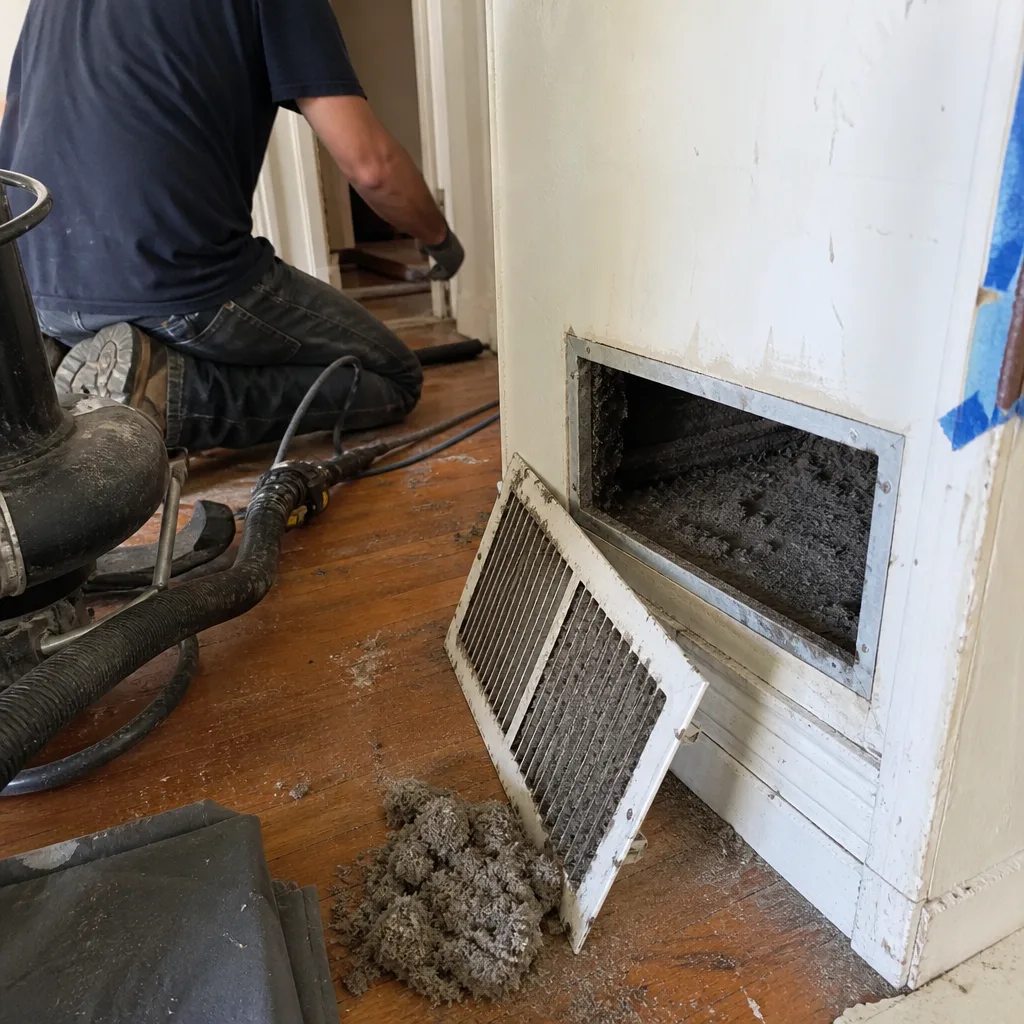 Before
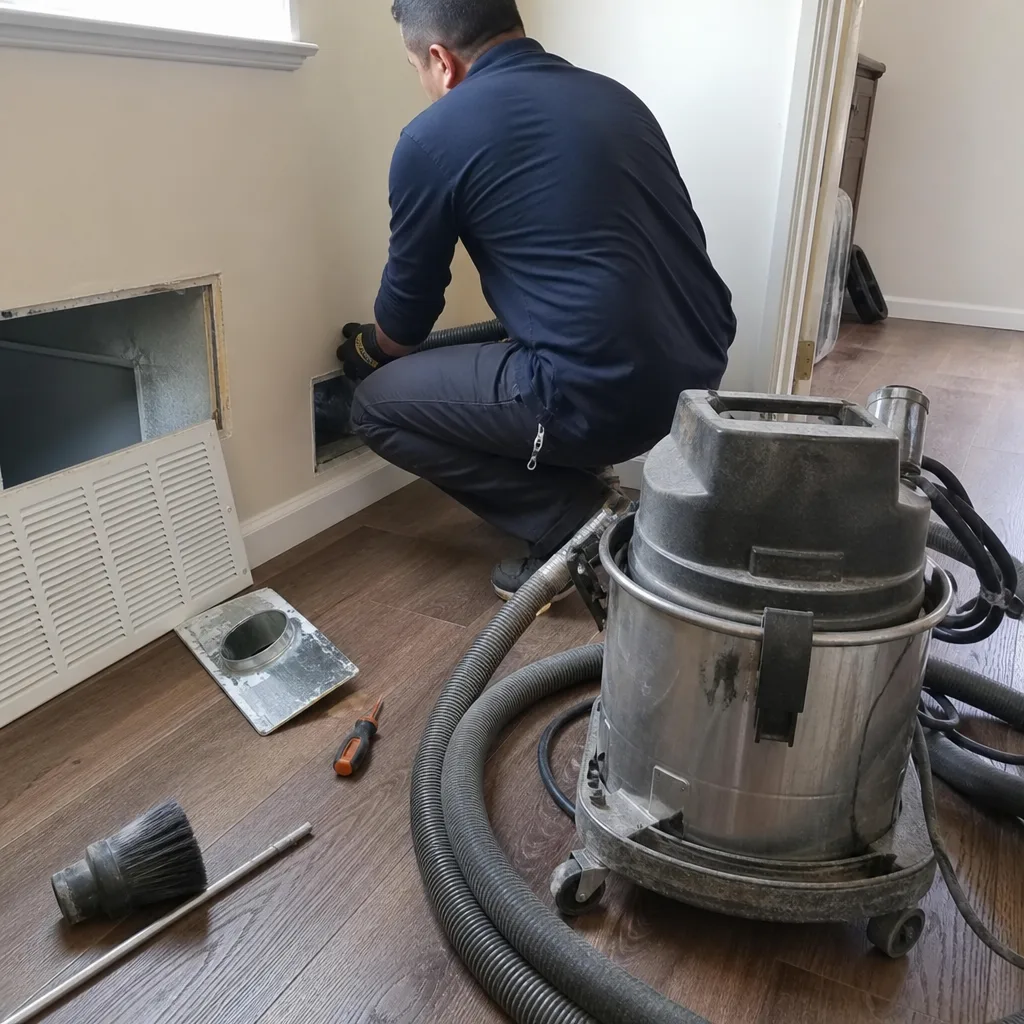 After
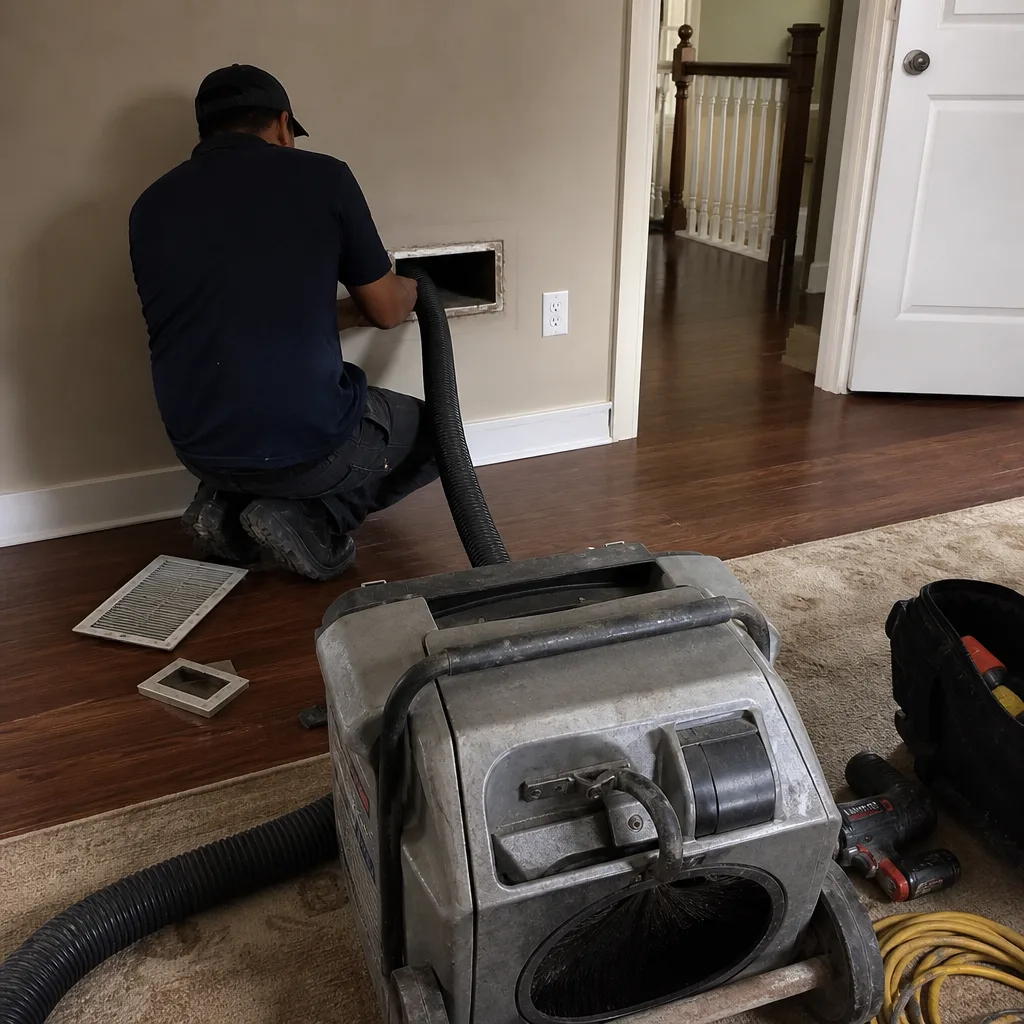 Before
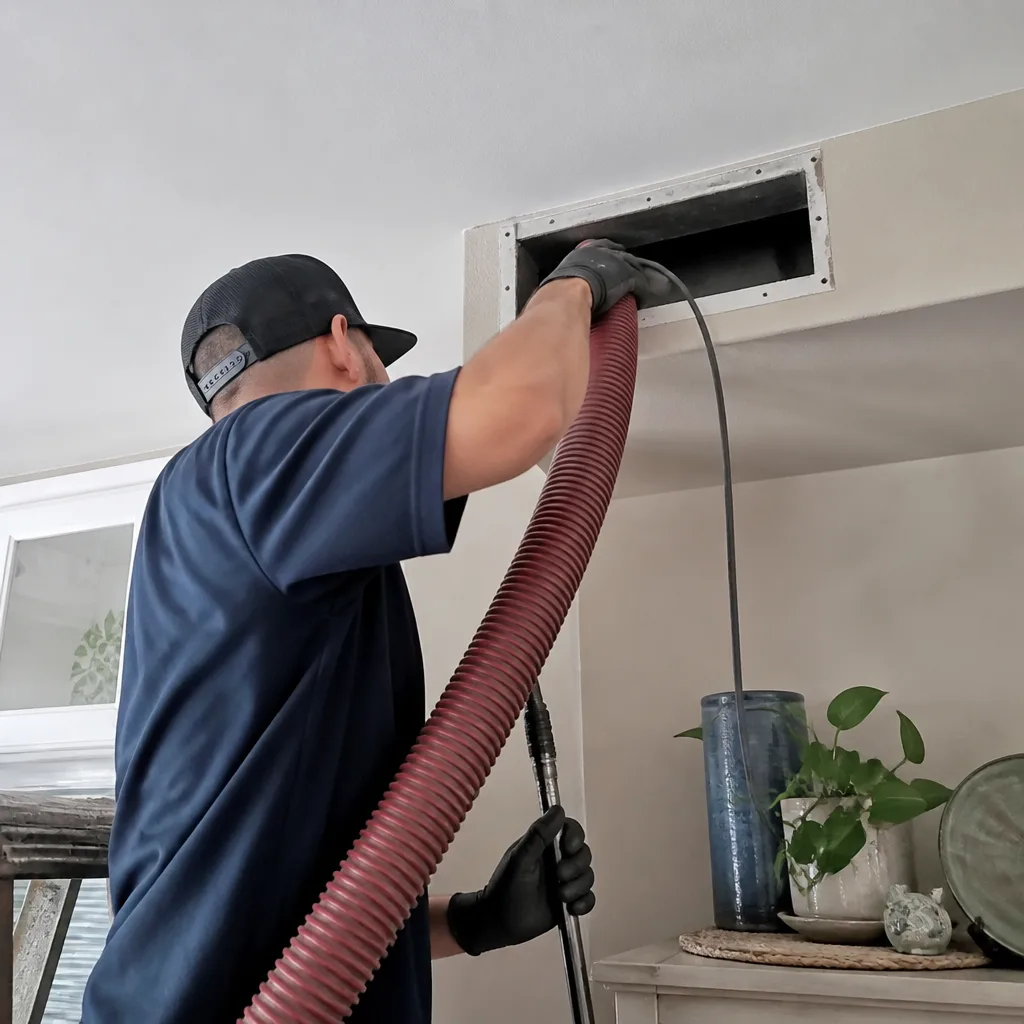 After
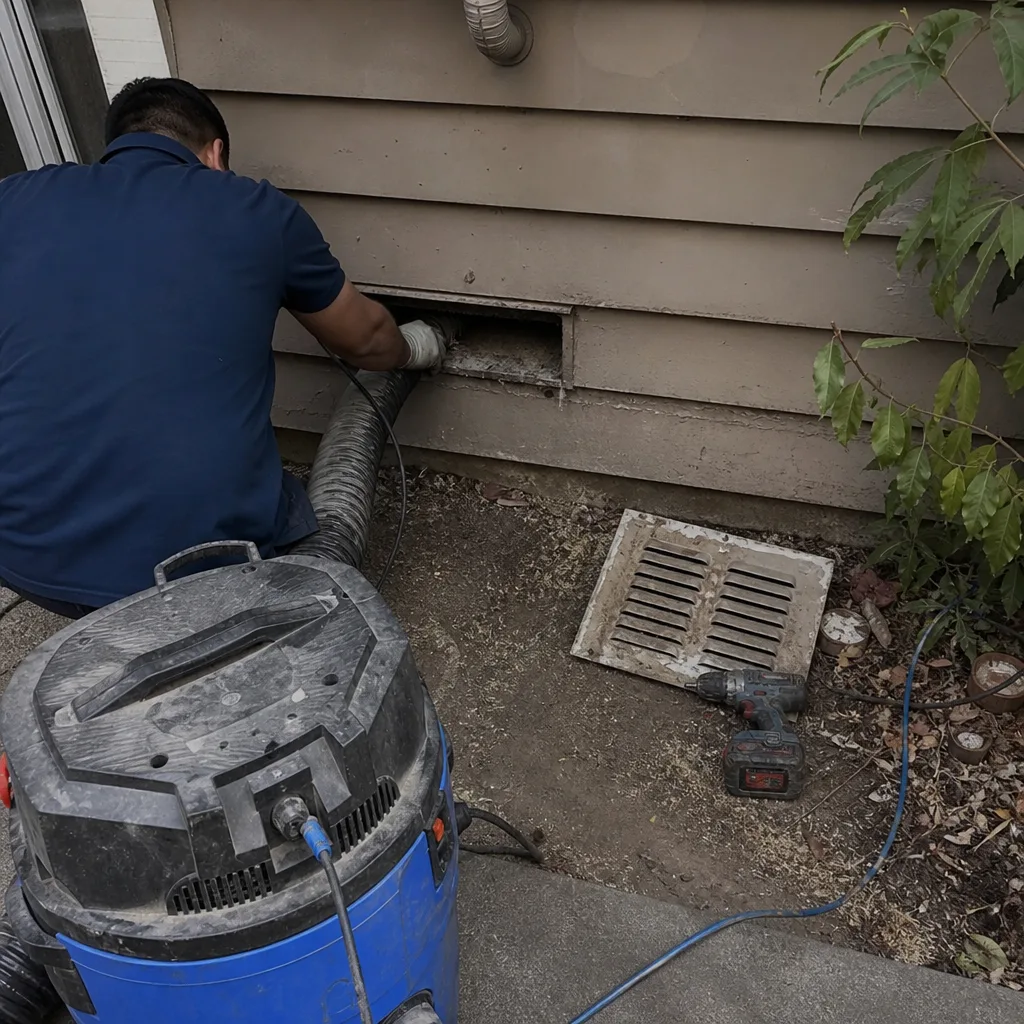 Before
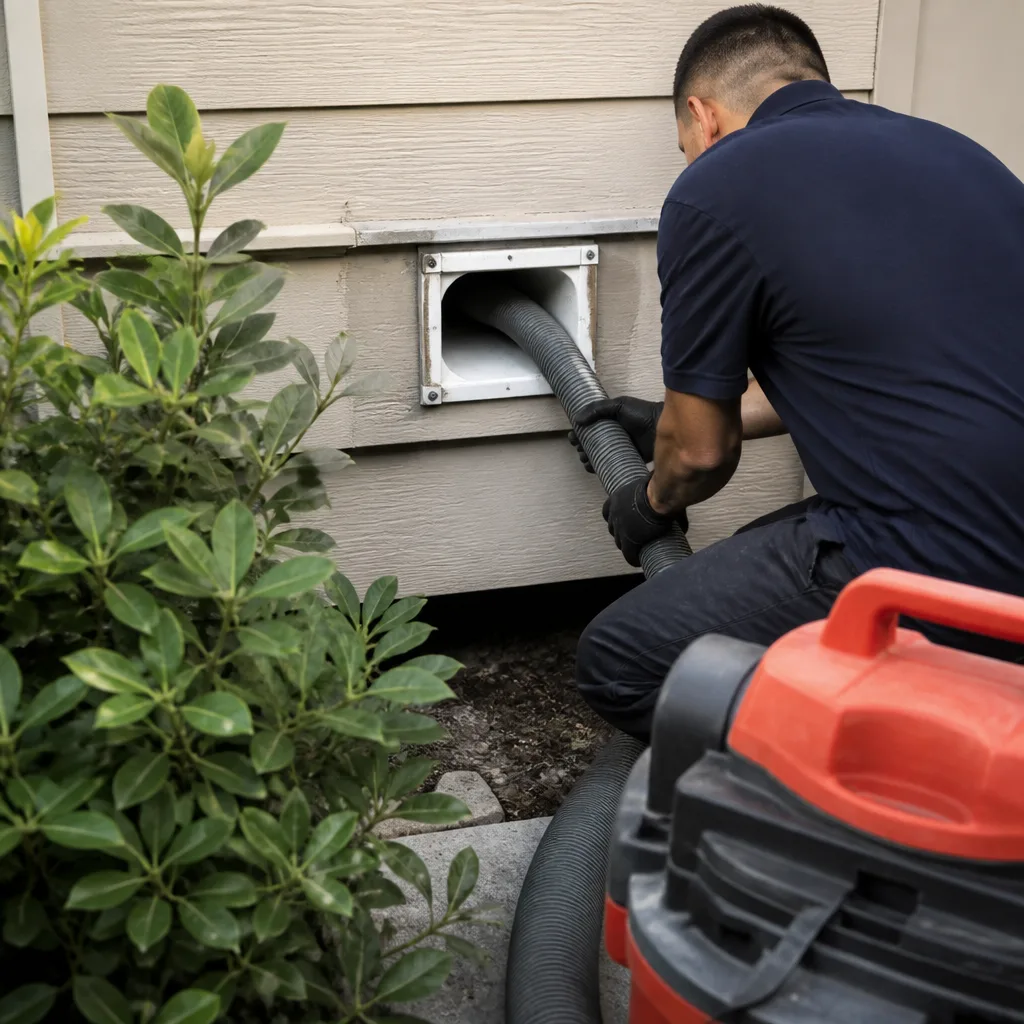 After
When to Call a Professional
Call a professional when the camera shows anything other than plain surface dust, when you’ve never cleaned the ducts in a home you bought, or when anyone in the household has persistent allergy symptoms that improve away from home. Call when the ducts show moisture staining, when you’ve had a rodent problem that went unchecked, or when a remodel has pumped drywall dust through the system for weeks. Call when the dryer takes two cycles to dry a load and the vent hasn’t been inspected in years. Air Duct Cleaning Palo Alto offers free estimates in Palo Alto, and the estimate should include a camera look at what’s actually inside your system. Call (833) 620-7085 to schedule.
Frequently Asked Questions
Air duct cleaning in Palo Alto typically ranges from $450 to $1,200 for a full system, depending on the number of vents, duct material, access difficulty, and contamination level. Most local homes fall between $500 and $800 for a complete cleaning with brush-contact agitation and HEPA negative-air capture. Get a free estimate with a camera inspection before committing. Call (833) 620-7085 for pricing on your specific system.
For most Palo Alto homes, every 4 to 7 years is appropriate, with 4 years recommended after wildfire smoke seasons or if the home has pets and allergy-prone residents. Homes with crawlspace ducts or older flex duct may need cleaning more often because they pull in more outdoor particulates. The best interval depends on what the camera shows and how well your filtration is performing.
Yes, cleaning removes accumulated allergens including dust mites, pet dander, pollen, and smoke particulate that recirculate through the living space every time the HVAC system runs. For the best results, combine the cleaning with a media filter upgrade so new particulates are captured before they re-enter the ducts. Households with allergy sufferers in Palo Alto see the most visible difference after cleaning a system that hasn’t been touched in many years.
Cheaper quotes often come from operators using surface wipe-downs with shop-vac equipment rather than brush-contact systems and HEPA negative-air capture, which means they’re not actually cleaning most of the duct system. Others quote a low teaser price and then add on fees once the technician arrives and “discovers” the real condition of the ducts. A legitimate quote for a full system with the right equipment will be honest about the scope from the beginning.
Ask for before-and-after camera footage of the same duct runs so you can see the difference with your own eyes, and don’t accept a verbal assurance as proof. You can also mark the inside of a few registers with a piece of tape before cleaning and check whether those areas were actually accessed. A professional company will show you the after video without hesitation because the evidence speaks for itself.
Yes, especially after significant smoke events like the 2020 wildfire season that deposited fine particulate throughout Bay Area duct systems, because that smoke residue is sticky and does not simply blow through the system. Cleaning with HEPA capture removes the particulate rather than recirculating it, and a high-MERV filter upgrade afterward helps capture future smoke particles before they enter the ducts. If the residue is heavy, this may be a remediation-grade situation rather than a standard clean.
The Bottom Line
Air duct cleaning is not a commodity, and in Palo Alto it’s not a simple dust removal job either. The older ranches, the smoke-season residue, the crawlspace humidity, and the mix of duct materials across decades of construction mean every system tells a different story when you actually look inside it. The right approach starts with a camera inspection, matches the agitation method to the duct material, and uses HEPA negative-air capture so the debris leaves the building, not the room. If you’re buying the cheapest quote, you’re buying a surface wipe. If you’re hiring someone who shows you the before and after and uses the right equipment, you’re paying for what’s actually removed. Air Duct Cleaning Palo Alto home for a free estimate and a straight answer about what’s inside your ducts. Call (833) 620-7085 today.
Written by the team at Air Duct Cleaning Palo Alto, serving Palo Alto since 2016. Browse more guides & resources.