
Last updated November 3, 2026
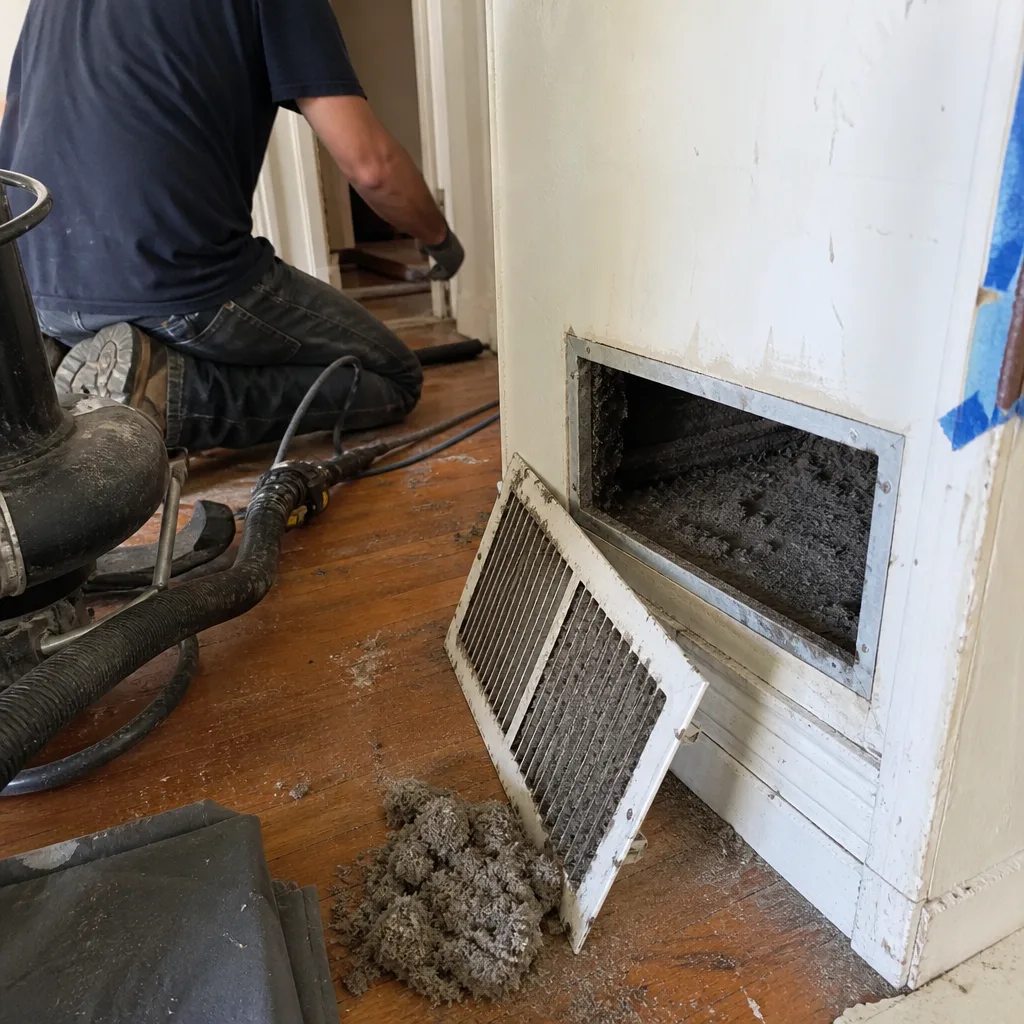
Whole-system duct and dryer vent check with before-and-after photos - you see exactly what came out of your vents
That "$99 whole-house special" is a bait ad - the real number appears once they are in your hallway, or the "clean" is a shop-vac at the register. We photograph the inside of your ducts before and after instead.
Choosing the Right Air Duct Cleaning Brand: A Buyer’s Guide for Palo Alto
Here’s something most homeowners in Palo Alto never realize: the single best predictor of whether a duct cleaning actually works isn’t the company’s review count, its certifications, or its advertising budget. It’s the specific equipment loaded into the van. Three companies can all claim to use “professional equipment.” One arrives with a Rotobrush BrushBeast system. One brings a Nikro HEPA negative-air machine. The third wheels out a portable unit bought at a warehouse club. These are not equivalent tools, and the difference between them is measurable in what remains in your ductwork after the crew packs up and leaves. This guide explains how to evaluate Air Duct Cleaning services by the equipment they use, what each major system actually does, and how to ask the right questions without getting dismissed.
Quick Answer
To choose the right air duct cleaning brand in Palo Alto, base your decision on the equipment the company uses, not the logo on their website. The strongest choice is a contractor who runs a Rotobrush brush-contact agitation system paired with a Nikro HEPA negative-air machine for containment, because that combination physically dislodges compacted debris while capturing it before it can re-enter your living space. Ask every contractor one question: “What is the brand and model of your primary extraction unit?” The answer tells you more than a hundred online reviews.
Styles & brands we work with
- Whole-home duct cleaning
- Dryer vent cleaning
- Camera inspection
- Sanitizing & deodorizing
Table of Contents
- Why Equipment Matters More Than Reviews
- What a Rotobrush System Actually Does
- Why Nikro Negative-Air Equipment Changes the Job
- Abatement Technologies and the Remediation Standard
- How to Ask About Equipment Without Being Dismissed
- Equipment Is Only Half the Equation: Training and Experience
- What Makes Palo Alto Duct Systems Different
- What Should Duct Cleaning Cost in Palo Alto?
Why Equipment Matters More Than Reviews
Online reviews tell you whether the technician was polite and showed up on time. They rarely tell you whether the job actually removed what was inside the ducts. That’s the problem with relying on star ratings alone. A friendly crew with a consumer-grade vacuum can leave 80% of the impacted debris in place, and most homeowners in Palo Alto would never know, because they can’t see inside their own ductwork.
Equipment, on the other hand, imposes physical limits on what a job can achieve. A brush-contact system either makes physical contact with the duct walls or it doesn’t. A negative-air machine either maintains the room under negative pressure during cleaning or it doesn’t. These aren’t preferences. They’re mechanical realities. When you evaluate a company based on the tools they use, you’re evaluating something verifiable, not a marketing claim.
Think of it this way. You wouldn’t choose a surgeon without knowing what instruments they use. Duct cleaning is less dramatic, but the principle holds. The equipment determines the ceiling of what’s possible. Everything else, training, process, thoroughness, operates within that ceiling.
What a Rotobrush System Actually Does
Rotobrush is a brand name for a class of equipment known as rotary brush contact-cleaning systems. The design is specific, and understanding it helps you understand why tool choice matters in air duct cleaning.
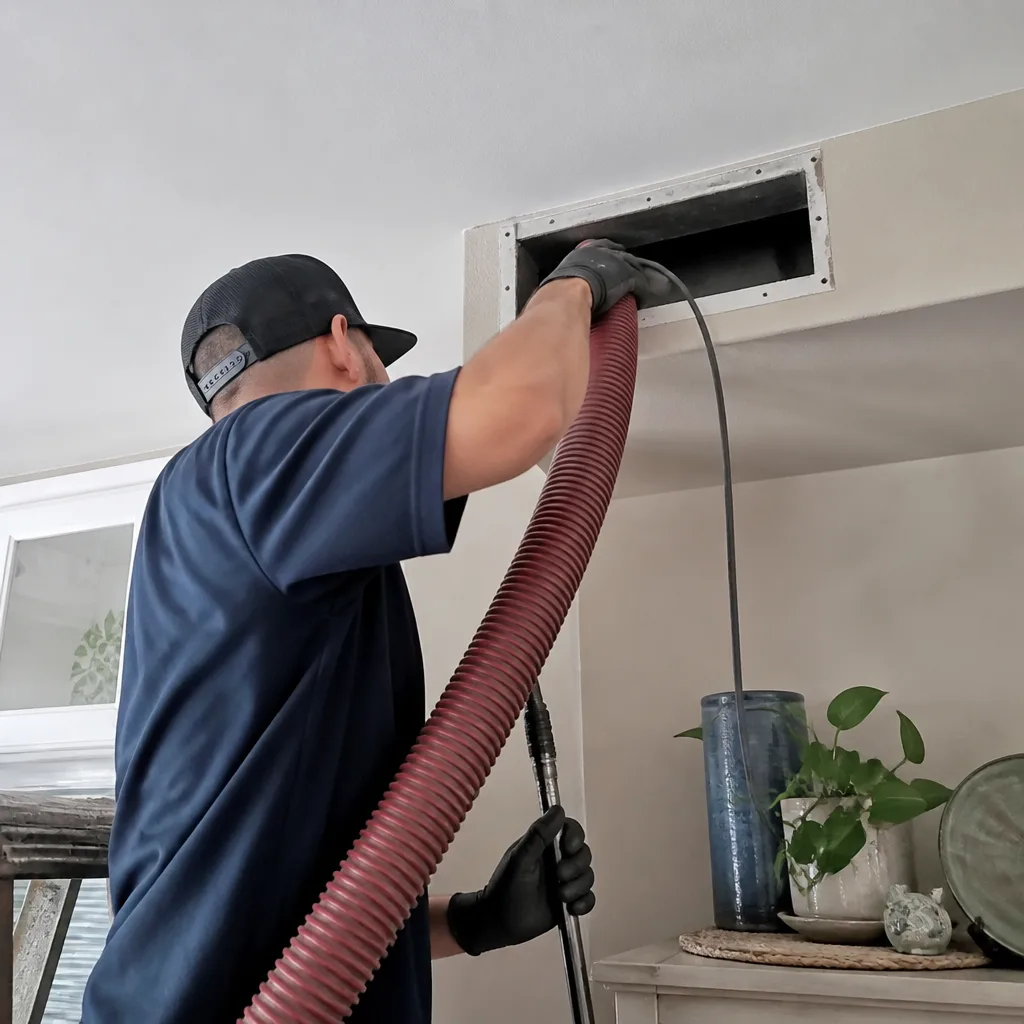
The system combines two actions simultaneously. First, a rotating brush head travels through the duct and physically scrubs the interior walls. The bristles make actual contact with the metal or flex duct surface, dislodging dust, pet dander, pollen, and the gray film of lint and skin cells that accumulates over years. Second, a vacuum extraction system runs at the same time, pulling the dislodged material out of the duct before it can settle elsewhere in the system.
That word “simultaneously” is the important part. Here’s why. Some cleaning methods agitate first and vacuum later, often from a single access point. The problem is that dislodged debris doesn’t politely wait to be collected. It re-settles, drifts into branch lines, or gets pushed deeper into the system. A Rotobrush design means debris is agitated and extracted in the same moment, which dramatically reduces what gets left behind.
Rotobrush equipment also typically includes a HEPA-filtered collection system, meaning the air exhausted from the vacuum doesn’t re-introduce fine particulates into the home. In a Palo Alto household with an allergy sufferer or an infant, that distinction matters. The air leaving the machine has been filtered, not just moved.
Key capabilities of rotary brush systems:
- Physical agitation breaks up debris that air-only systems can’t dislodge
- Simultaneous extraction prevents re-contamination during the cleaning process
- HEPA filtration on the exhaust side protects indoor air quality during the job
- Effective on both metal and flex duct, common throughout Palo Alto homes
Why Nikro Negative-Air Equipment Changes the Job
Nikro manufactures HEPA-filtered negative-air machines, and the lineage of this equipment is worth understanding. Negative-air machines were originally developed for asbestos abatement and mold remediation work. Their purpose is simple but critical: they pull air out of an enclosed space through a HEPA filter, creating lower air pressure inside that space than outside it. This prevents contaminated air from escaping into surrounding areas while work is happening.
Why does that matter for duct cleaning? During a cleaning, the process of agitating years of accumulated debris releases particulate matter into the air. Without containment, some of that material drifts out of the duct openings and into the living space. A Nikro negative-air machine running during the job captures those particulates at the source, before they can settle on furniture, bedding, or flooring.
This is especially relevant in Palo Alto homes where residents have allergies, asthma, or respiratory sensitivities. The cleaning process itself shouldn’t make the air worse before it makes it better. HEPA-level containment ensures it doesn’t.
It’s also worth noting that in our experience, the presence of negative-air equipment is a strong signal of operator seriousness. Companies that invest in this class of equipment are building a professional operation, not running a side gig with rented gear. The machine has one job, protecting your indoor air during service, and it does that job whether or not you’re watching.
What negative-air containment provides:
- HEPA filtration of 99.97% of particles at 0.3 microns
- Negative room pressure that keeps dislodged particulates from spreading
- Protection for residents with respiratory conditions during service
- Same class of equipment used in professional mold and contamination remediation
Abatement Technologies and the Remediation Standard
Abatement Technologies makes air scrubbing and particulate capture equipment engineered for contaminated environments. Their machines are used after fires, floods, renovation projects, and mold events, anywhere airborne contaminants need to be removed from a space systematically rather than just cosmetically.
For a residential duct cleaning in Palo Alto, this matters in specific scenarios. Homes near the foothills, in neighborhoods like Los Altos Hills adjacent communities, or anywhere affected by California wildfire smoke, carry fine particulate loads that settle deep in duct systems. After a kitchen fire, even a small one, smoke odor and particulate residue travel through the HVAC system and deposit on duct walls. After a renovation, drywall dust and construction debris do the same.
Standard duct cleaning equipment, a blower and a basic vacuum, cannot fully address that kind of contamination. Abatement Technologies equipment is designed to scrub air continuously, capturing particles that other systems re-circulate. When a Palo Alto homeowner has experienced fire, smoke, or major renovation, asking whether the contractor has air scrubbing capability is a reasonable and informed question.
The frame to remember: this equipment exists because some environments contain contaminants that need to be captured, not just moved. If your duct system has been through those conditions, the equipment class matters.
How to Ask About Equipment Without Being Dismissed
Most homeowners never ask about equipment because they don’t know what to ask, and some contractors prefer it that way. The single most effective question is simple and direct:
- Ask: “What is the brand and model of your primary extraction unit?”
- Ask what the extraction unit is paired with: a brush-contact system, a negative-air machine, or just a blower and vacuum.
- Ask whether their system includes HEPA filtration on the exhaust side.
- Ask how they contain particulates during the job, specifically whether they run negative pressure while cleaning.
- Ask how long the technician operating the equipment has worked with that specific system.
Here’s what the answers tell you. An operator who can immediately name their equipment, describe how it works, and explain why they chose it is running a professional operation. An operator who deflects, generalizes, or says “we use professional-grade equipment” without specifics is signaling something else entirely.
You don’t need to become an equipment expert to ask these questions. You just need to ask them and listen to how the answers sound. An informed operator welcomes the question. The whole point is to separate companies that own professional equipment from companies that rent a portable blower and hope for the best.
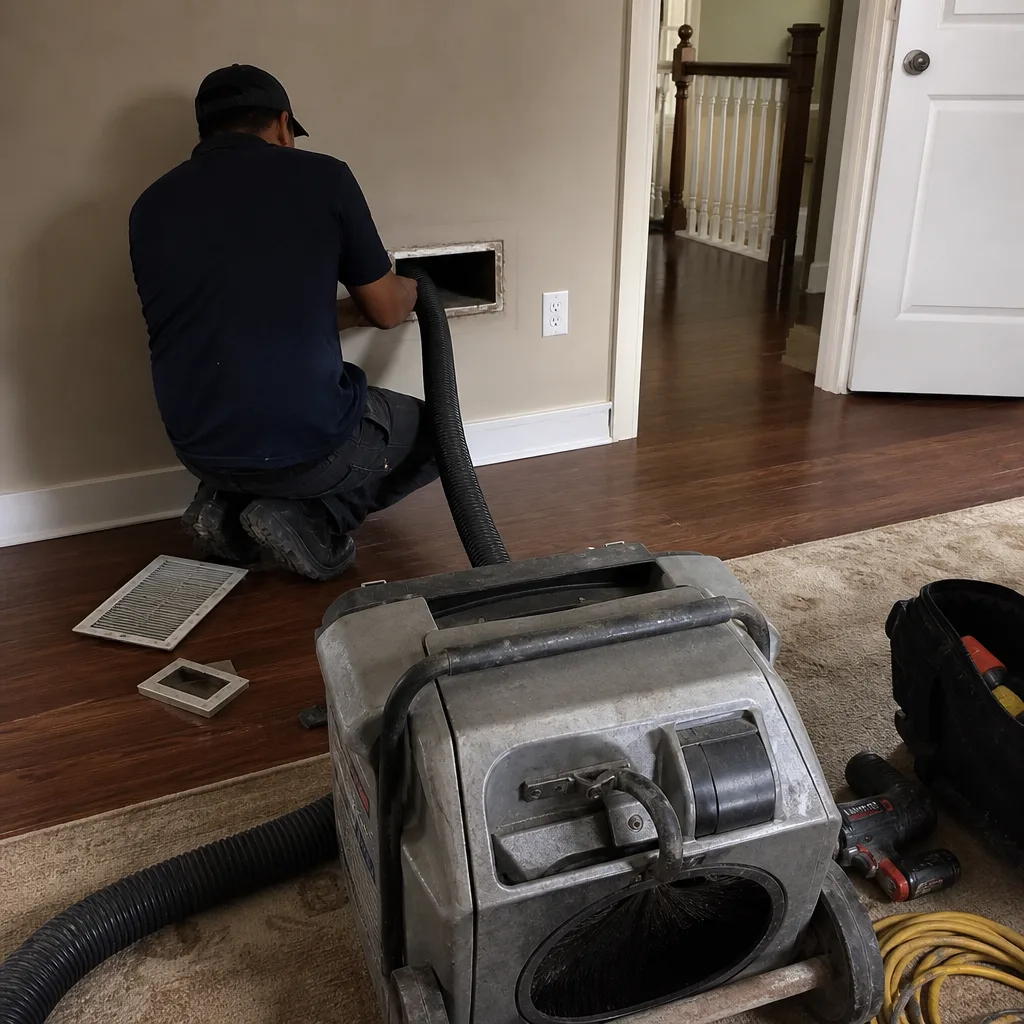
As a full-service air duct cleaning company in Palo Alto, we operate Rotobrush brush-contact systems and Nikro HEPA negative-air machines because they’re the right tools for the job. But this guide isn’t meant to push you toward one company. It’s meant to give you the question that protects you from every company that shows up with the wrong tools.
Equipment Is Only Half the Equation: Training and Experience
Professional equipment in untrained hands produces unprofessional results. A Rotobrush system is effective when the operator knows how fast to advance the brush through the duct, how many passes a given section needs, how to read the material coming out on the first pass, and when to stop and investigate rather than push through. None of that is on the equipment label.
Here’s what to look for when evaluating training and experience:
- Time on the specific system. Ask how long the technician has operated the exact equipment they’ll be bringing to your home. Someone with three years on a Rotobrush system will deliver different results than someone on their third job.
- Experience with comparable duct configurations. Palo Alto homes span a wide range: 1950s ranchers with original metal ducts, 1970s Eichlers with radiant heating and limited ducting, 1990s and 2000s builds with flex duct runs through tight attic spaces. Each configuration demands different technique.
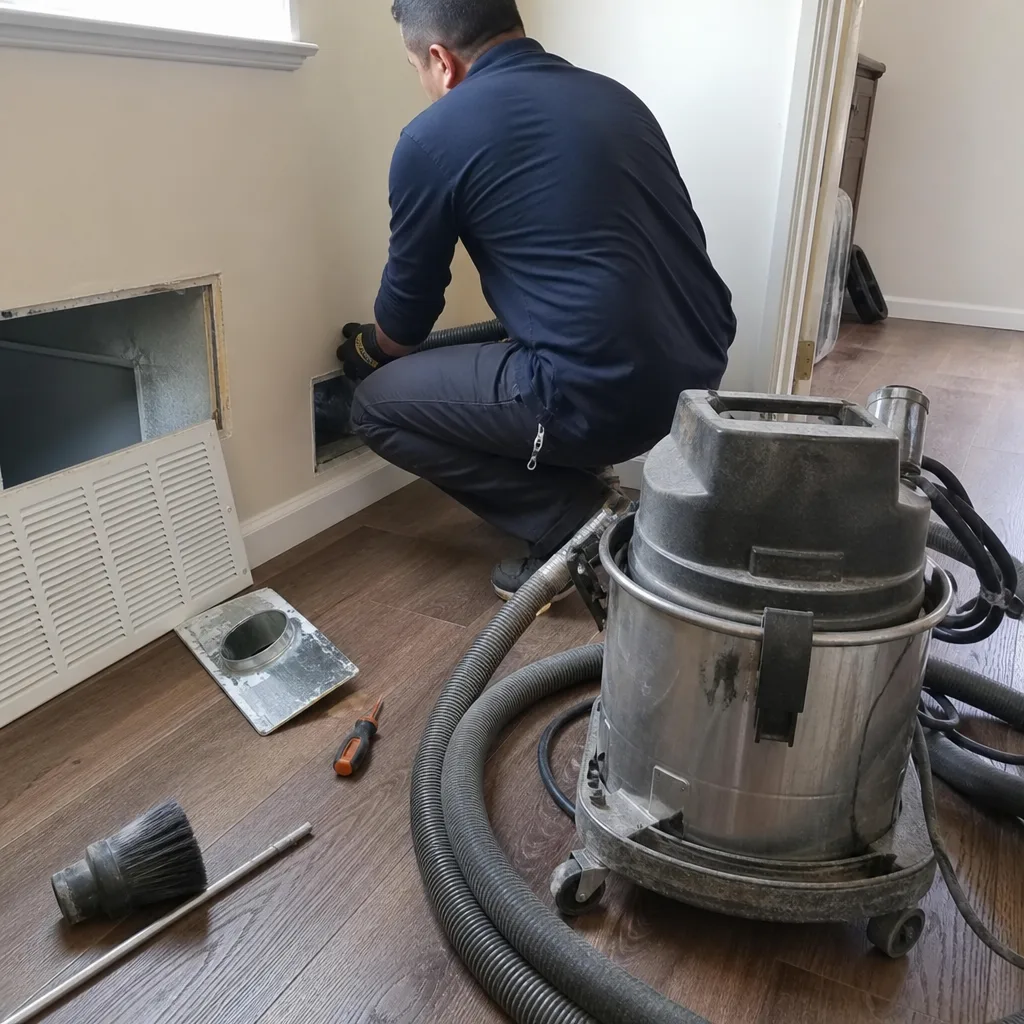
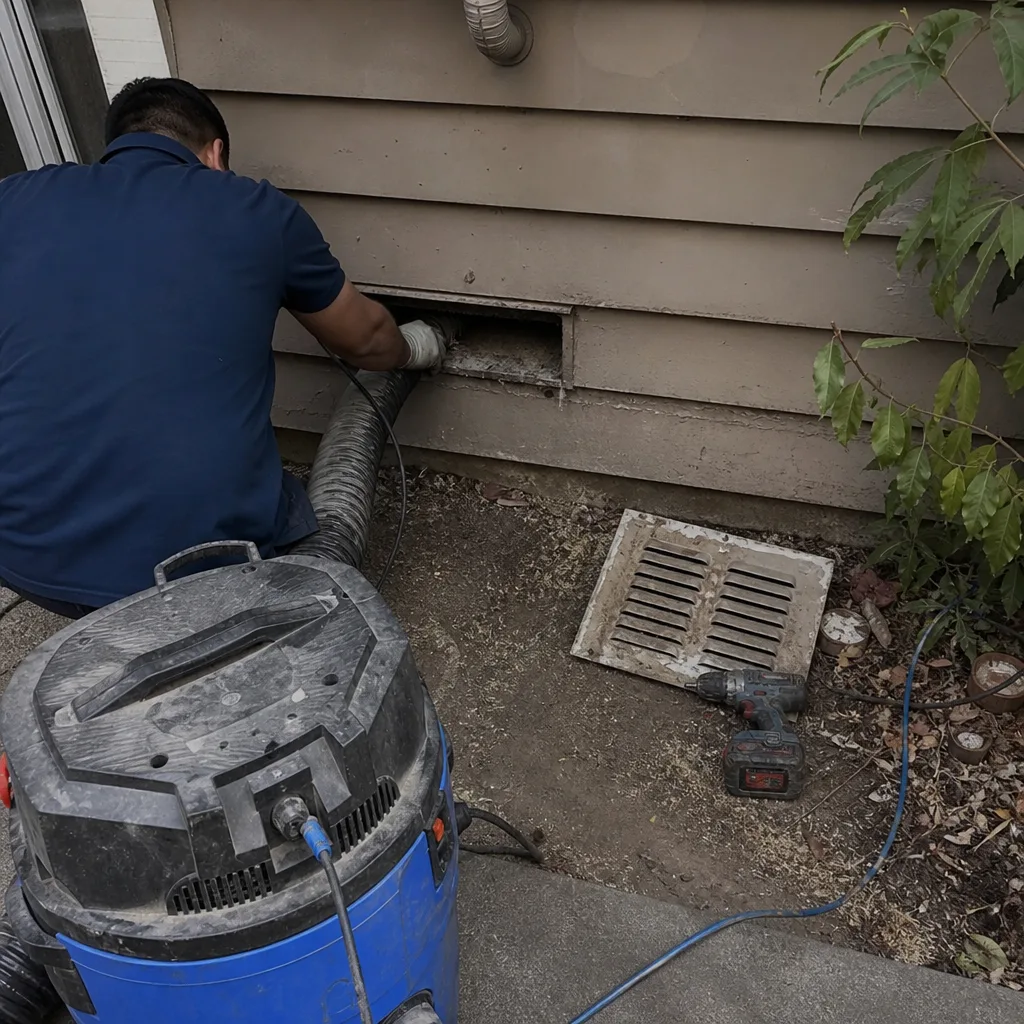
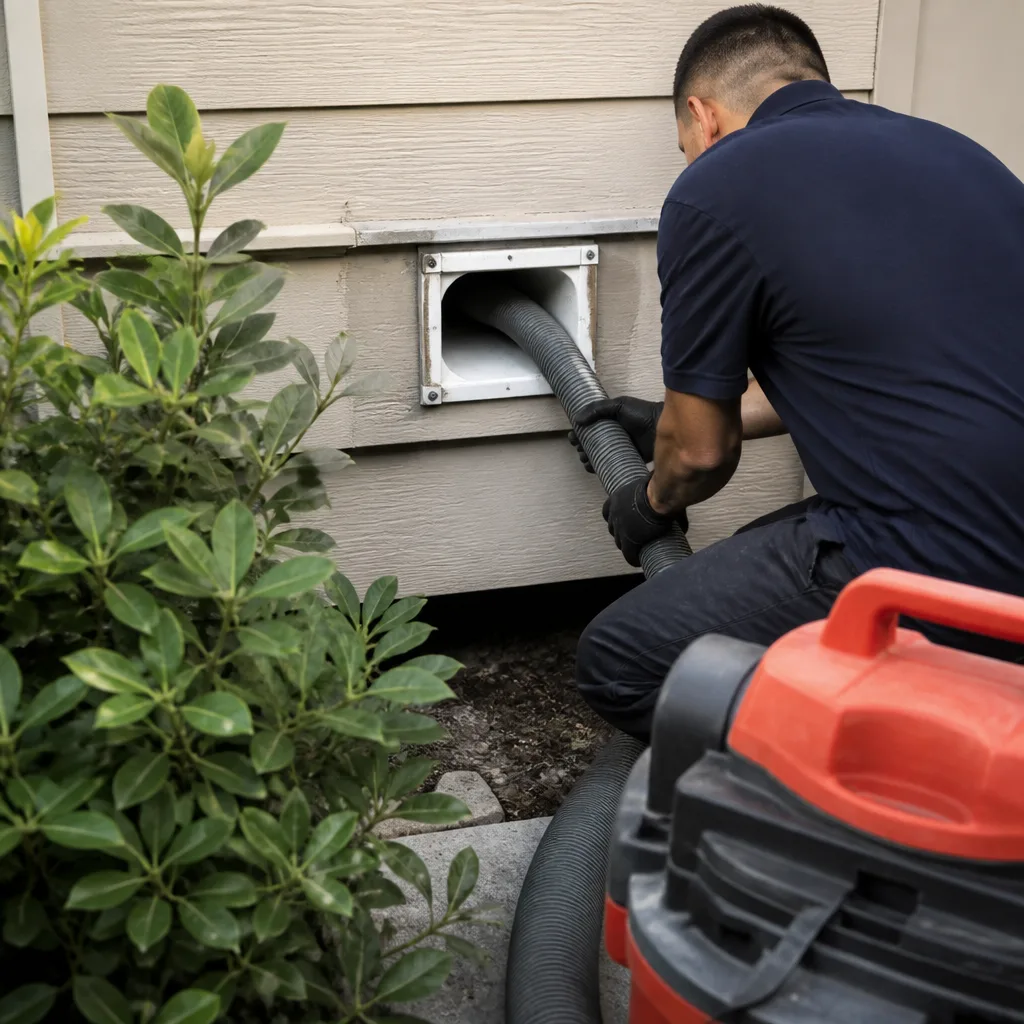
- Willingness to show you the work. A trained operator should be able to show you before-and-after photos of your actual ducts, not stock images. If the company won’t or can’t, that’s an answer in itself.
- Repair competency. A technician who understands how duct systems are built and sealed can identify damage during cleaning rather than just skipping over it. Some companies only clean, and if they find a disconnected or crushed duct section, they’ll leave it because repair isn’t in their scope. That’s a gap worth asking about directly because it’s the difference between a clean system and a functional one. A company that offers air duct repair in Palo Alto as a standalone service can address what the cleaning uncovers.
- Dryer vent knowledge. Dryer vent cleaning may seem like an add-on, but it carries a fire-safety dimension that changes how the job should be done. The technician should be able to explain lint accumulation rates, airflow testing, and what the vent termination looks like from the exterior. We treat dryer vent cleaning in Palo Alto as a fire-prevention service, not a quick upsell.
Training also shows up in the details. Does the technician lay down corner guards and floor protection before running hoses through your living room? Do they seal access points after the job? Do they check airflow before and after? These are process habits, and they come from training, not from the tool itself.
What Makes Palo Alto Duct Systems Different
Palo Alto’s housing stock creates specific conditions for duct systems, and The Complete Air Duct Cleaning Guide for Palo Alto Homeowners would be only half useful if it ignored local context. Here’s what we see in this market, across neighborhoods from Barron Park to Midtown to Old Palo Alto.
First, the age range of homes is extreme. Some Palo Alto properties date to the early 1900s, with original gravity heating systems later converted to forced air. Others are new construction or major remodels completed in the last decade. The ductwork in a 1920s Craftsman has nothing in common with the ductwork in a 2018 rebuild in Crescent Park, and neither should be cleaned with the same assumptions.
Second, renovation activity is constant. Palo Alto sees heavy remodeling volume, which means dust from drywall, flooring, and framing settles into duct systems during construction. If you’ve renovated, your ducts are carrying construction debris regardless of how carefully the contractor taped off the work area. Negative-air containment and thorough extraction matter more after renovation than in a home that hasn’t been touched in twenty years.
Third, the microclimate near the Bay and the foothills contributes to moisture cycles that affect duct interiors. Homes closer to the Bay experience higher ambient humidity, which can accelerate the accumulation of dust on duct walls. Homes up in the hills deal with wildfire smoke particulate during fire season, material that penetrates homes and settles into HVAC systems. Both conditions argue for equipment that physically scrubs rather than just vacuums surface dust.
Fourth, many Palo Alto homes have crawl spaces, which means return ducts routed through areas exposed to dust, rodent activity, and moisture. A return duct drawing air through a crawl space with a loose joint is pulling contaminated air directly into the house. A proper cleaning should include inspection of these connections, not just the exposed registers.
What Should Duct Cleaning Cost in Palo Alto?
Pricing for duct cleaning in the Palo Alto market varies more by equipment and process than most homeowners expect. Here’s a realistic picture based on what we see in this market.
| Service Scope | Typical Palo Alto Range | What Affects Price |
|---|---|---|
| Whole-home duct cleaning (single system, 2,000 sq ft or less) | $450 to $750 | Number of registers, system accessibility, contamination level |
| Whole-home duct cleaning (larger homes or dual systems) | $700 to $1,200 | Multiple HVAC systems, amount of flex duct, attic access difficulty |
| Duct cleaning plus dryer vent | $550 to $850 | Vent run length, roof vs. wall termination, lint blockage severity |
| Duct cleaning with repair work | Add $150 to $500+ per repair section | Severity of damage, duct material, access difficulty |
These ranges reflect professional equipment and thorough process. You’ll find roadside coupons advertising whole-house jobs at $99 or $149. The math on those numbers doesn’t work if the operator is amortizing a Rotobrush system, running a HEPA negative-air machine, and paying trained technicians. Low-ball pricing in this industry almost always converts to upsell pressure once the crew is on site, or it reflects a job that moves air around rather than actually cleaning. The bait-and-switch reputation that clings to this industry exists for a reason, and the antidote is a flat price agreed before the work starts.
An honest operator can explain what their price includes and why it is what it is. They can tell you the equipment being used and how long the job will take. If the explanation comes down to “it’s just how much we charge,” that’s not an explanation, that’s a deflection, and Palo Alto homeowners deserve better.
Common Mistakes to Avoid
- Choosing by coupon price. A $99 whole-house cleaning in Palo Alto cannot cover the cost of running professional equipment. You’ll get a quick pass with a consumer-grade vacuum, or you’ll get an aggressive upsell the moment the technician walks your attic. Neither is what you wanted when you picked up the phone.
- Asking only about price, never about equipment. The question “how much?” doesn’t reveal anything about what’s being done. Ask “what equipment are you using?” and let the answer shape how you interpret the price.
- Assuming all certifications are equal. Some certifications require demonstrated competence with specific equipment. Others are effectively paid memberships. A certification without an equipment conversation is incomplete information.
- Skipping the dryer vent during duct work. Lint accumulation in dryer vents is a documented fire hazard, and it accumulates on a different schedule than duct debris. Treating dryer vent cleaning as a separate, dedicated service rather than an afterthought yields better outcomes. Dryer vent fires are preventable, but only if the vent actually gets cleaned.
- Not asking for before-and-after photos of your own ducts. If a company can’t show you what was inside your ducts and what they looked like after, you have no way to verify the work happened at all. In this industry, that verification matters.
- Ignoring repair needs discovered during cleaning. A clean duct system with a disconnected branch line is still a broken duct system. Ask whether the company can address damage they find, or whether you’ll be left to find another contractor. From cleaning to repair, the stronger companies close that loop themselves.
- Hiring for speed. A thorough cleaning of a typical Palo Alto home takes several hours. Anyone promising a 45-minute whole-house job is not doing the same work, regardless of what their flyer says. Professional-grade equipment, not improvised tools, takes time to operate correctly.
See the difference
 Before
 After
 Before
 After
 Before
 After
When to Call a Professional
There are moments when skipping professional duct cleaning is a reasonable choice, and moments when it isn’t. You should call a professional if you’ve completed renovation work and you can smell or see construction dust, if a household member has allergy or asthma symptoms that worsen inside the home, if you’ve had a kitchen fire or smoke event of any size, if you can see visible dust accumulation at the registers, or if you’re buying a home and the ducts have no documented service history. Any of those scenarios justifies professional equipment and a thorough process. For The Complete Air Duct Cleaning Guide for Palo Alto Homeowners and a free estimate throughout the Palo Alto area, Call (833) 620-7085 to talk through what you’re seeing and get an honest read on what needs to happen.
Frequently Asked Questions
The optimal configuration is a rotary brush contact-cleaning system paired with a HEPA negative-air machine, which is why Rotobrush and Nikro equipment are common among professional operators. The brush system physically dislodges debris that air-only methods leave behind, and the negative-air machine contains particulates during the job, preventing cross-contamination into living spaces.
Ask for before-and-after photos of your own duct interiors, not stock images, and verify that the company documented the specific access points they used. A professional operator should be able to show you what was removed and what the duct walls look like after cleaning. Call (833) 620-7085 if you want to talk through what documentation to expect before you schedule anyone.
Low-priced quotes typically reflect lighter equipment, fewer labor hours, or a strategy of getting on-site and then upselling. A proper cleaning with brush-contact agitation and HEPA negative-air containment costs real money to deliver, and any price that can’t cover that equipment cannot deliver that service. The cheap quote usually costs more by the time the van leaves your driveway.
Every three to five years is a reasonable interval for most Palo Alto homes, more often if you’ve renovated, have pets that shed heavily, live near the foothills during wildfire season, or have household members with respiratory conditions. The best signal is visual: when you see dust accumulation at the registers, the ducts are carrying more than you can see.
Duct cleaning is about system performance and air quality, not just allergy management. A duct system carrying years of accumulated debris forces the HVAC blower to work harder, shortens filter life, and circulates particulate matter through the home continuously. In an older Palo Alto home with original ducts, the accumulation can be substantial even without allergy symptoms. What’s actually inside your ducts is the question to answer.
Most older homes need some of both. Cleaning removes what has accumulated, and repair addresses what has failed: disconnected joints, crushed flex sections, leaking return plenums. A company that only cleans may not be able to fix what they find. We offer air duct repair in Palo Alto as a standalone service specifically because the two needs usually appear together, and leaving the repair unaddressed just means the cleaned system re-contaminates faster.
Expect $450 to $750 for a typical single-system home in Palo Alto, with larger or dual-system properties running $700 to $1,200. Prices below that range generally indicate lighter equipment or a pressure-based upsell approach. A flat price agreed before work starts, based on an actual assessment of your system, is the model to look for.
The Bottom Line
Choosing a duct cleaning company in Palo Alto comes down to verifiable facts, not marketing language. Ask what equipment will be running in your home, and ask the operator to explain what that equipment does. A Rotobrush brush-contact system paired with a Nikro HEPA negative-air machine is the configuration that actually removes debris and contains it during the job. A portable blower and a basic vacuum is a different service wearing the same name. Combine the equipment question with before-and-after documentation, a flat price agreed in advance, and the ability to handle repairs if the cleaning uncovers damage. For more guides & resources, That combination separates the professional operators from everyone else. Air Duct Cleaning Palo Alto is one of those operators, and we’re glad to prove it. Call (833) 620-7085 for a free estimate and let’s talk about what’s actually inside your ducts.
Written by the team at Air Duct Cleaning Palo Alto, serving Palo Alto since 2016.