
Last updated November 2, 2026
Whole-system duct and dryer vent check with before-and-after photos - you see exactly what came out of your vents
That "$99 whole-house special" is a bait ad - the real number appears once they are in your hallway, or the "clean" is a shop-vac at the register. We photograph the inside of your ducts before and after instead.
Air Duct Cleaning Cost Breakdown: The Palo Alto Homeowner’s Reference for 2026
The $299 whole-house duct cleaning special is mathematically implausible for a Palo Alto home. A properly scoped job on a 2,000 sq ft house with 12 to 15 supply runs takes 4 to 6 hours with professional equipment. When a job takes 90 minutes, physics tells you what didn’t happen. This guide gives you the real numbers, explains what actually drives price variation across Palo Alto’s housing stock, and shows you how to compare quotes so you’re not comparing our Air Duct Cleaning services to a guy with a shop vac and a coupon. By the end, you’ll know what equipment questions to ask, which add-ons are legitimate, and why pre-1980 homes in neighborhoods like Midtown and Old Palo Alto need a different scope of work entirely.
Quick Answer
Air duct cleaning in Palo Alto typically costs between $450 and $1,200 for a standard single-family home in 2026, with most homeowners paying around $600 to $850 for a full system clean using professional-grade equipment. Homes under 1,500 sq ft with accessible ductwork may fall in the $350 to $500 range, while larger or older homes with flex ducting, multiple HVAC systems, or contamination issues can exceed $1,500. The single biggest variable is whether the contractor uses brush-contact agitation with HEPA negative-air containment, or just runs a portable vacuum through your registers.
Styles & brands we work with
- Whole-home duct cleaning
- Dryer vent cleaning
- Camera inspection
- Sanitizing & deodorizing
Table of Contents
- What Actually Drives Duct Cleaning Cost in Palo Alto
- Equipment Class: Why the Machine Matters as Much as the Labor
- How to Compare Quotes Accurately: 5 Questions That Force Specificity
- Legitimate Add-Ons vs. Upsells That Are Almost Never Warranted
- Palo Alto-Specific Cost Factors Most National Guides Miss
- What a Legitimate Duct Cleaning Actually Involves: Step-by-Step Scope
- Cost by Home Size and System Type: Palo Alto Reference Ranges
- Why the Spread Is So Wide: The Honest Explanation
What Actually Drives Duct Cleaning Cost in Palo Alto
The gap between a $200 duct cleaning quote and a $900 quote for the same Palo Alto home isn’t profit margin. It’s that you’re looking at two entirely different jobs. One company is sending a technician with a portable vacuum and a rotating brush attached to a drill. The other is running a Nikro HEPA negative-air machine at the furnace, cutting access ports into the main trunk line, and mechanically agitating every linear foot of ductwork with Rotobrush contact-cleaning systems that dislodge compacted debris, not just the loose dust sitting on top. Both invoices say “duct cleaning.” One takes 6 hours and removes the kind of material you can feel between your fingers. The other takes 90 minutes and changes nothing you can verify.
Here’s what legitimate price variation reflects, in order of impact:
- Duct linear footage. A 4,000 sq ft home in Old Palo Alto with zoned HVAC and two air handlers has roughly triple the duct surface area of a 1,400 sq ft rancher in Ventura. More linear feet means more time, more access points, more labor.
- Material type: flex vs. hard pipe. Flexible ductwork is faster to clean in some ways, but tears easily and often needs repair or replacement. Rigid galvanized duct cleans thoroughly with brush systems but requires more access cutting in older homes. The material changes the tooling and the time.
- Access difficulty. Crawlspace ductwork in a 1950s Eichler requires a different approach than basement or attic ducting in a 2010s Craftsman. If the technician is working on their back in a 24-inch crawlspace, that labor cost shows up in the invoice.
- System age. Duct runs from 1960 have 60 years of accumulated material baked onto the walls. What’s inside isn’t dust. It’s a compacted layer that takes two or three passes with contact agitation to remove. Newer systems clean faster.
- Contamination type. Standard household dust is one thing. The gray fibrous material that accumulates in ducts where a rodent nested is another. Soot from a 1960s furnace, drywall dust from a renovation, or visible mold growth changes the scope entirely and may require a separate remediation protocol.
We’ve noticed something specific in Palo Alto over the years: homes where the HVAC system was added as a retrofit (common in pre-war and mid-century houses) almost always have tighter access and more improvised duct routing than homes built with central air from the start. That retrofit routing means more elbows, more transitions, more places for debris to compact, and more time to clean properly. It’s one reason two 2,000 sq ft Palo Alto homes can have ducts that look similar from the outside but take very different labor to actually clean.
Equipment Class: Why the Machine Matters as Much as the Labor
Most homeowners think duct cleaning is duct cleaning. The price difference is just how honest the company is or how nice the van looks. That’s the wrong mental model. The equipment itself sets a floor on what the job can physically accomplish, and the machine’s capability translates directly into labor time, which translates directly into price.
A portable rig, the kind you see with $199 specials, uses a small vacuum and a brush on a flexible shaft. It can reach maybe 25 to 30 feet from each register before the brush loses mechanical force. It doesn’t create negative pressure on the full system. It picks up what’s loose within arm’s reach of each opening and leaves everything else. That’s not an ethical failure of the technician, necessarily. It’s a physics limitation of the equipment.
Professional-grade setups used in restoration and light-commercial work operate differently. A Nikro HEPA negative-air machine connects at the air handler and pulls the entire duct system under vacuum while the technician works. That negative pressure means anything dislodged gets captured and contained, not pushed into living spaces. Pair that with a Rotobrush contact-cleaning system, which uses a powered rotating brush head that maintains contact with the duct walls through the full run, and you’re doing a fundamentally different job. The brush dislodges compacted material. The negative air captures it. Nothing cross-contaminates the home.
That equipment costs real money to buy, maintain, and operate. It also requires a technician who understands airflow dynamics, static pressure, and access point placement. So when a Palo Alto homeowner gets a quote for $700 and another for $250, they’re often not comparing the same service outcome at all. They’re comparing one company that owns $15,000 to $30,000 in dedicated equipment (Rotobrush, Nikro, Abatement Technologies class machines) against another that runs a $1,500 portable unit. Both quotes are honest. Only one describes a job that actually cleans the ducts.
How to Compare Quotes Accurately: 5 Questions That Force Specificity
If you’ve got three quotes for duct cleaning in Palo Alto and they range from $280 to $1,100, your job as the buyer isn’t to figure out who’s ripping you off. For more guides & resources, see our blog. It’s to figure out what each company is actually planning to do. These five questions force a contractor to define scope, equipment, and verification. If they can’t answer clearly, that’s your answer.
- “What equipment are you using, and what are the specific models?” A professional operation can name the machine. “We run a Rotobrush system with a Nikro HEPA negative-air unit.” A bucket-shop operation says “we have a powerful vacuum.” The former tells you the method. The latter tells you nothing.
- “How many access points are you cutting, and where?” Proper cleaning requires access to the main trunk line, not just the register openings. If the answer is “we go through your vents,” they’re doing the portable-rig version of the job, whether they know it or not. A real answer sounds like: “We cut an access port at the plenum, one at each trunk line branch, and we seal every port with a permanent access cap.”
- “How long will the job take?” A full-scope cleaning on a 2,000 sq ft Palo Alto home is a 4 to 6 hour job. If someone tells you 90 minutes, they’re not doing what you’re paying for. This single question filters more bad quotes than any other.
- “What does verification look like – how do I know the ducts were cleaned?” We provide before-and-after photos from inside the ductwork, taken through the access ports. If a company has no verification method beyond “feel the airflow,” they’ve given themselves no accountability.
- “Is this a flat price or a per-vent price, and does the price on the quote cover the whole system?” Legitimate companies price by the job: one flat price per HVAC system, agreed before work starts. That’s how we work at Air Duct Cleaning in Palo Alto. If the price is per vent, or the quote keeps changing as the technician “finds things,” what you’re really looking at is a sales call wearing a work uniform.
Legitimate Add-Ons vs. Upsells That Are Almost Never Warranted
The duct cleaning industry has a reputation problem, and most of it comes from the add-on invoice. A homeowner books a $399 cleaning and the invoice comes back at $1,100 because of things the technician “found.” Some add-ons are legitimate and worth paying for. Others are almost never justified, and being able to tell the difference protects you from the worst version of this industry.
Here’s what’s actually legitimate:
- Sanitizer or antimicrobial application after cleaning. If your ducts had visible biological growth (mold, mildew, or the gray biological film that accumulates in coastal climate homes), a post-cleaning sanitizer makes sense. We use Abatement Technologies and Guardsman products in this workflow because they’re designed for post-remediation environments, not as a scented spray.
- Dryer vent cleaning as a separate, dedicated service. Your dryer vent is not part of your HVAC ductwork, and it shouldn’t be priced as a tiny add-on. It’s a fire-prevention service. Dryer Vent Cleaning in Palo Alto is a full job with its own equipment and verification, because lint accumulation is the mechanism behind roughly 2,900 home dryer fires annually, according to the U.S. Fire Administration.
- Filtration upgrades. If you’re cleaning your ducts because someone in the home has allergies or a respiratory condition, a Honeywell or Aprilaire media filter or electronic air cleaner addresses source-level air quality. This is a real improvement, installed by HVAC professionals, not a magic magnet strapped to your return grille.
- Duct repair identified during cleaning. Torn flex duct, disconnected runs, collapsed sections. Old Palo Alto ductwork fails in specific, predictable ways, and a legitimate company will show you the photo and tell you what it means. Air Duct Repair in Palo Alto should be a separate, clearly scoped service, not a surprise line item.
And here’s what’s almost never worth it:
- Ozone shock treatment during a standard cleaning. Ozone is a lung irritant. Using it on a home that doesn’t have a specific, identified contamination problem is like fogging your living room because you saw a spider. If a company recommends ozone during a routine cleaning without evidence of a specific problem, find another company.
- Full UV light system installs as a duct cleaning add-on. UV has legitimate applications in specific HVAC contexts (coil irradiation in humid climates, some hospital applications). It’s not a general-purpose air quality upgrade for a Palo Alto home, and it’s expensive. If someone tries to bundle a $900 UV system into your $600 duct cleaning, decline.
- “Whole-home disinfection” for an unspecified fee. This is usually the sanitizer above, repackaged with stronger marketing and a weaker explanation of what’s actually being applied.
- Anything priced “per vent” or “per register.” This is how the bait-and-switch mechanics work. The price sounds low until someone multiplies it by 18 and adds “main trunk line” and “return air plenum” as separate line items. A flat rate per system, agreed in writing before work starts, eliminates the whole game.
Palo Alto-Specific Cost Factors Most National Guides Miss
National duct cleaning guides give you generic price ranges, but Palo Alto’s housing stock creates specific cost factors that don’t show up in a Dallas or Phoenix average. See our Air Duct Cleaning Emergency Preparedness Guide for Palo Alto Homes for related local guidance. If you live in a home built before 1980, or in one of the city’s several architectural eras that complicate HVAC access, your real cost will differ from the national numbers. Here’s what actually matters in this market.
First, there’s the pre-1980 asbestos screening question. Homes built before 1980 in Palo Alto may have asbestos-containing materials around duct boots, insulation, or older HVAC components. If a technician will be disturbing those materials by cutting access ports or replacing duct sections, a screening or abatement consultation may be required before work starts. This isn’t a scare tactic, it’s regulatory reality in California, and it adds a legitimate pre-work cost that national guides don’t account for. The fix isn’t to skip it. The fix is to know it’s coming and budget for it.
Second, Palo Alto’s older housing stock is architecturally diverse in ways that affect duct access. Eichler homes (roughly 2,700 of them in the city, concentrated in Greenmeadow, Fairmeadow, and other mid-century tracts) typically have radiant floor heating with no ductwork at all, but when they do have forced air, it’s often retrofitted and routed through tight spaces. Homes in Professorville and Old Palo Alto from the 1890s through the 1930s frequently received central air as a retrofit decades after construction. That means non-standard duct routing, more elbows, more transitions, and often access that requires working in a narrow crawlspace or through a finished wall.
Third, there’s the simple fact that Palo Alto’s median home age is over 60 years. In a 60-year-old duct system, the material on the walls isn’t the light gray dust you’d see in a 10-year-old house. It’s compacted, sometimes hardened, and it requires multiple passes with powered brush agitation. In our service area, including Air Duct Cleaning Palo Alto home territory from Midtown to Barron Park, we regularly find homes where the first cleaning pass exposes a second, denser layer that wasn’t visible on inspection. That’s not a problem, it’s just labor, and labor is the main legitimate price driver in this market.
Fourth, Palo Alto’s climate matters. The Bay Area’s mild, often dry climate means less mold growth than humid-climate homes, but it also means dry particulate (dust, pollen, fine construction residue) accumulates and compacts differently. Add in the fact that many Palo Alto homes have been remodeled at least once that’s decades of drywall dust, paint overspray, and renovation particulates layered inside the ducts. One of the reasons older Palo Alto homes often need a longer first cleaning isn’t poor maintenance by the previous owner, it’s construction history.
What a Legitimate Duct Cleaning Actually Involves: Step-by-Step Scope
If you’ve never watched a professional-grade duct cleaning with the right equipment, it’s worth understanding what the process should look like at each step. This is what you’re paying for when the price is in that $600 to $850 range for a standard Palo Alto home. It’s also the standard you should hold any quote to.
- Inspection and access planning. The technician walks through your home, identifies every supply and return register, locates the air handler, and plans where access ports need to be cut. In a retrofit home, this step takes real time because the duct routing isn’t always documented or standard.
- Equipment setup and containment. The negative-air HEPA unit connects at the air handler or main trunk line to put the entire duct system under vacuum before agitation begins. This prevents dislodged debris from escaping into living spaces during the work.
- Mechanical agitation, run by run. The Rotobrush contact-cleaning system moves through each duct run, from the trunk line out to each supply register, and back from each return register to the air handler. The rotating brush head maintains physical contact with the duct walls, dislodging compacted material that a vacuum-only approach cannot remove.
- Access port sealing. Every port cut for the cleaning is sealed with a removable access cap and taped. The cap stays in place for future cleanings and inspection. If a company cuts holes and doesn’t leave sealed, labeled access caps, they’ve done an incomplete job, and they’ve actually made your duct system worse.
- System reassembly and verification. Registers go back, filter housings are sealed, and the system is run briefly to confirm proper airflow. The technician takes before-and-after photos from inside the ductwork at the access points, so you can see what was removed and verify the work was done.
The whole process on a 2,000 sq ft Palo Alto home with 12 to 15 supply runs takes 4 to 6 hours. If someone tells you they can do the same job in 90 minutes, the physical limitations of the process tell you what was skipped.
Cost by Home Size and System Type: Palo Alto Reference Ranges
These ranges reflect what we’re seeing in Palo Alto in 2026 for single-family homes using professional-grade equipment with HEPA negative-air containment. They assume accessible ductwork and no significant contamination beyond normal household accumulation. Homes with contamination, extensive repair needs, or difficult access should expect to be at or above the top of these ranges.
| Home Size | Typical System | 2026 Price Range | Notes |
|---|---|---|---|
| Under 1,200 sq ft | Single system, 6 to 8 supply runs | $350 to $500 | Faster access, fewer runs, shorter labor. |
| 1,200 to 2,000 sq ft | Single system, 10 to 14 supply runs | $500 to $800 | Most common Palo Alto home size. The realistic “standard” job. |
| 2,000 to 3,000 sq ft | Single or dual system, 14 to 18 supply runs | $750 to $1,100 | Dual systems priced separately or as a combined scope. |
| 3,000+ sq ft | Dual system, 18+ supply runs | $1,000 to $1,500+ | Often includes zoned dampers and longer runs. |
| Any size, pre-1980 | Single system, older ductwork | $550 to $1,200+ | Add asbestos screening if duct replacement is needed. Access varies widely by home era. |
Additional repair work, if identified during the inspection or cleaning, is quoted separately. That’s how it should be: the cleaning price covers cleaning, and the repair price covers repair. We don’t bundle hidden repair costs into a cleaning quote, and we don’t discover “problems” that were visible before we started.
Why the Spread Is So Wide: The Honest Explanation
You’re a Palo Alto homeowner. You’ve got bills. The spread between a $280 duct cleaning and a $900 one is real money, and you deserve an honest answer about why it exists. The true duct cleaning price gap in this market comes down to three things: what equipment the contractor brings, how much time the job actually takes, and whether the contractor is cleaning your ducts or performing a demonstration for you.
The equipment question is objective. A portable vacuum-and-brush rig costs a few thousand dollars at most. A professional setup (Rotobrush contact-cleaning system plus a Nikro HEPA negative-air machine) costs ten to twenty times that. A contractor running the portable rig can charge less and still make margin. But the portable rig can’t physically agitate compacted material from 40-year-old duct walls, and it can’t put the entire system under negative pressure. The customer pays less and gets less. That’s not dishonest, it’s just limited.
The labor question is equally objective. A 2,000 sq ft home with 14 supply runs, two return drops, and a single air handler is a 4 to 6 hour job with proper equipment. Some companies can do it in 2 hours, but they’re not doing the same job. They’re doing the reachable-portion version. When we price a job, we’re pricing the time it takes to actually clean every run, the access cutting, the containment, the verification photos. That labor time is what separates a real cleaning from a demonstration.
And then there’s the verification question. A legitimate company shows you what was removed. Not just “look at this dust cloth,” but before-and-after photos from inside the actual ductwork, taken at the access points, so you can see the duct wall surface before and after. If a company has no verification method, nothing is stopping them from running a vacuum for 45 minutes and calling it a cleaning. You don’t get verified results with the cheap quote.
In our experience working in Palo Alto homes for years, the homeowners who call us after a cheap cleaning has failed aren’t necessarily victims of a scam. Most of them got exactly what the cheap price paid for: a partial clean of the accessible duct portions, no containment, no verification, and the same dust resettling in their home within a month. The math on the cheap quote worked out exactly as it was supposed to.
Common Mistakes to Avoid
- Basing your decision on price before scope. If you don’t ask the five questions from the section above, you’re comparing dollar amounts, not jobs. That’s how you end up with a $299 “cleaning” that didn’t clean anything.
- Accepting “per vent” pricing. Per-vent pricing is the entry point for bait-and-switch pricing. Legitimate Palo Alto duct cleaning companies quote one flat price per system, agreed before work starts. If the price is per vent, the sales mechanics are at play.
- Skipping the asbestos screening on a pre-1980 home. If ductwork replacement or aggressive access cutting is part of the job and your home predates 1980, the screening is a legal and practical necessity, not an upsell. Skipping it doesn’t save you money, it creates liability.
- Paying for a portable-rig cleaning at touch-up prices, expecting full-scope results. A portable vacuum at each register is a legitimate service for light maintenance between full cleanings. It’s not a substitute for contact cleaning with negative-air containment. Know which one you’re buying.
- Waiting until you can see visible dust streaming from registers. By the time you see particulate output at the register, the accumulation in the ductwork is significant, and the cleaning job will take longer and cost more. If you’ve lived in your Palo Alto home for a decade and can’t remember the last time the ducts were cleaned, it’s not the first cleaning anymore, it’s the overdue one.
- Bundling dryer vent cleaning as an afterthought. Lint accumulation is the primary cause of dryer vent fires. A legitimate dryer vent cleaning uses dedicated equipment and should be scheduled separately, with the fire-safety rationale, not tacked onto an HVAC cleaning as a box-ticking exercise.
- Hiring a company that won’t cut access ports. Full-scope cleaning requires access to the trunk line. If a company says they clean through existing registers only, they’re doing the partial job. Every legitimate professional in this market cuts sealed, labeled access ports. That’s the standard, and the alternative is not a shortcut, it’s a limitation.
See the difference
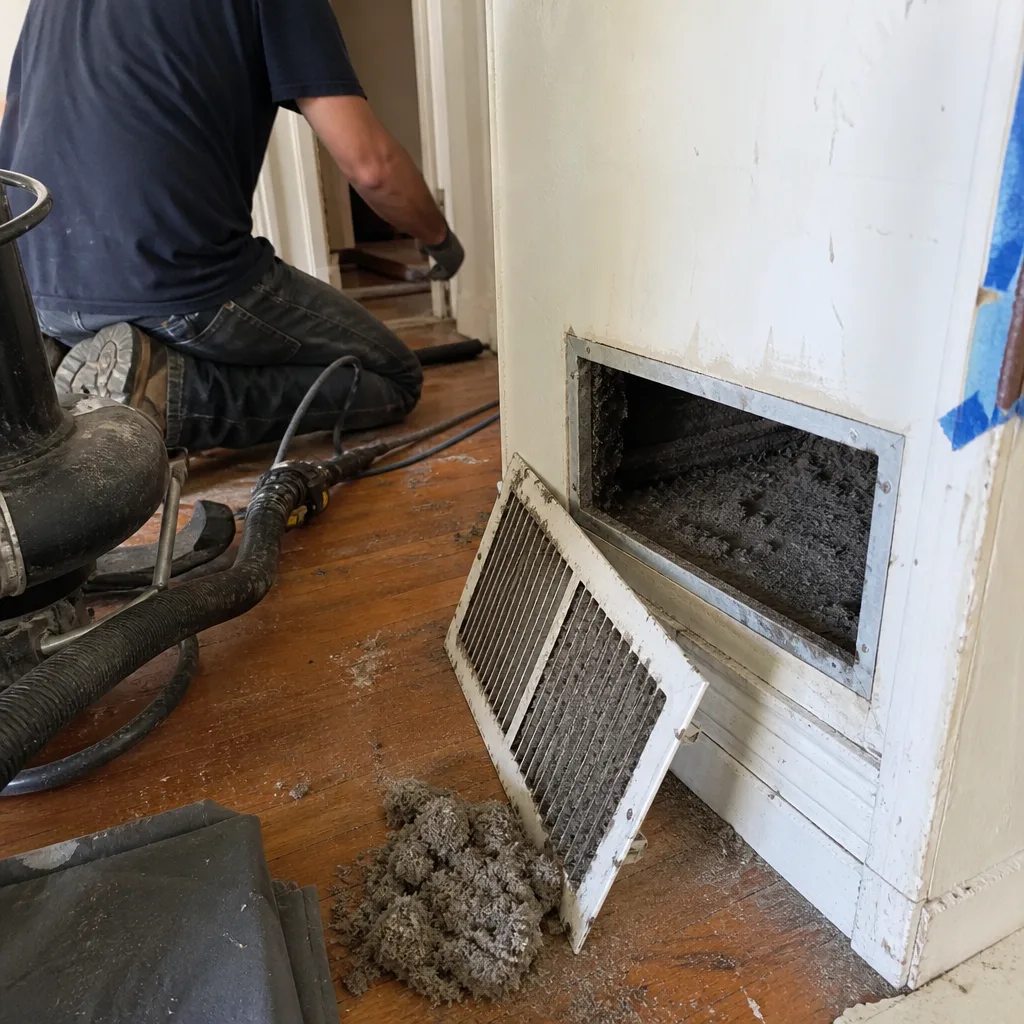 Before
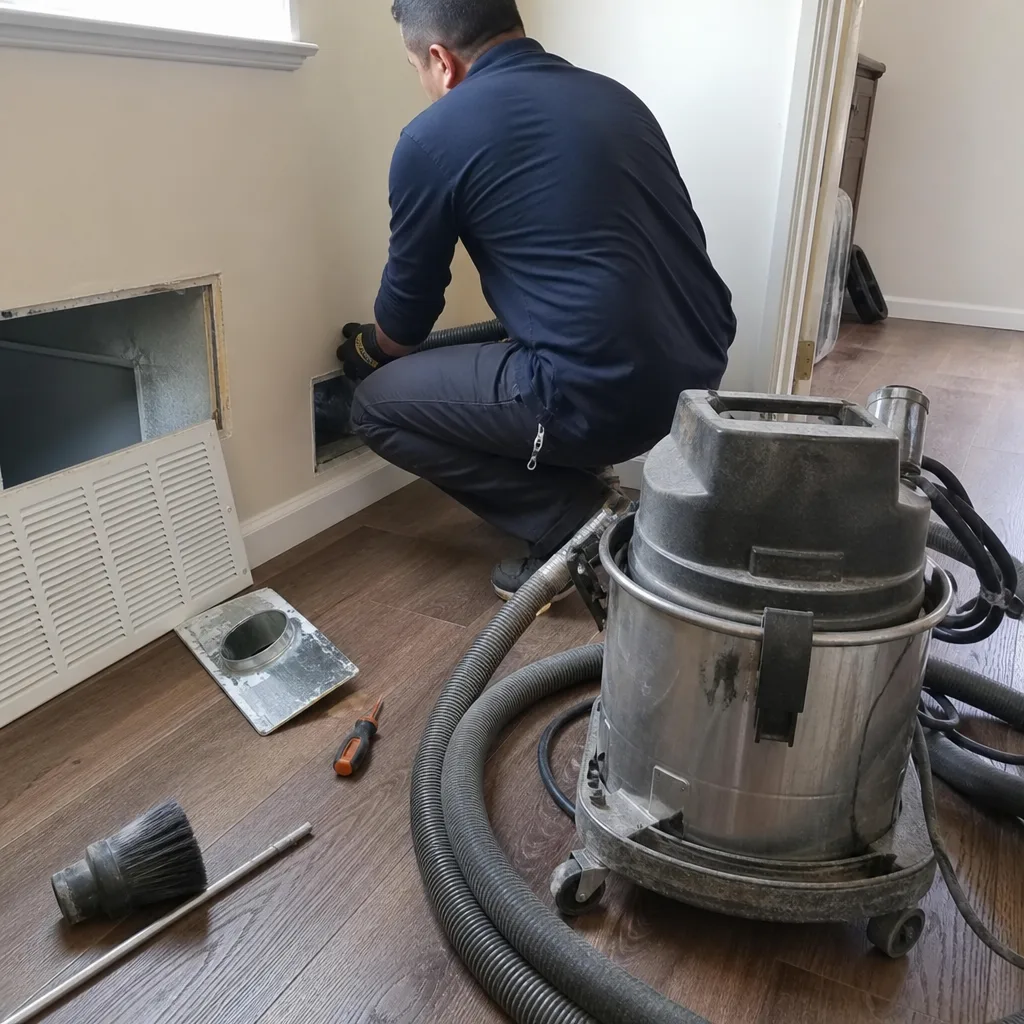 After
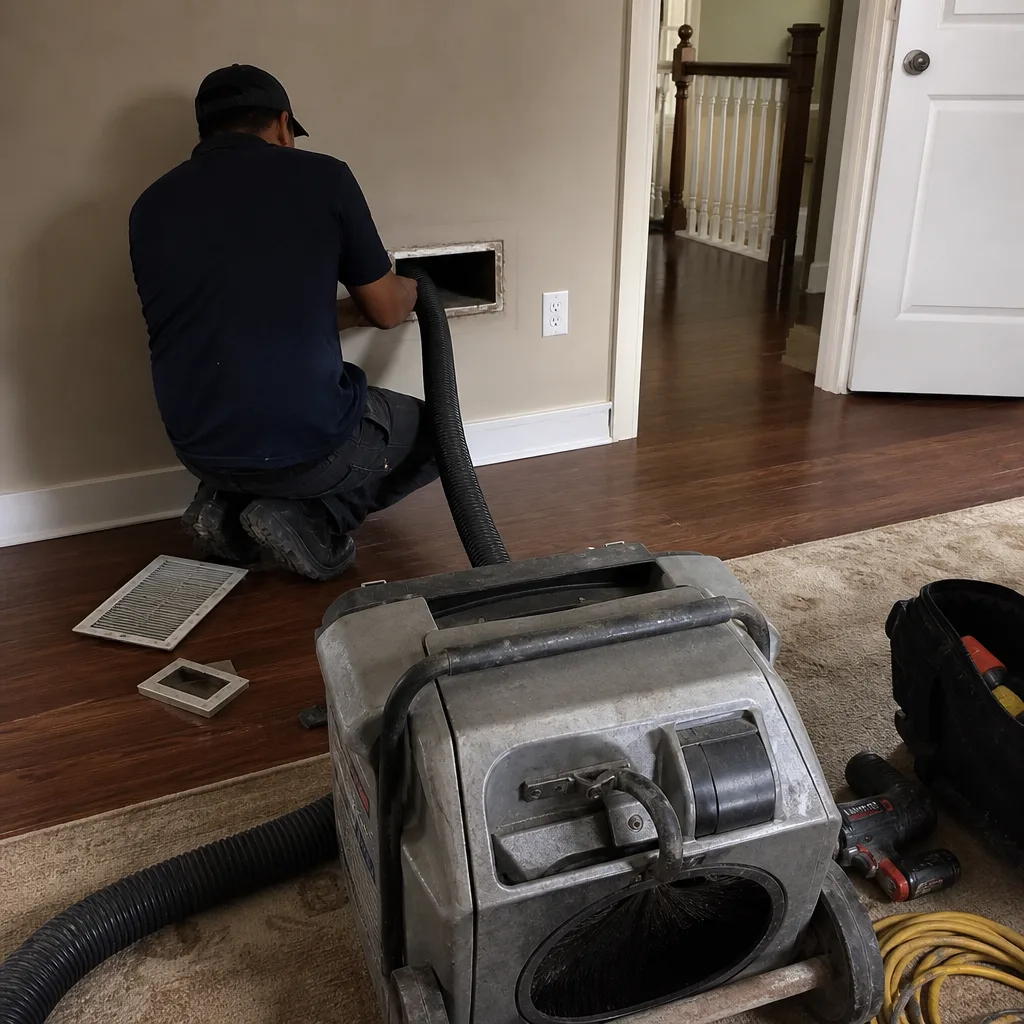 Before
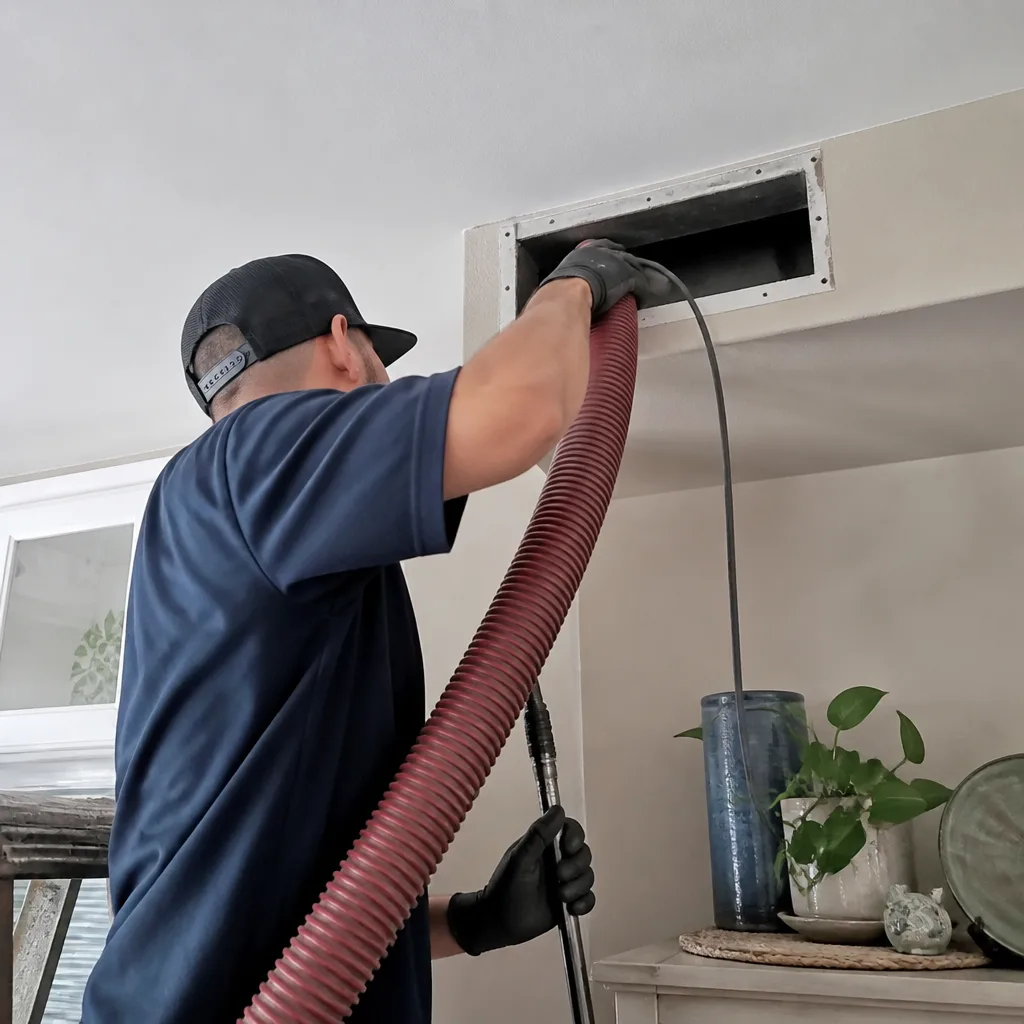 After
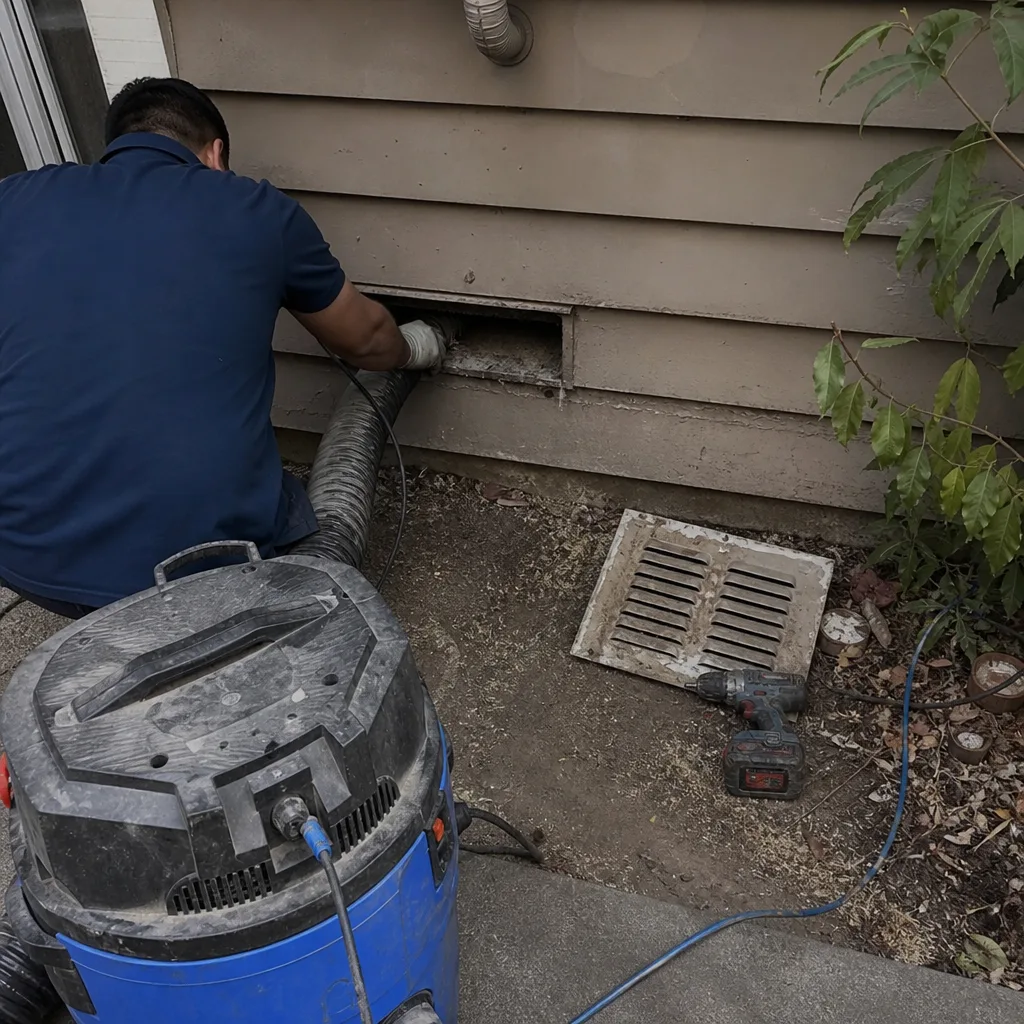 Before
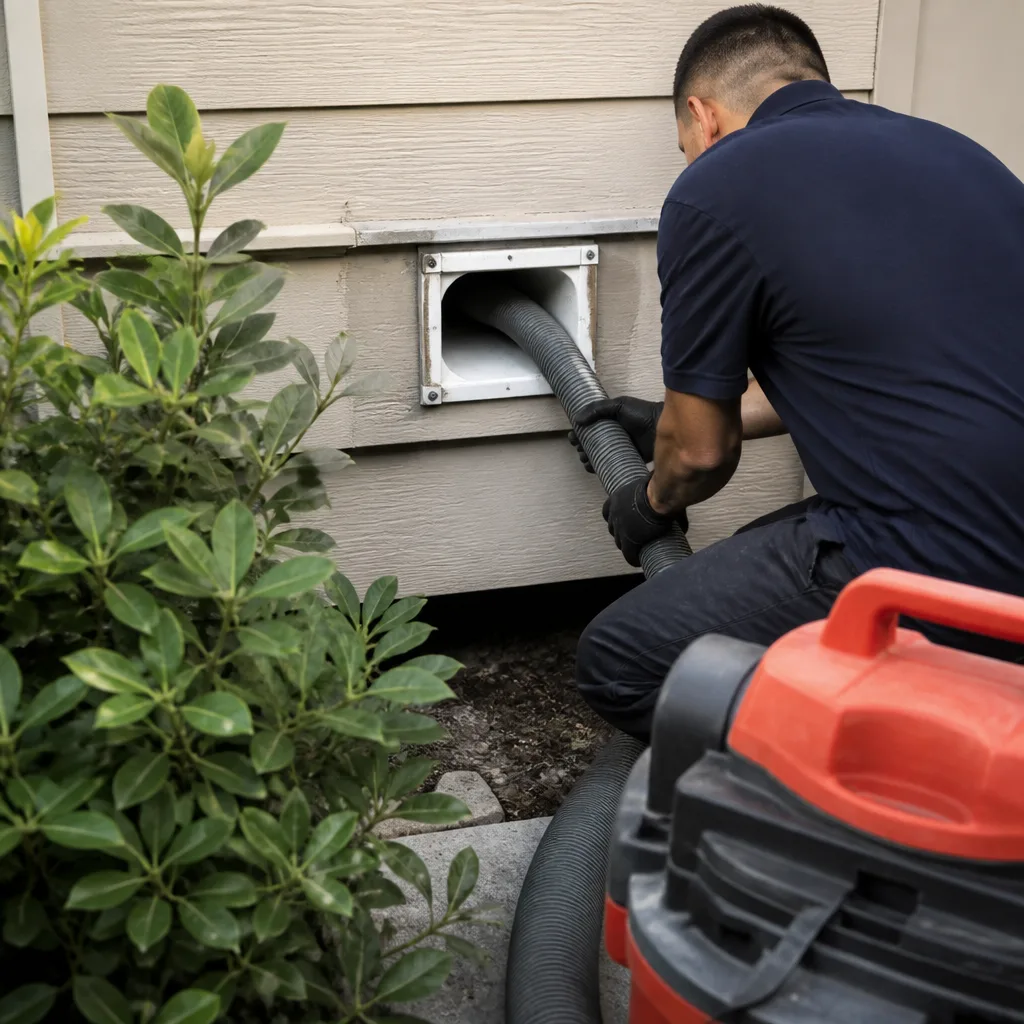 After
When to Call a Professional
Call a professional if you’ve never had your ducts cleaned in the home’s lifetime, if you see visible dust at registers even after cleaning the room, if someone in the home has persistent allergy symptoms that improve when they leave the house, if you know the home had a rodent or pest problem in the attic or crawlspace, or if you’re buying a pre-1980 home in Palo Alto and want the ducts inspected before moving in. Those are all legitimate, specific triggers for professional duct cleaning, not marketing prompts. Air Duct Cleaning Palo Alto offers free estimates in Palo Alto – call (833) 620-7085 to book an inspection and get an honest, scoped quote for your specific system.
Frequently Asked Questions
Most Palo Alto homeowners pay between $500 and $800 for a full-system duct cleaning on a standard 2,000 sq ft home in 2026, using professional-grade equipment with HEPA negative-air containment. Smaller homes can run $350 to $500, while larger or older homes with retrofit ductwork can exceed $1,200. The price reflects the equipment class and labor time, not arbitrary markup. Call (833) 620-7085 for an exact quote on your specific system.
Cheaper quotes almost always reflect different equipment and a different scope of work, not a more generous company. A portable vacuum-and-brush rig can’t agitate compacted material from aging duct walls or maintain negative pressure on the full system, so the job takes 90 minutes instead of 4 to 6 hours. The price difference is the difference between a partial clean and a full one. Ask any contractor what equipment they use and how long the job will take before you compare prices.
Every 3 to 5 years is the honest interval for most Palo Alto homes, with the shorter end for households with pets that shed heavily, residents with allergy or respiratory conditions, or homes that underwent significant renovation since the last cleaning. Check our Air Duct Cleaning Maintenance Checklist for Palo Alto Homeowners for a full schedule. Homes where someone smokes indoors, or where there’s been a pest issue in the attic or crawlspace, may need more frequent attention. The 3 to 5 year window isn’t a marketing invention, it reflects how quickly particulate re-accumulates in real-world conditions.
Yes, because your air filter protects the HVAC equipment, not the ductwork itself. The filter sits at the return air intake and catches particulate before it reaches the blower and coil. It doesn’t clean the ducts downstream of the filter, and it doesn’t address what’s already inside the duct runs. Regular filter changes reduce the rate of new accumulation, but they don’t remove existing buildup. If your Palo Alto home has 10 years of accumulated material on the duct walls, a new filter doesn’t change that.
Possibly, if the work requires replacing duct sections or aggressively disturbing materials that may contain asbestos. California regulations require screening and potentially abatement before disturbing asbestos-containing materials in pre-1980 construction. The inspection step at the beginning of the job will identify whether this applies to your home. Most cleanings on pre-1980 homes proceed normally, but the screening cost is legitimate when it’s required, and any company that tells you to skip it is giving you bad advice. Call (833) 620-7085 to have us assess your specific home.
You should receive before-and-after photos taken from inside the ductwork, through the access ports, showing the duct wall surface before and after cleaning. If a company can’t or won’t provide photographic verification from inside the ducts, they’ve given themselves no accountability for the work. We provide those photos on every job because the visual record is the only honest verification method. Ask about verification before you book, not after the van leaves.
The Bottom Line
Air duct cleaning in Palo Alto in 2026 realistically costs between $450 and $1,200 for most homes, and the gap between a cheap quote and a real one comes down to equipment class, labor time, and verification. A 2,000 sq ft home with 14 supply runs is a 4 to 6 hour job with professional equipment like Rotobrush contact-cleaning systems and Nikro HEPA negative-air machines. A 90-minute job with a portable vacuum is a different service entirely, priced accordingly. The right way to compare quotes is to ask about equipment, scope, access points, labor time, and verification. If the company can answer those questions clearly, you’re comparing real work. If they can’t, you have your answer. For a free, scoped estimate on your Palo Alto home, call (833) 620-7085.
Written by the team at Air Duct Cleaning Palo Alto, serving Palo Alto since 2016.