
Last updated November 2, 2026
Whole-system duct and dryer vent check with before-and-after photos - you see exactly what came out of your vents
That "$99 whole-house special" is a bait ad - the real number appears once they are in your hallway, or the "clean" is a shop-vac at the register. We photograph the inside of your ducts before and after instead.
Air Duct Cleaning Permits, Codes & Inspections in CA: What You Need to Know
Most homeowners in Palo Alto assume duct cleaning is a regulated construction activity requiring city permits. It isn’t. But here’s the counterintuitive part: the conditions that trigger professional duct cleaning – mold growth, asbestos-containing insulation in pre-1980 homes, post-wildfire particulate contamination – often do pull in permits, licensing thresholds, and written protocols. The service itself sits outside the permit system. The context around it doesn’t. In this guide and our Air Duct Cleaning Warning Signs: A Palo Alto Homeowner’s Reference Guide, we’ll walk through California’s actual regulatory framework so you know exactly when a routine cleaning is routine, and when it becomes something the state treats as abatement, remediation, or construction. Palo Alto homes carry specific age and climate risks that make this distinction more than academic.
Quick Answer
Air Duct Cleaning itself requires no permit in California and is not a licensed trade. However, if the ducts contain asbestos-containing insulation, visible mold growth, or contamination from fire or flood, California Code of Regulations Title 8 and CDPH guidelines may require a licensed abatement contractor, a written remediation protocol, and potentially a building permit before any cleaning work begins. In Palo Alto, homes built before 1980 are the highest-risk category for asbestos in duct insulation.
Styles & brands we work with
- Whole-home duct cleaning
- Dryer vent cleaning
- Camera inspection
- Sanitizing & deodorizing
Table of Contents
- Does Air Duct Cleaning Require a Permit in California?
- Asbestos in Duct Insulation: The Pre-1980 Palo Alto Problem
- Mold in HVAC Systems: When CDPH Guidelines Trigger a Protocol
- Duct Cleaning vs. Duct Repair vs. Duct Replacement: The Permit Line
- Contractor Licensing: When Cleaning Becomes Abatement
- Santa Clara County and Post-Wildfire Indoor Air Quality Oversight
- How to Get a Pre-Cleaning Materials Assessment
- Common Mistakes to Avoid
- When to Call a Professional
- Frequently Asked Questions
Does Air Duct Cleaning Require a Permit in California?
No. Air duct cleaning is not a construction activity, not an alteration, and not an installation. The California Building Standards Code (Title 24) governs work that changes, extends, or repairs building systems. Cleaning removes accumulated debris from existing ducts without modifying the system. A vacuum and agitation brush don’t trigger a permit because they don’t touch structural elements, electrical connections, or system design.
This surprises many Palo Alto homeowners who assume anything involving HVAC requires city sign-off. In practice, a routine Air Duct Cleaning in Palo Alto job is treated by the City of Palo Alto’s building department the same way as carpet cleaning or window washing. No permit, no inspection, no final sign-off.
But here’s where the nuance lives. If the cleaning uncovers problems that do require modification – a crushed section of duct, a disconnected run, a rusted plenum – the repair may require a building permit. The cleaning doesn’t. The distinction is the work performed, not the reason the contractor showed up. A technician who cleans your ducts and leaves is unpermitted and legal. A technician who replaces a section of damaged ductwork without a permit is operating outside Title 24 compliance.
For most homeowners, the practical takeaway is simple: routine cleaning, no permit. Any modification to the duct system, permit consideration required.
Asbestos in Duct Insulation: The Pre-1980 Palo Alto Problem
Here’s the risk most guides skip. California Code of Regulations Title 8, Section 1529 governs asbestos in construction materials. Duct insulation, particularly tape-wrap styles common in homes built before the 1980s, sometimes contains asbestos. In Palo Alto, a substantial portion of the housing stock in neighborhoods like Midtown, College Terrace, and Old Palo Alto predates 1980. Those homes carry a statistically higher probability of asbestos-containing duct wrap.
When is this a problem? Asbestos is dangerous when disturbed. A routine cleaning that agitates insulation releases fibers into the air stream. If testing confirms asbestos, that cleaning job is no longer a cleaning. Under Title 8, it becomes asbestos abatement, which requires:
- A Cal/OSHA-registered asbestos abatement contractor
- A written abatement plan
- Containment and negative air pressure protocols
- Worker certification and medical surveillance
- Waste handling and disposal manifests
- Post-abatement air clearance testing
The cost difference is significant. A standard residential duct cleaning in Palo Alto might run $450 to $1,200 depending on system size. Asbestos abatement of the same system can exceed $5,000 because of the regulatory overhead. The reason to test before cleaning is not bureaucratic. It’s financial and medical.
Our approach in Palo Alto homes built before 1980 starts with a visual inspection of duct insulation materials. If the wrap is friable, damaged, or suspect, we recommend bulk sample testing before any agitation begins. A certified lab runs polarized light microscopy (PLM) analysis on a small sample. Results typically return within 48 to 72 hours. The testing cost – usually $150 to $400 – is trivial compared to the cost of disturbed asbestos.
This is the single most important regulatory distinction Palo Alto homeowners need to understand. The cleaning is legal. The disturbance of unidentified asbestos is not, and it’s not reversible.
Mold in HVAC Systems: When CDPH Guidelines Trigger a Protocol
The California Department of Public Health (CDPH) does not require permits for mold cleanup. What it provides is a set of guidance documents – most notably the CDPH Statement on Indoor Mold and the 2010 Mold in Indoor Workplaces guidance – that establish when mold remediation crosses from routine maintenance into protected work.
For duct cleaning, the relevant threshold is the extent of visible mold growth. CDPH guidance aligns with EPA and industry standards: mold growth covering less than 10 square feet inside ductwork can typically be addressed as part of a cleaning service. Growth exceeding that threshold, or mold associated with water damage to building materials, triggers a different expectation: a written remediation protocol prepared by a qualified professional.
That protocol should address:
- Source identification – where the moisture is coming from and why
- Containment plan – preventing spore migration during disturbance
- Cleaning methodology – including use of HEPA-filtered negative air machines like the Nikro units we run on Palo Alto jobs
- Post-remediation verification – visual inspection and, when warranted, air sampling
Palo Alto’s climate matters here. The marine layer and cool evenings create condensation conditions in crawl spaces and uninsulated duct runs. Homes near the Bay – from the Eichler tracts of Greenmeadow to the ranchers of Duveneck/St. Francis – experience humidity-related duct sweating that repeatedly produces mold. A cleaning that removes visible growth without addressing the condensation source is a temporary fix. CDPH guidelines don’t mandate a permit for mold, but they do establish a standard of care. If a contractor ignores that standard, and a resident later develops respiratory illness, the liability exposure is significant.
Our equipment selection reflects this. We use Abatement Technologies and Nikro negative-air containment during mold-suspect cleanings because the protocol standard CDPH articulates – containing airborne spores rather than dispersing them – is the same standard used in professional remediation. A shop-vac approach not only falls short of that standard; it can actively worsen the problem by aerosolizing spores into living spaces.
Duct Cleaning vs. Duct Repair vs. Duct Replacement: The Permit Line
The cleanest way to understand California’s permit logic is to separate the three activities that often get lumped together.
Duct Cleaning: No Permit
Removing debris, dust, and microbial growth from existing ductwork without structural modification. No city permit. No state license requirement. This is the service a homeowner can legally hire any competent contractor to perform.
Duct Repair: Permit Often Required
Repairing a disconnected joint, patching a hole, replacing a damaged section, or reconnecting a fallen run. Under the California Residential Code (which Palo Alto adopts and enforces), duct modification is mechanical work. Depending on jurisdiction interpretation and the scope of repair, this can require a mechanical permit from the City of Palo Alto. Minor patch jobs are gray-zone. Anything involving section replacement or duct reconfiguration trends toward permitted work. If you’re dealing with damaged ducts and want an Air Duct Repair in Palo Alto contractor who coordinates permits when they’re needed, you want someone who understands the line rather than someone who pretends it doesn’t exist.
Duct Replacement or Installation: Permit Required
Full duct system replacement or new duct installation is unambiguously permitted work under Title 24. It requires mechanical permit application, plan review in some cases, and a final inspection. Title 24 energy compliance requirements (the California Energy Code) also apply to duct insulation and leakage standards on replacement work. The City of Palo Alto requires HERS testing for duct systems in many replacement scenarios – a blower-door and duct-leakage verification that confirms the system meets California’s energy standards.
The homeowner’s takeaway: cleaning touches nothing. Repair touches something. Replacement rebuilds it. The permit line follows the touch.
Contractor Licensing: When Cleaning Becomes Abatement
California’s Contractors State License Board (CSLB) issues licenses by classification. Duct cleaning does not have a dedicated classification because it’s not a licensed trade. A business cleaning ducts as routine maintenance needs no CSLB license at all.
But the moment the work shifts to abatement – asbestos, lead, or fungal remediation above the threshold – the licensing picture changes. Asbestos abatement contractors must be registered with Cal/OSHA’s Asbestos Contractor Registration Unit. Mold remediation contractors typically hold CSLB specialty licenses (often C-22 Asbestos Abatement or D-64 Non-Specialized, depending on scope). The licensing isn’t optional once the nature of the work crosses the line.
Here’s the practical failure mode we see in Palo Alto. A homeowner suspects mold in the ducts. They call a cleaning company. The company quotes a price and shows up. Mid-job, the technician discovers growth consistent with remediation-level scope. The company either ignores it and cleans anyway (leaving contamination behind) or stops work and tells the homeowner to call a remediation firm.
For a homeowner, that’s the worst-case scenario: two contractors, two mobilizations, and a remediation protocol written for a system that’s already half-disturbed. A competent duct cleaning contractor in Palo Alto should identify this risk before work begins, not after. Our process uses the inspection stage to rule out abatement triggers. If we see evidence consistent with asbestos-containing insulation or extensive fungal growth, we stop and recommend testing before we touch the system. That’s not loss of business. It’s the correct regulatory sequence.
Santa Clara County and Post-Wildfire Indoor Air Quality Oversight
Palo Alto sits in Santa Clara County, which means the county’s Department of Environmental Health has jurisdiction over certain indoor air quality matters. Routine duct cleaning falls outside their purview. Post-wildfire indoor air quality work does not.
After the 2020 CZU Lightning Complex fires and subsequent Bay Area wildfire smoke events, Santa Clara County issued guidance for homes affected by smoke intrusion. What homeowners frequently misunderstand is that wildfire particulate – fine ash, char, and combustion byproducts – doesn’t behave like household dust. It’s fine enough to bypass standard HVAC filters, acidic enough to corrode duct surfaces, and persistent enough to off-gas volatile organic compounds for weeks after the smoke clears.
When does this trigger regulatory oversight? In most cases, it doesn’t – county environmental health is not performing inspections of wildfire-affected homes outside declared disaster zones. But in homes that qualify for FEMA or CalOES disaster assistance, or in multi-family buildings with landlord-tenant disputes over habitability, the documentation requirements shift. A landlord in Palo Alto with tenants suffering post-wildfire respiratory symptoms may need to demonstrate that HVAC cleaning followed recognized protocols. Our Nikro HEPA negative-air machines and Abatement Technologies containment processes exist specifically for this scenario: the ability to document that particulate was captured, not redistributed.
The practical question for Palo Alto homeowners is simple. If your ducts are dirty from household dust and pet dander, you’re in routine cleaning territory. If your ducts are dirty from wildfire smoke infiltration, you’re in a contaminated-particle scenario that deserves containment-grade equipment and documentation of the cleaning process.
How to Get a Pre-Cleaning Materials Assessment
Before any duct cleaning in a Palo Alto home built before 1980, a materials assessment is cheap insurance. Here’s the sequence:
- Visual inspection of duct insulation. A contractor examines accessible duct runs – typically in the attic, crawl space, or basement. Look for fibrous tape wrap, corrugated paper wrap, or any material that appears friable or degrading.
- Bulk sample collection. If suspect material is identified, a small sample is collected and sent to a certified asbestos laboratory. PLM analysis determines asbestos content.
- Interpretation. If the sample is negative, cleaning proceeds. If positive, the homeowner has a regulatory decision: abate, encapsulate, or leave undisturbed.
- Protocol development (if needed). For positive asbestos or remediation-level mold, a written protocol is developed specifying containment, work practices, and clearance testing.
Who can collect the sample? In California, bulk sampling for homeowner decision-making can be performed by a homeowner, a contractor, or a certified asbestos consultant. The critical requirement is that the analysis be performed by a certified lab, not the contractor’s own visual judgment. A contractor who tells you insulation “looks fine” without testing is giving you an opinion, not a result.
In our Palo Alto work, we recommend testing whenever duct insulation is fibrous, deteriorating, or from an era of construction that used asbestos-containing building materials. The cost of a bulk sample is the cheapest regulatory compliance you’ll ever buy.
Common Mistakes to Avoid
- Assuming a permit is required for routine duct cleaning. It isn’t, and contractors who quote permit fees for a standard cleaning are padding the invoice. Permits apply to modifications, not maintenance.
- Cleaning ducts in a pre-1980 Palo Alto home without testing insulation first. Disturbed asbestos is a Title 8 violation, not just a bad idea. Testing costs a fraction of the abatement bill the homeowner can trigger by skipping it.
- Treating mold in ducts as a surface-cleaning issue. CDPH guidelines and industry standards treat fungal growth above 10 square feet as remediation, not cleaning. The standard of care applies whether or not a permit is filed.
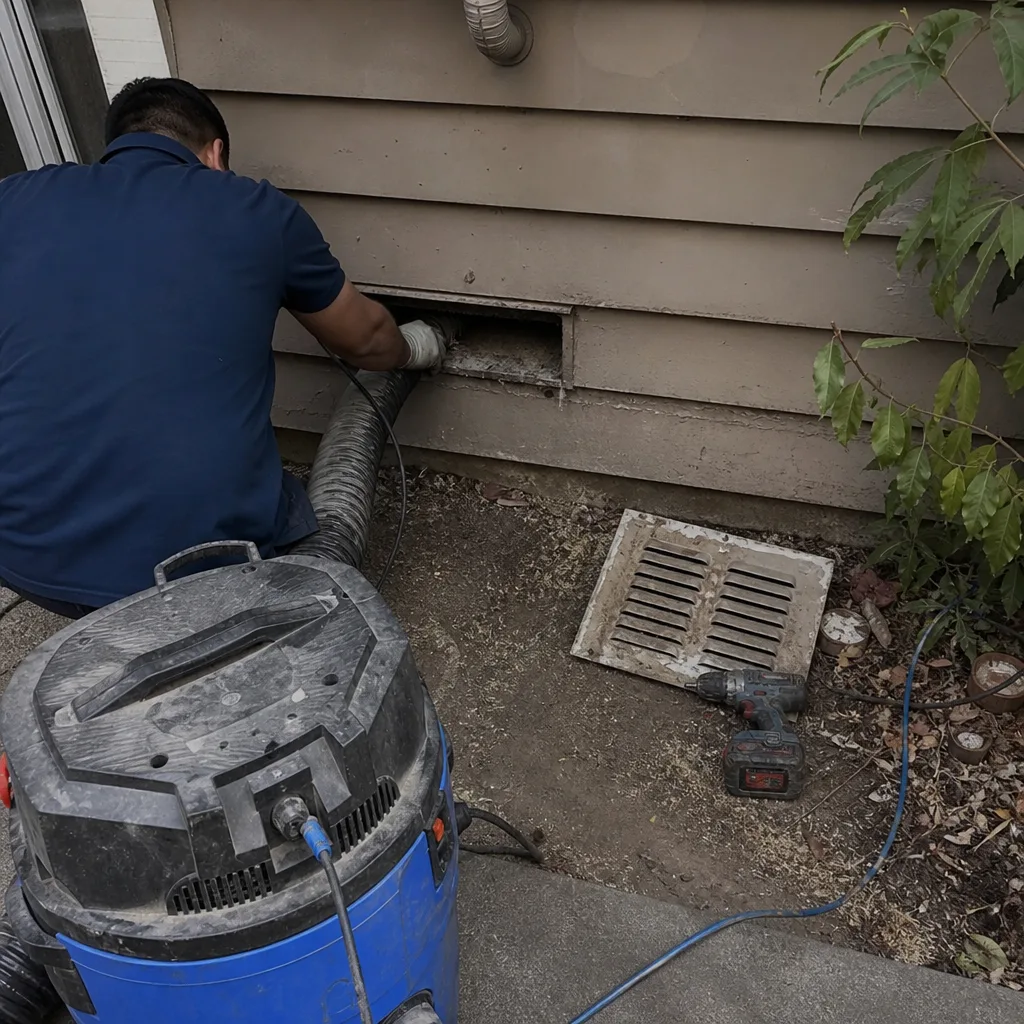
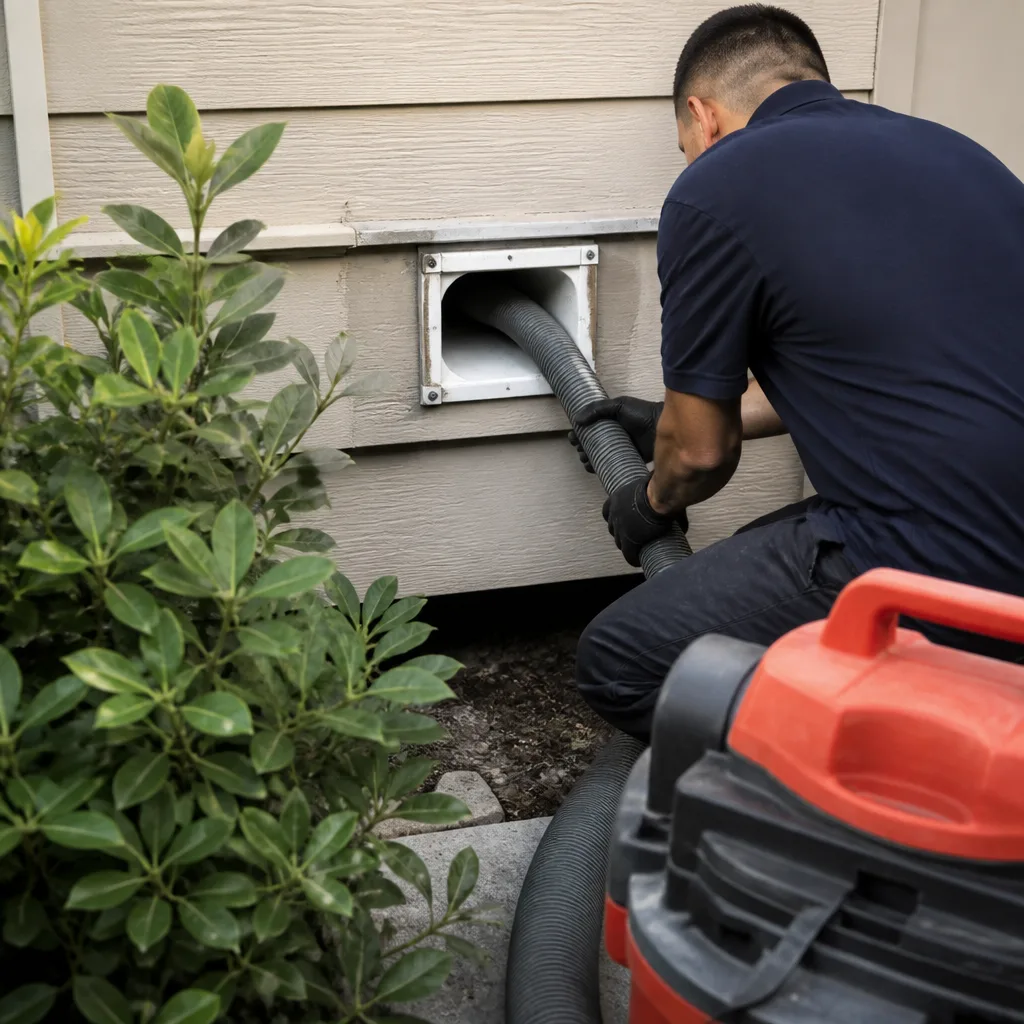
- Using a shop-vac contractor for contaminated systems. Portable consumer vacuum units without HEPA filtration aerosolize whatever they collect. For wildfire particulate or mold spores, that’s actively harmful. Professional-grade containment equipment – the Nikro negative-air class – is the difference between removal and redistribution.
- Confusing duct cleaning with duct repair. A cleaning contract does not authorize a contractor to modify or replace ductwork. If damage is found, the repair is separate work, potentially permitted work. Contractors who fold repairs into a cleaning visit without discussing the permit question are operating outside Title 24.
- Ignoring the source of contamination. Cleaning ducts attached to a moisture problem or a pest intrusion is a temporary fix. The root cause has to be addressed, or the problem returns in months, not years.
- Basing hiring decisions on price alone. The gap between a $99 whole-house special and a $600 professional cleaning in Palo Alto is equipment, containment, and documentation. When asbestos or mold is involved, the gap is liability exposure.
When to Call a Professional
You’ll want professional involvement, not just a cleaning appointment, when any of these apply: your Palo Alto home predates 1980 and has original duct insulation you can’t identify; anyone in the household has persistent respiratory symptoms that worsen at home; you see visible mold growth in or around supply registers; you’ve had a water event in the attic or crawl space that soaked ductwork; or you can smell stale, musty air that doesn’t resolve after filter changes. Air Duct Cleaning Palo Alto home inspections include a pre-cleaning assessment, and we’ll tell you honestly if you need testing, a written protocol, or a licensed abatement contractor before cleaning can proceed. For a free estimate in Palo Alto, call (833) 620-7085. If it’s a dryer vent concern, we also provide Dryer Vent Cleaning in Palo Alto as a fire-prevention service, which carries its own codes around clearance to combustibles and vent termination.
Frequently Asked Questions
No. Routine air duct cleaning requires no city permit in Palo Alto or anywhere in California. Duct modification, repair, or replacement may require a mechanical permit from the City of Palo Alto, but cleaning alone does not. Call (833) 620-7085 if you’re unsure which category your job falls into.
Whole-system residential duct cleaning in Palo Alto typically runs $450 to $1,200 depending on system size, number of returns, and accessibility. Homes with asbestos-suspect insulation that require testing add $150 to $400, and remediation-level mold work is priced separately by scope. Free estimates are available at (833) 620-7085.
Because cheaper contractors use consumer-grade vacuum units without HEPA containment, skip pre-cleaning assessment, and don’t address contamination sources. The result is dust redistribution, not removal. Our process uses Rotobrush contact-cleaning and Nikro HEPA negative-air equipment – the same containment class used in professional abatement work.
Ask for before-and-after photos of your own ductwork. We photograph supply registers, return plenums, and the collector unit during service, so you’re not taking anyone’s word for what happened inside your system. A legitimate contractor shows the evidence. Call (833) 620-7085 to schedule.
Every 3 to 5 years for most Palo Alto households, and more often if you have pets, recent construction, wildfire smoke exposure, or allergy-prone residents. Ducts that are correctly sealed and filtered may go longer. The honest answer depends on what’s actually inside your ducts – which a visual inspection can tell you quickly.
Not as a permitted activity, but the California Fire Code and local adoption in Palo Alto impose requirements on dryer exhaust systems: proper termination, rigid metal ducting, and clearance to combustibles. A Dryer Vent Cleaning in Palo Alto service that removes accumulated lint is a fire-code-aligned maintenance practice, not a permit-required one.
The Bottom Line
Air duct cleaning in California is a permit-free, license-free maintenance service – until it isn’t. The line is drawn not by the act of cleaning but by what the cleaning disturbs. Asbestos-containing insulation in pre-1980 Palo Alto homes, mold growth above CDPH’s remediation threshold, and post-wildfire particulate contamination each pull the work into a regulatory framework that involves testing, protocols, containment, and potentially licensed abatement contractors. The homeowner who understands this distinction avoids the expensive error of treating a context problem as a routine service. For more guides & resources on protecting your home’s air quality, explore our blog. Test when in doubt, hire equipment-grade contractors who use containment as standard practice, and keep the permit question pointed at the right target: not the cleaning itself, but the modifications and contaminations that surround it.
Written by the team at Air Duct Cleaning Palo Alto, serving Palo Alto since 2016.
See the difference
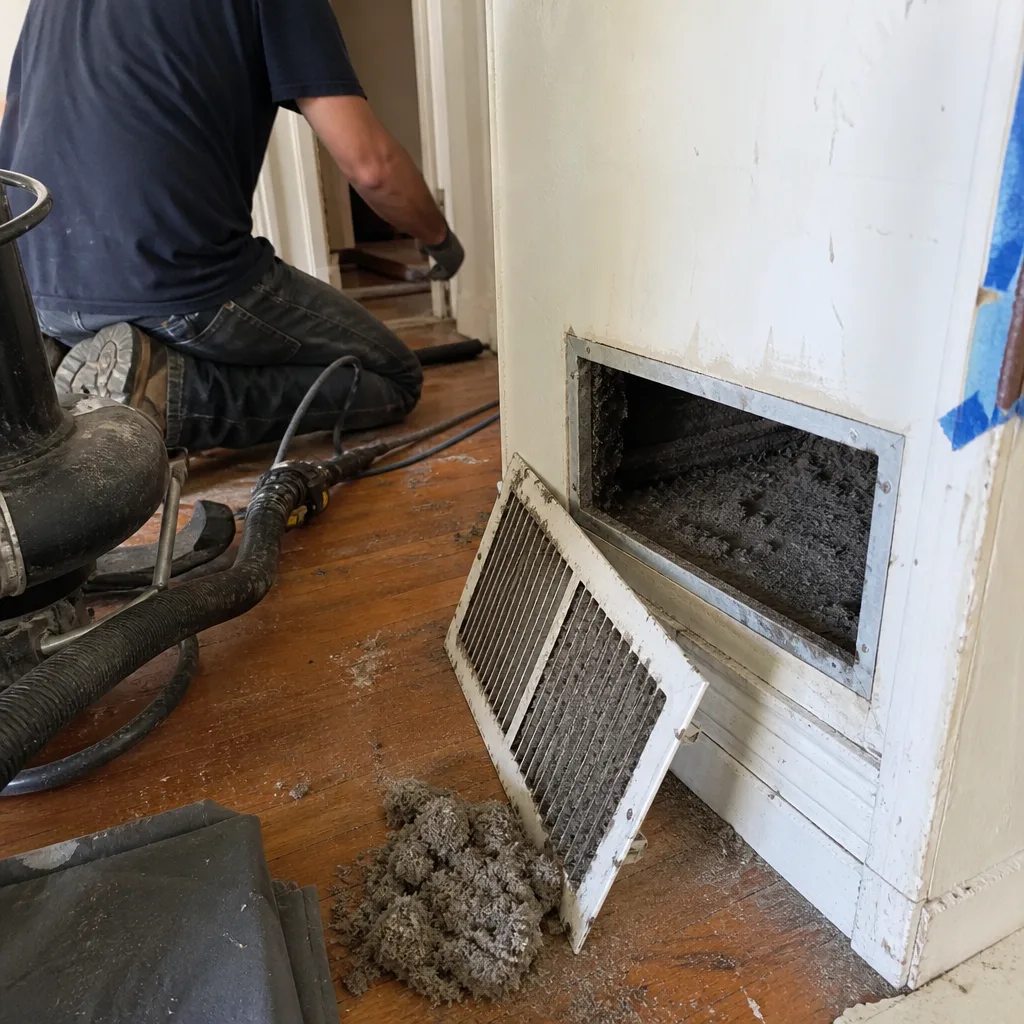 Before
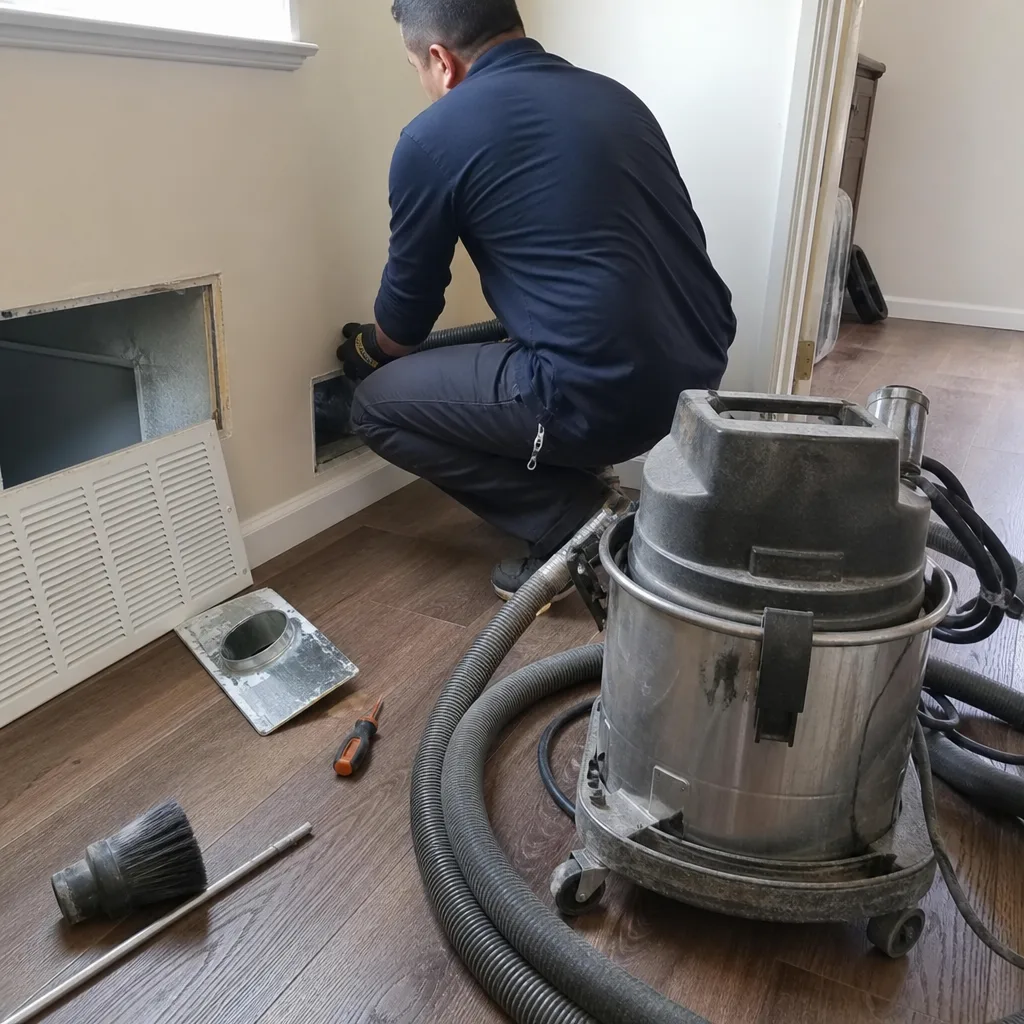 After
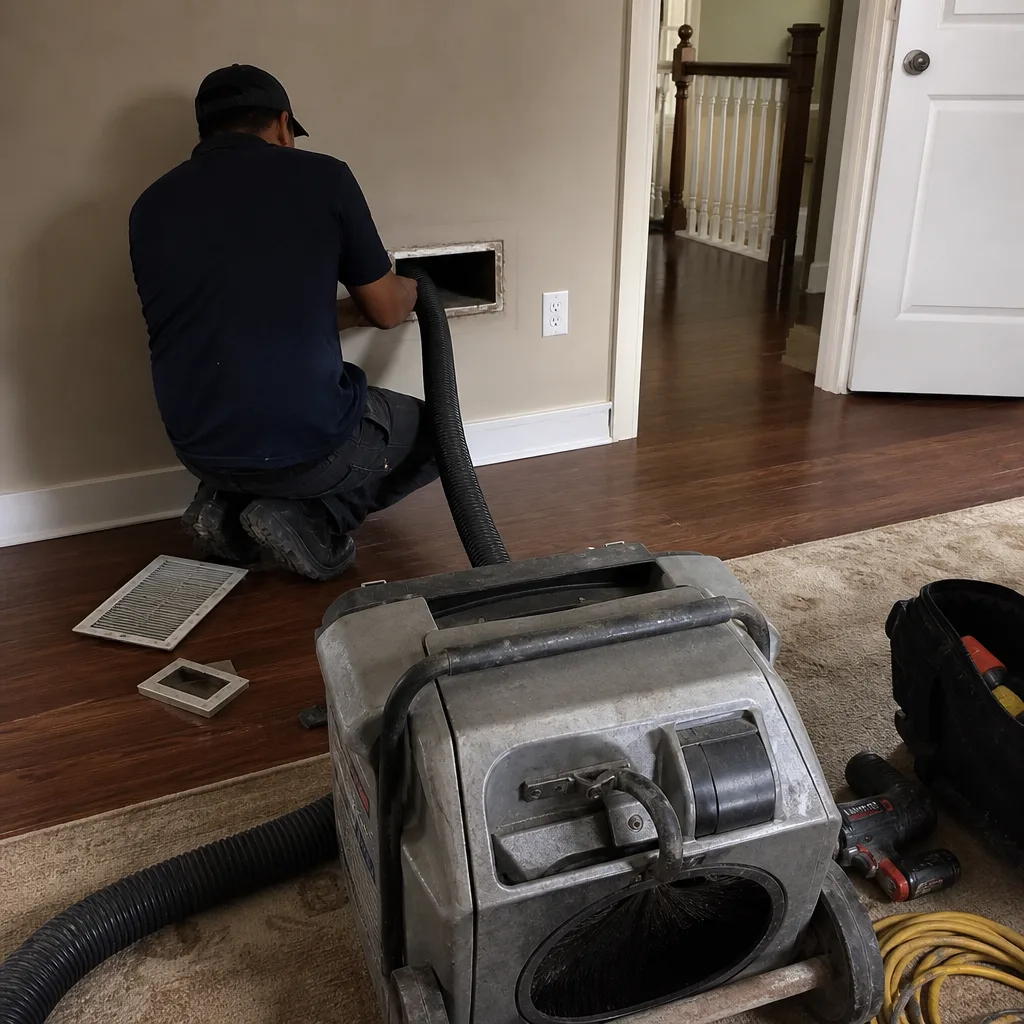 Before
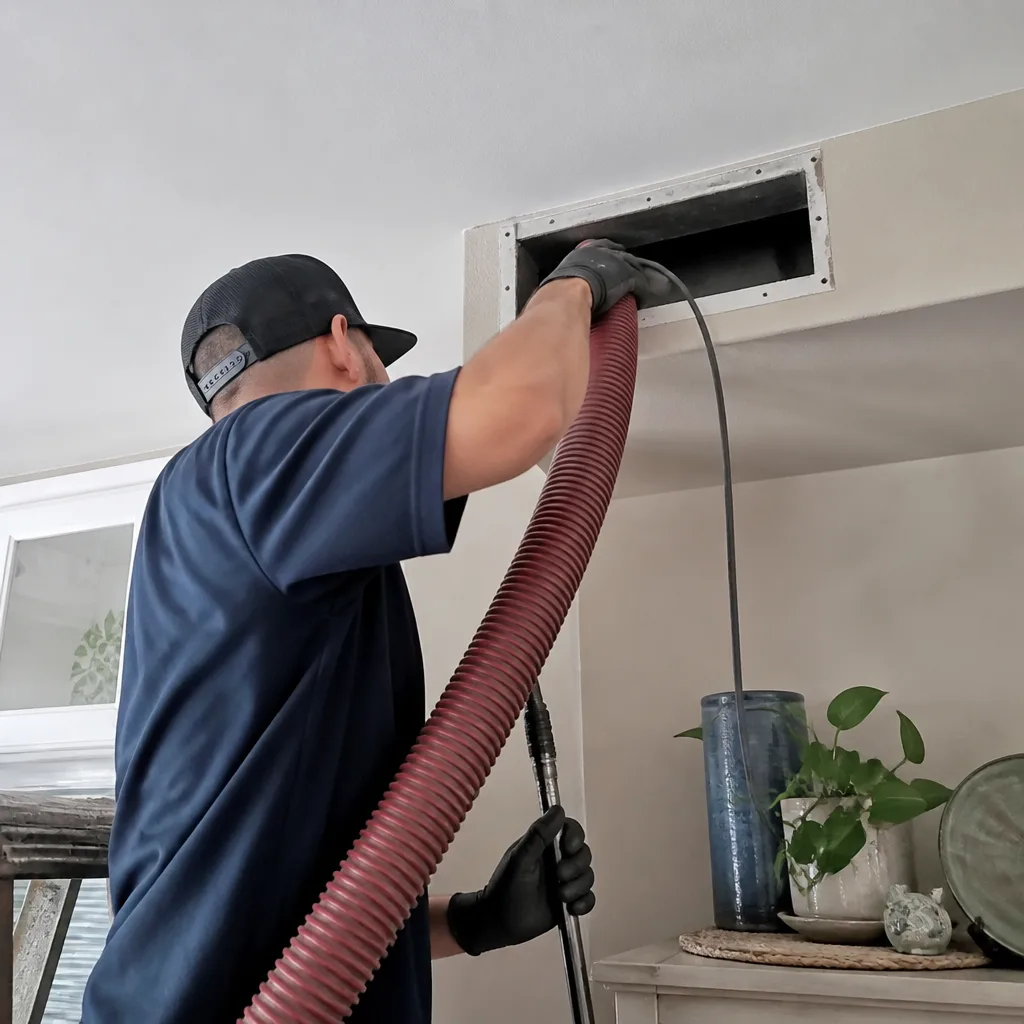 After
 Before
 After