
Last updated November 2, 2026
Whole-system duct and dryer vent check with before-and-after photos - you see exactly what came out of your vents
That "$99 whole-house special" is a bait ad - the real number appears once they are in your hallway, or the "clean" is a shop-vac at the register. We photograph the inside of your ducts before and after instead.
Seasonal Air Duct Cleaning Care for Palo Alto: Year-Round Homeowner’s Guide
We hear it every October: “Time to get the ducts cleaned before winter.” But Palo Alto doesn’t follow a New England calendar. Our worst air quality events typically peak in September and October during wildfire season, which means the standard advice handed down from national home magazines sends homeowners to schedule work at exactly the wrong moment. Cleaning your ducts in early October, before the smoke clears, means you’ll pay for a service and then immediately reintroduce the same particulate load you just paid to remove. This guide replaces the generic four-seasons playbook with a four-phase approach built around what actually happens to the air in Palo Alto, and what your ductwork experiences as a result. For a deeper look at pricing, see our Air Duct Cleaning Cost Breakdown: The Palo Alto Homeowner’s Reference for 2026.
Styles & brands we work with
- Whole-home duct cleaning
- Dryer vent cleaning
- Camera inspection
- Sanitizing & deodorizing
Quick Answer
Seasonal air duct cleaning in Palo Alto should be aligned to the region’s four air-quality phases, not calendar dates. The optimal window for a full cleaning is November through February, after wildfire season ends and before the heating season concentrates indoor particulate. The second-best window is March through May, when a filter and plenum assessment prepares the system for heavy AC use. If you document significant smoke exposure during fire season, a post-season cleaning removes what your filters could not.
Table of Contents
- Phase 1 (November to February): The Post-Smoke-Season Cleaning Window
- Phase 2 (March to May): Pre-Cooling-Season System Check
- Phase 3 (June to September): Mid-Season Monitoring in High-Cycle Homes
- Phase 4 (October): The Decision Point
- How to Use PurpleAir Data to Track What Your Ducts Are Collecting
- When Seasonal Cleaning Reveals Damage: The Repair Conversation
- Filtration Upgrades That Make Seasonal Cleaning More Effective
- Common Mistakes to Avoid
- When to Call a Professional
- Frequently Asked Questions
- The Bottom Line
Phase 1 (November to February): The Post-Smoke-Season Cleaning Window
Palo Alto sits at the receiving end of the Bay Area’s wildfire smoke corridor. When fires burn in the North Bay, East Bay hills, or the Santa Cruz Mountains, the prevailing winds push smoke down the Peninsula and into our homes. Your HVAC filter catches a portion of that particulate, but not all of it. Fine particulate matter, the PM2.5 that PurpleAir sensors track across Palo Alto neighborhoods, measures 2.5 microns or smaller. Most residential filters rated MERV 8 stop around 3 to 10 microns. That gap is where your ducts start loading up.
November through February is the best window for a full air duct cleaning in Palo Alto. The reasoning is straightforward. By November, fire season has typically subsided. The system has spent several months recirculating smoke-laden air through the return plenum, supply trunk lines, and branch runs. Whatever bypassed the filter is now resting inside those channels. When the heater kicks on for the first sustained stretch, that same particulate gets re-entrained into the living space.
In our experience working on homes in Midtown, College Terrace, and the Eichler tracts of Greenmeadow, we see the same pattern every late fall. Homeowners report a faint campfire smell when the furnace first cycles on. They switch to a new filter, which helps for a day or two, and then the smell returns. That smell is not the furnace. It is the ductwork releasing what it collected during September and October.
What should happen during this phase:
- Full duct cleaning using contact-cleaning equipment that physically agitates the interior surfaces. Rotobrush systems, which use rotating brush heads to dislodge compacted debris, are built for this exact scenario. Smoke particulate bonds with the thin film of dust and oils already present in ducts. A vacuum-only approach, the kind most consumer-grade equipment relies on, will not break that bond.
- Negative-air containment during the cleaning process. A Nikro HEPA negative-air machine creates a pressure differential that captures dislodged particulate before it can migrate into the living space. This step matters more after smoke season because you are dealing with carbon-laden particulate, not just household dust.
- Filter housing inspection. Smoke exposure shortens filter life, and we often find filters that were changed in September and are already saturated by November. A loaded filter forces the blower to work harder and pushes more air through gaps around the frame rather than through the media itself.
- Plenum inspection with a camera. The return plenum is where the system pulls air from the home before conditioning it. In Palo Alto homes with aging metal plenums, particularly the 1950s and 60s construction found in Barron Park and South Palo Alto, smoke particulate settles in corners and seams where airflow is low.
One point that is easy to miss: post-smoke cleaning should not be scheduled while smoke is still active. If the AQI in Palo Alto is still fluctuating above 100 during late October, wait. A cleaning performed during active smoke simply means the ducts start re-collecting the moment the system runs again.
Phase 2 (March to May): Pre-Cooling-Season System Check
Palo Alto does not experience the brutal summer heat of the Central Valley, but the shift to air conditioning is real. By late May, most homes are running cooling daily, and once that begins, the system enters its highest-volume season. More air moving through the ducts means more opportunity for any accumulated debris to circulate.
March through May is the time for a lighter intervention: inspection, filter upgrade, and plenum assessment. If you completed a full cleaning in Phase 1, this phase is about preserving that work. If you skipped it, this phase becomes your last practical window before the AC cycle begins.
What we recommend during this phase:
- Replace the filter with a fresh one, and consider a higher MERV rating for the cooling season. A MERV 11 or MERV 13 filter catches more fine particulate than the MERV 8 most Palo Alto homes are equipped with. The tradeoff is increased static pressure, which matters in older systems with undersized returns. We’ll cover that more in Phase 3.
- Inspect the return-side ducting for air leaks. Pulling unconditioned attic air into the return stream means filtering air that never should have entered the system in the first place. In Palo Alto’s climate, that air also carries the pollen load from the spring bloom, particularly from the oaks and eucalyptus that line many Peninsula streets.
- Check the supply registers in the rooms you will use most during the summer. In many Palo Alto homes, the register boxes are original to the house and have never been opened. Dust, pet hair, and construction debris from years of renovations accumulate in the boot and fall back into the room air when the AC runs.
- If anyone in the home has seasonal allergies, this is the window to install a media cabinet or upgrade to a Honeywell or Aprilaire filtration system. These products use deeper media than a standard one-inch filter, allowing for better filtration without the airflow penalty.
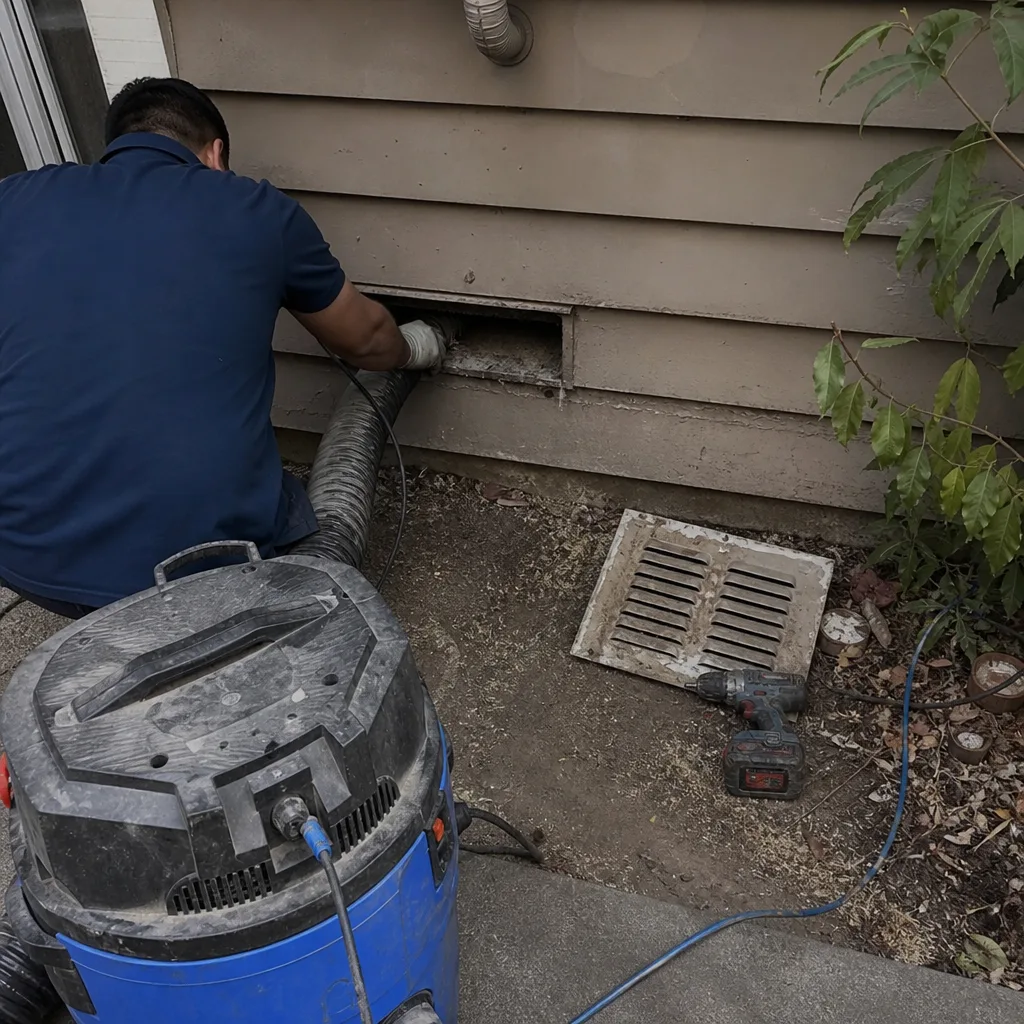
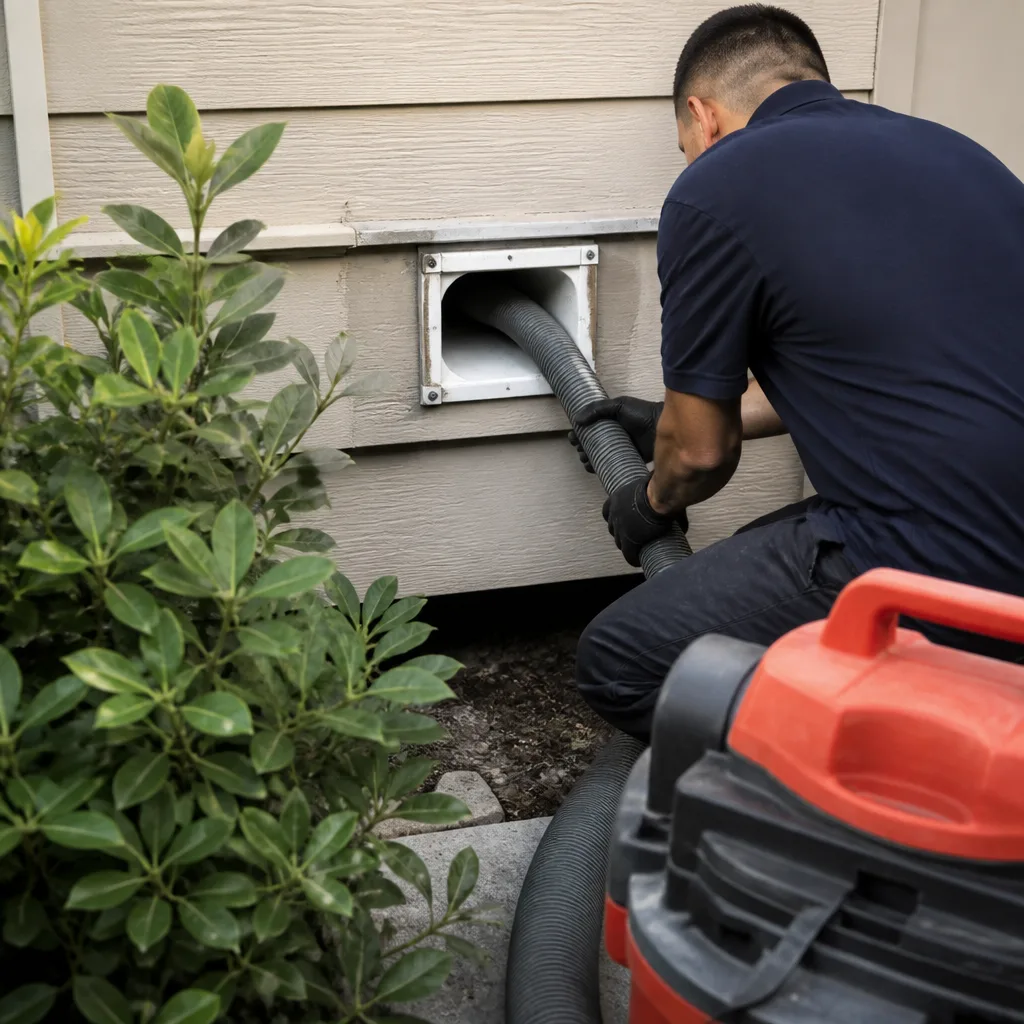
The spring phase is also a good moment for a dryer vent inspection. Palo Alto homes frequently route dryer vents through the crawlspace or roof, and those runs are longer than the wall-vent designs common in other regions. Longer runs mean more opportunity for lint to accumulate at elbows and low points. A dryer vent cleaning in Palo Alto is a fire-prevention service, and scheduling it before the high-use summer laundry season makes practical sense.
Phase 3 (June to September): Mid-Season Monitoring in High-Cycle Homes
This phase is about awareness, not action. During the summer, the system runs at full volume, and the filter is your first line of defense. The decision point in Phase 4 depends on what you observe now.
Palo Alto has a housing stock problem that most homeowners never think about: undersized return systems. Homes built in the 1950s through the 1970s, which make up a large share of the city’s neighborhoods, were designed around heating. Air conditioning was added later, often by connecting a coil to the furnace and using the same ductwork. Those ducts were sized for a gas furnace’s airflow requirements, which are lower than what a modern AC system demands.
The result is a system that runs with higher static pressure. In practical terms, the blower works harder, moves air faster, and captures more debris per week than a properly sized system would. Filters load faster. Duct interiors accumulate material faster. And the system generates more internal heat, which bakes particulate onto the duct surfaces.
What to watch for during Phase 3:
- Filter loading time. If a filter that usually lasts three months is showing visible darkening at six weeks, your return air is carrying a heavier particulate load than the system was designed for. That is not a signal to panic. It is a signal to document and plan for the Phase 4 decision.
- Dust patterns on furniture near supply registers. Fine dark dust settling in streaks below a register suggests that particulate is making it through the ductwork and into the room. In homes with HEPA-level containment standards in mind, this pattern indicates the system is blowing material from inside the duct runs rather than simply filtering room air.
- Musty odor when the system first turns on for the day. In the summer, the coil produces condensate, and that moisture creates an environment where biological growth can occur on accumulated dust inside the air handler. The smell is often strongest in the first minutes of operation before the condensate evaporates.
- Noise changes in the return. A whistling sound or increased blower noise without a corresponding change in thermostat setting suggests a restriction. That restriction is often a saturated filter, but in homes with older returns, it can also be a return plenum that has accumulated so much debris that it cannot pass air properly.
For homeowners in neighborhoods like Professorville and Old Palo Alto, where homes are older and duct systems may include original hard-pipe runs, the mid-season monitoring phase is especially relevant. Those systems were not designed for the volume of air a modern AC unit pushes.
Phase 4 (October): The Decision Point
October is not a cleaning month in Palo Alto. October is a documentation month. This is the mistake that national advice gets wrong for our region, and it is the single most common error we see in scheduling decisions.
By October, you know what your system experienced during the summer and early fall. You have the evidence from your filter changes, your visual observations at the registers, and, most importantly, the public air-quality record. The Bay Area Air Quality Management District and PurpleAir both maintain historical AQI data for Palo Alto neighborhoods, and that data tells a story about what your ducts collected.
Here is the process we recommend for the October decision:
- Pull the AQI history for your zip code from the PurpleAir map or the Bay Area AQMD archive. Count the number of days AQI exceeded 100 during the fire season months of June through October. In a typical Palo Alto year, that number might be 15 to 30 days. In a severe year like 2020, it was far higher.
- Review your filter changes during the same period. If you changed filters more frequently than the manufacturer’s recommendation, document that. If you skipped changes, be honest about it.
- Check the registers in your main living spaces. Run a finger along the inside surface of the register boot, the metal or fiberglass section directly behind the grille. If you pull out a dark, fine dust with a slightly oily feel, you are looking at smoke particulate, not household lint.
- Consider the occupants. Homes with infants, elderly residents, or anyone with respiratory conditions should be more aggressive about post-season cleaning. The health case for removing smoke residue when you have a vulnerable occupant is straightforward.
- If any of the above suggests the system took a meaningful hit during fire season, schedule the Phase 1 cleaning for November or December. If the summer was mild and the filters were maintained, you may be able to skip a year. That is a legitimate outcome, and it is not something most duct cleaning companies will tell you.
The goal of the October decision is not to always clean. The goal is to clean when the evidence says cleaning is warranted. For a homeowner who skipped Phase 1 last year and experienced a heavy smoke season, the answer is almost always yes.
How to Use PurpleAir Data to Track What Your Ducts Are Collecting
PurpleAir maintains a network of citizen-deployed air quality sensors, and Palo Alto has one of the densest coverage maps in the Bay Area. Several sensors operate in neighborhoods across the city, including Downtown, Midtown, and the areas near Foothills Park. The data is publicly available and goes back several years.
Here is how to use it for a duct cleaning decision:
- Go to the PurpleAir map and locate the sensors nearest your Palo Alto neighborhood. Sensors near major roads like El Camino Real will read higher than those in quieter residential pockets, so choose the one closest to your home’s exact location.
- Use the historical data view to pull AQI readings for the summer and fall months. Pay attention to the daily peaks, not the averages. A day that reads AQI 45 at noon but 160 at 7 PM exposed your system to smoke for several hours, and the average will not show it.
- Cross-reference the peaks with your filter replacement schedule. If you changed a filter two weeks after a cluster of high-AQI days and it was visibly blackened, you now know your system was actively collecting that particulate.
- Use the data to decide on urgency. A season with 10 days above AQI 150 is a different situation than a season with 10 days above AQI 80. The first justifies a full cleaning with negative-air containment. The second may be handled with a filter upgrade and plenum inspection.
In our experience, this kind of data-driven approach separates the homeowners who clean when needed from the ones who clean on a schedule someone else invented. It also aligns naturally with the way the professional-grade equipment we use, including Abatement Technologies containment products and Nikro HEPA negative-air machines, is selected for a job. The equipment match depends on what the data says the system experienced.
When Seasonal Cleaning Reveals Damage: The Repair Conversation
A full duct cleaning is also an inspection. The camera work we do before and after a cleaning shows more than dust. It shows torn flex duct, disconnected register boots, crushed sections in crawlspaces, and seams that have separated in hard-pipe runs. In Palo Alto, where much of the housing stock is 50 to 70 years old and has been remodeled repeatedly, these findings are common.
This is where the seasonal model connects to a larger issue. A homeowner who discovers a disconnected return branch during a Phase 1 cleaning cannot solve that problem with more cleaning. The air is bypassing the filter entirely and entering the return through the gap. Cleaning the ducts without addressing the breach means the system starts re-accumulating immediately.
We offer air duct repair in Palo Alto as a standalone service for this exact reason. Many duct cleaning companies will clean what they find and leave the damage alone, because they do not have the capability or the interest in repair work. That leaves the homeowner with a clean system that fails prematurely. From cleaning to repair, the work belongs under one provider, with one person accountable for the outcome.
Common findings we address during seasonal work:
- Disconnected or partially disconnected flex duct under crawlspaces. This is common in Palo Alto homes with addition-built-on-addition floor plans, where duct runs were extended during different renovation eras and the connections were never properly sealed.
- Crushed return ducts from contractors or homeowners using the crawlspace for storage. A crushed return restricts airflow and forces the system to pull air from wherever it can, including through the crushed section itself.
- Rusted or separated hard-pipe seams in older homes. Metal duct from the 1960s corrodes over decades, particularly in the marine-influenced air of the Peninsula. Seams open, air leaks, and the system loses pressure.
- Torn register boots where flex duct meets the register box. This is frequently a pest access point as well as an air leak, and Palo Alto’s crawlspace rodent population is active year-round.
The seasonal cleaning cadence described in this guide works because the inspection is built in. You are not just cleaning. You are finding problems before they become failures.
Filtration Upgrades That Make Seasonal Cleaning More Effective
The most cost-effective improvement a Palo Alto homeowner can make is not more frequent cleaning. It is better filtration between cleanings. A higher-quality filter catches more particulate before it enters the ductwork, which means each seasonal cleaning is dealing with less accumulated material and the system stays cleaner longer.
We install and service Honeywell and Aprilaire filtration products, and we recommend them specifically for Palo Alto’s air-quality profile. The fire season particulate that loads up our ducts is fine enough to pass through the basic one-inch fiberglass filters many homes still use. A MERV 13 media filter or a self-contained Aprilaire unit catches far more of that material at the point of entry.
What to consider:
- Media cabinet vs. standard filter slot. A deeper media cabinet allows for a thicker filter with more surface area, which means better filtration without a big increase in static pressure. This matters in the older Palo Alto homes discussed in Phase 3.
- Filter replacement cadence tied to air quality events, not calendar months. If PurpleAir shows a week of AQI above 150, replace the filter when the smoke clears, regardless of how recently it was changed.
- Compatibility with the existing system. Some older furnaces cannot handle the airflow resistance of a high-MERV filter. A professional assessment prevents a filtration upgrade from turning into a system failure.
Better filtration does not eliminate the need for seasonal duct cleaning. It reduces the rate at which the ducts accumulate material and extends the meaningful interval between cleanings. For a homeowner in a typical Palo Alto neighborhood, that might mean a full cleaning every two to three years instead of every year, with filter and plenum checks in the intervening seasons.
Common Mistakes to Avoid
- Cleaning before fire season ends. Cleaning in September or early October in Palo Alto means the fresh ducts immediately begin collecting smoke particulate. Wait until November or December, when the smoke has cleared for the season.
- Using a company that only vacuums. Smoke particulate bonds to the film inside ducts. A vacuum-only approach without mechanical agitation, the kind Rotobrush contact-cleaning provides, leaves that bonded layer in place. You pay for a clean and receive a partial result.
- Skipping negative-air containment. Cleaning without a HEPA negative-air machine means the particulate being dislodged is partially released into the living space. In Palo Alto homes with occupants who have respiratory conditions, this defeats the entire purpose of a post-smoke-season cleaning.
- Ignoring the October documentation step. The homeowner who simply decides “it’s been a while” without reviewing AQI data, filter history, and register inspection has no way to know whether cleaning is actually needed. The result is either wasted money or missed need.
- Replacing filters on a fixed calendar schedule during fire season. A filter saturated by a week of AQI 200 smoke should be replaced when the smoke clears, not when the calendar says it is due. Running a saturated filter during the most active collection period accelerates duct loading.
- Treating dryer vent cleaning as an add-on. Dryer vents are a fire-prevention issue, and in Palo Alto homes with long, routed vent runs through crawlspaces, the risk is higher than in homes with direct wall vents. This service deserves its own scheduling priority, not a discount bundle.
- Ignoring the return side. Supply registers get the attention because that is where the air comes out. But the return side of the system is where the particulate enters, and the return plenum is where it settles. A cleaning that focuses only on supply runs misses half the system.
When to Call a Professional
A homeowner can manage filter changes, visual register inspections, and PurpleAir monitoring without help. But full duct cleaning, negative-air containment, and any repair work require professional equipment and training. If you have documented a significant smoke season, if your registers show dark fine particulate, if the system smells like campfire when the furnace first runs, or if you have not had the ducts inspected in several years and live in an older Palo Alto home, it is time to bring in a specialist. This is also true if anyone in the home has allergies, asthma, or other respiratory conditions that make accumulated particulate a health issue rather than a nuisance. Air Duct Cleaning services in Palo Alto and the surrounding Peninsula include free estimates. Call (833) 620-7085 to schedule a walkthrough, and we will tell you whether a cleaning is warranted based on what we actually find in your system.
Frequently Asked Questions
In our experience with Palo Alto’s air quality profile, most homes benefit from a full duct cleaning every two to three years, with the interval shortened by heavy wildfire seasons, pets, renovations, or occupants with respiratory conditions. The evidence from your filter changes and register inspections should guide the decision more than a calendar. If you experienced a significant smoke season and have never cleaned your ducts, schedule a post-season assessment.
The best window is November through February, after wildfire season has ended and before the system settles into its heating cycle. This removes the smoke particulate that accumulated during September and October and prevents it from circulating all winter. Call (833) 620-7085 for a free estimate, and we will assess whether your system warrants a cleaning this season.
Filter changes reduce the rate of accumulation but do not eliminate it. Fine particulate, including PM2.5 smoke particles, passes through most residential filters and settles inside the duct system over time. In homes with regular filter maintenance, we still find meaningful accumulation in the return plenum and in low-airflow sections of the trunk lines after several years.
Removing accumulated dust, pollen, and biological growth from the duct system reduces the reservoir of allergens available to circulate through the home. It does not eliminate allergens, but in our experience, households with allergy sufferers often report improvement after a cleaning, particularly when combined with a filtration upgrade to a Honeywell or Aprilaire system.
The equipment used varies enormously. A company using consumer-grade blowers and little else cannot dislodge the bonded layer of particulate a Rotobrush contact-cleaning system removes, and a company without Nikro HEPA negative-air machines cannot contain what it does dislodge. The quote difference reflects a difference in what is actually being performed, not just overhead. Call (833) 620-7085 and ask what equipment will be used on your job.
The return plenum and trunk lines in a residential system cannot be meaningfully cleaned with homeowner tools. Vacuuming the register openings removes only what is within a few inches of the grille. The rest of the system requires mechanical agitation plus negative-air containment, and in older Palo Alto homes, the work often involves crawlspace access and the discovery of leaks or damage that need repair.
The Bottom Line
Palo Alto’s air quality calendar does not match the four-seasons model that national advice assumes. Our real seasons are defined by wildfire smoke, spring pollen, summer cooling load, and the fall decision point when the evidence from the previous months tells you what your ducts actually experienced. By aligning cleaning to those phases, you avoid the double cost of cleaning before smoke season and the inefficiency of cleaning on a fixed calendar. The best cleaning schedule is one built on evidence: AQI data, filter history, register inspection, and the specific conditions of your home. Review the evidence, make the October decision, and if the system shows smoke-season loading, schedule the November cleaning. Call (833) 620-7085 for a free estimate and a straight answer about whether your ducts need work this year. For more guides & resources on maintaining your home’s air quality, explore our blog.
Written by the team at Air Duct Cleaning Palo Alto, serving Palo Alto since 2016.
See the difference
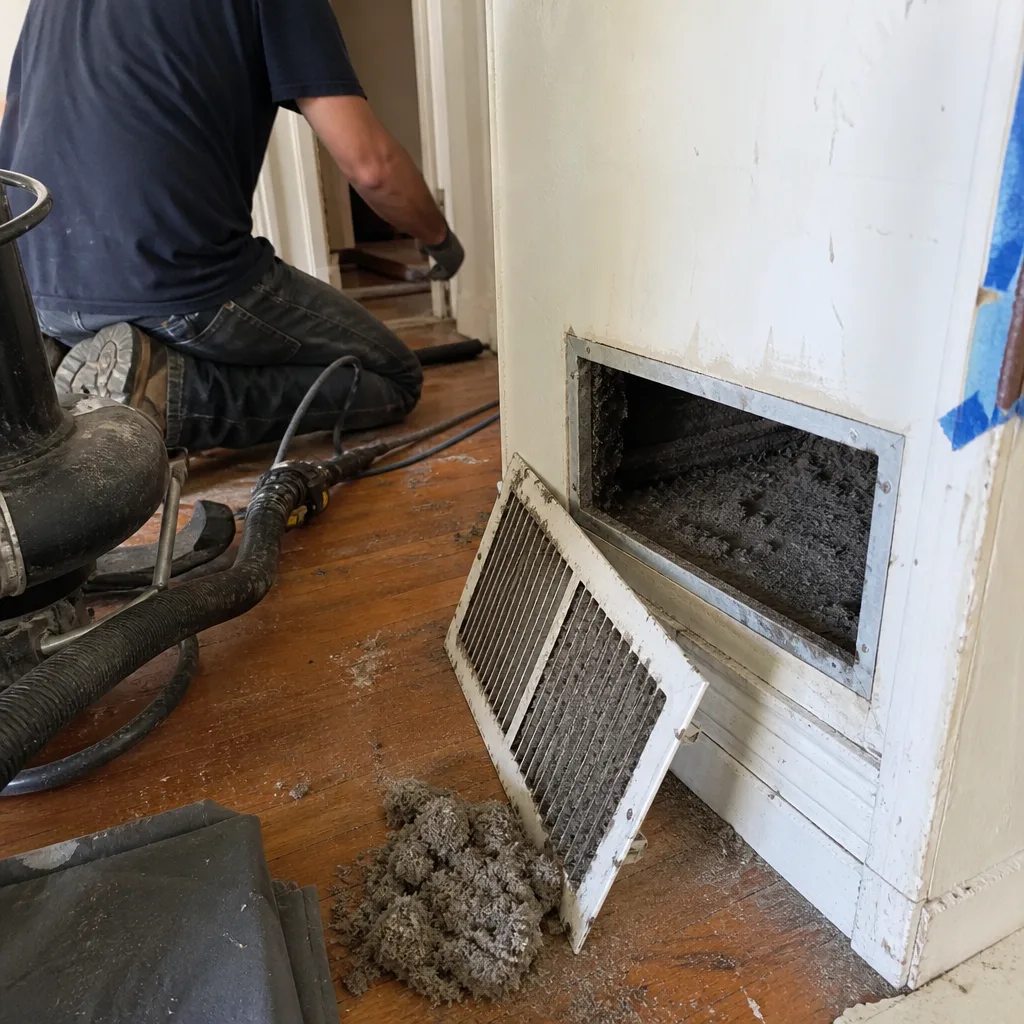 Before
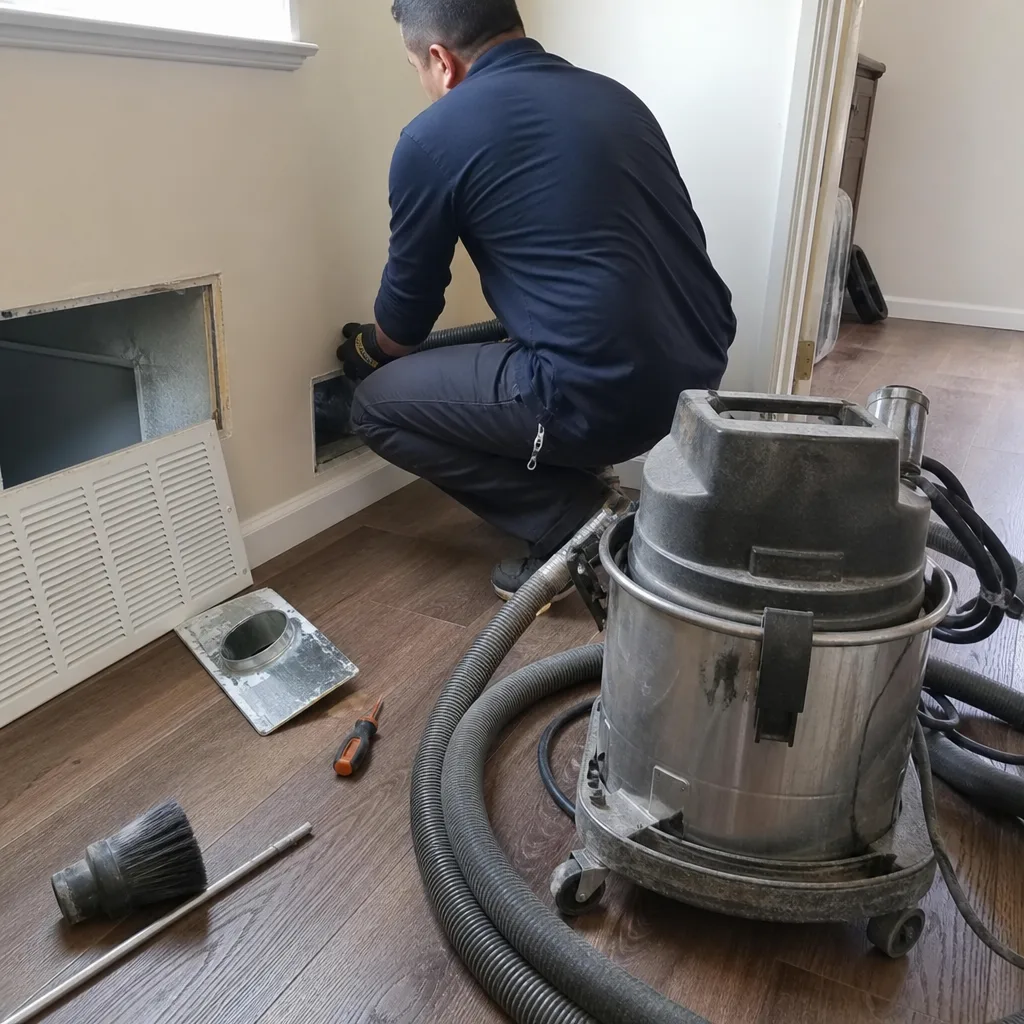 After
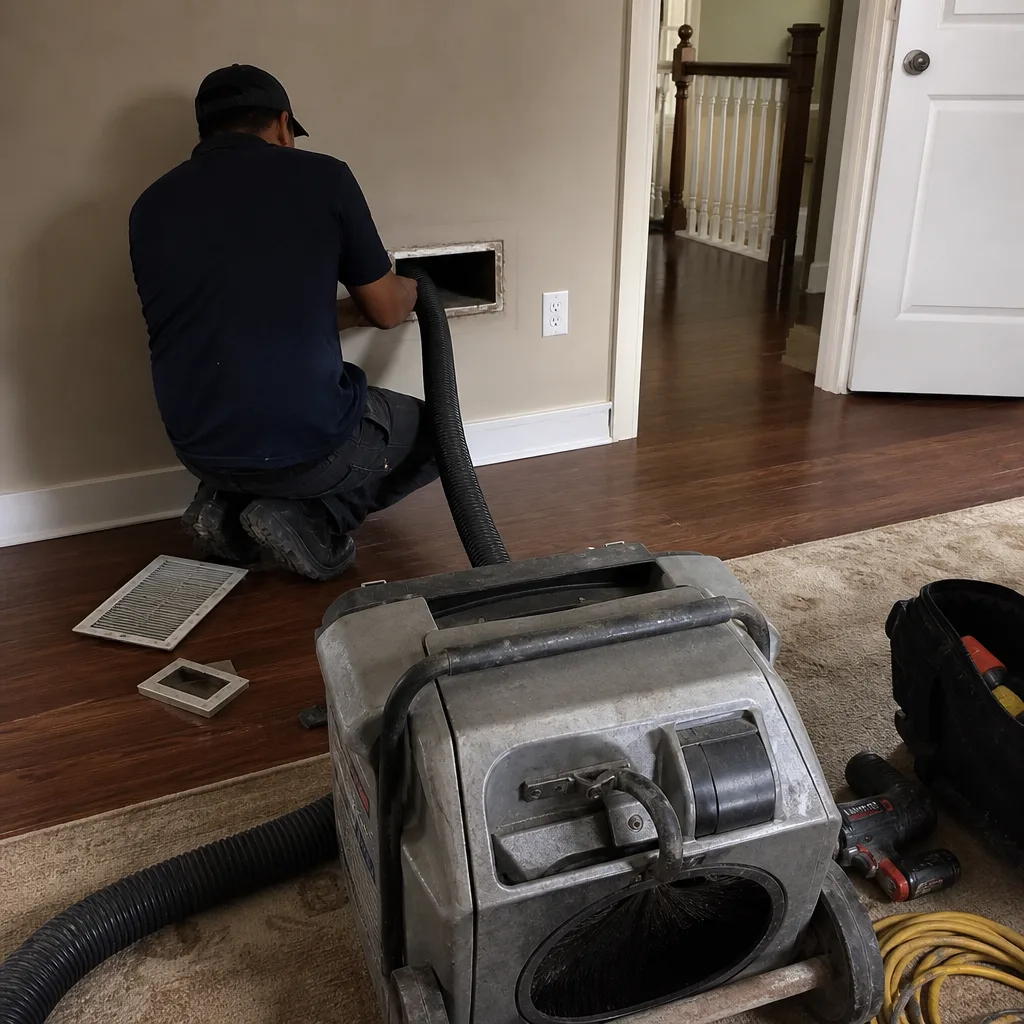 Before
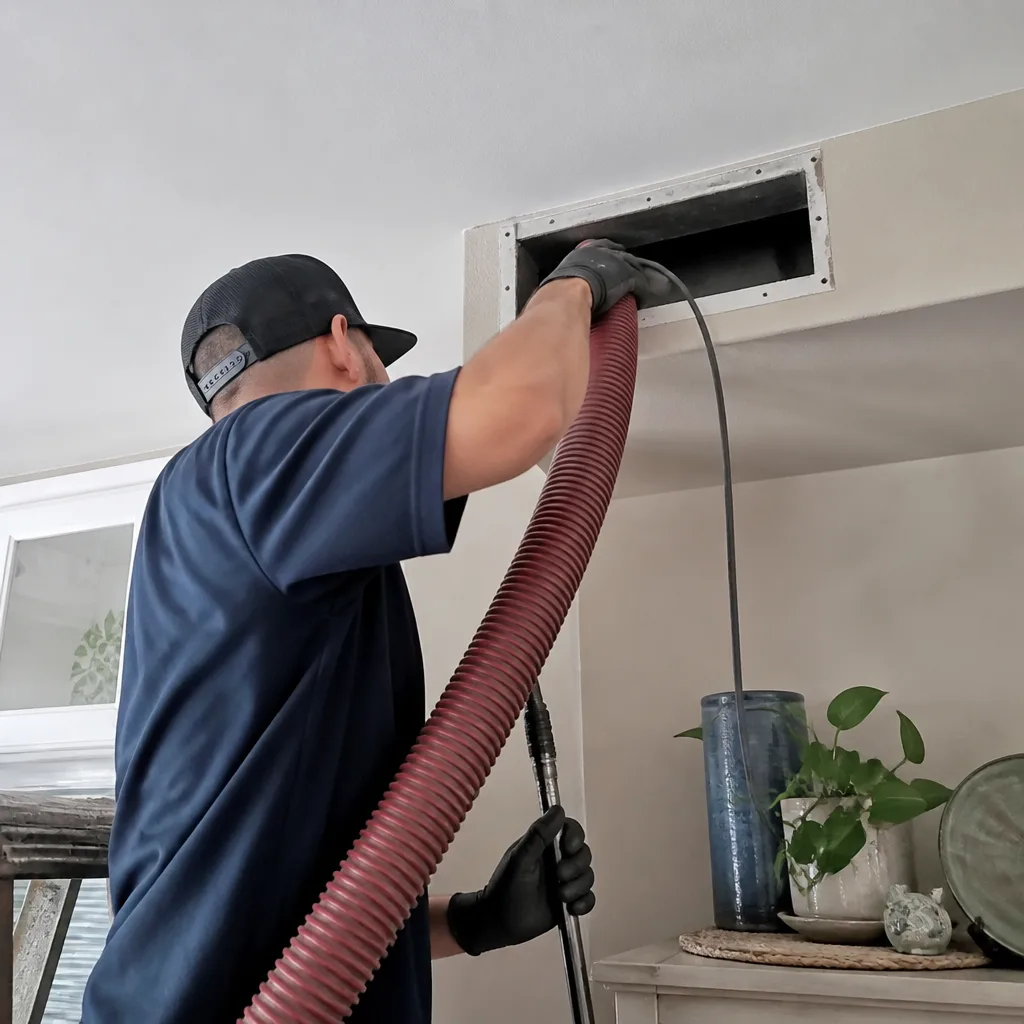 After
 Before
 After