
Last updated November 2, 2026
Whole-system duct and dryer vent check with before-and-after photos - you see exactly what came out of your vents
That "$99 whole-house special" is a bait ad - the real number appears once they are in your hallway, or the "clean" is a shop-vac at the register. We photograph the inside of your ducts before and after instead.
DIY vs Professional Air Duct Cleaning: The Palo Alto Homeowner’s Decision Guide
A standard shop vac pulls somewhere between 60 and 80 cubic feet per minute of airflow. Professional duct cleaning equipment operates at 2,000 to 4,000 CFM with HEPA filtration at the collection point. When you dislodge three years of dust, pet dander, and construction debris with a brush and try to catch it with a shop vac, the math on what stays in your duct system is not encouraging. This guide explains the physics behind effective Air Duct Cleaning, what you can safely handle yourself in a Palo Alto home, and where the line between maintenance and professional equipment sits.
Quick Answer
DIY duct cleaning in Palo Alto is generally ineffective for anything beyond register cleaning and visible surface dust because consumer vacuums cannot generate the negative air pressure required to capture dislodged debris at the source. A professional cleaning using brush-contact agitation combined with HEPA-filtered negative-air machines costs more but removes and contains what a shop vac simply blows further into the system. For homes with allergy sufferers, older ductwork, or pre-1980 construction, professional equipment is the only approach that improves air quality rather than temporarily stirring it up.
Styles & brands we work with
- Whole-home duct cleaning
- Dryer vent cleaning
- Camera inspection
- Sanitizing & deodorizing
Table of Contents
- The Equipment Physics Problem
- What DIY Can Legitimately Do
- What DIY Cannot Touch
- The Palo Alto Asbestos Caveat
- How DIY Attempts Create New Problems
- Is Cleaning Actually Needed? Honest Inspection Steps
- What Professional Equipment Actually Does
- Cost Comparison: DIY vs Professional in Palo Alto
The Equipment Physics Problem
The core issue with DIY duct cleaning is not skill. It is equipment physics. Effective duct cleaning requires two things happening simultaneously: mechanical agitation to break debris loose from duct walls, and sufficient negative air pressure to pull that debris out of the system before it settles elsewhere. The first part a homeowner can approximate with a brush. The second part is where the whole effort falls apart.
A typical wet/dry shop vac generates 60 to 80 CFM at best, and that number drops significantly once you attach 15 or 20 feet of hose. The static pressure loss through a long hose run means the vacuum is doing almost nothing at the far end of a duct line. Professional systems like the Rotobrush units we use generate 2,000 to 4,000 CFM through a sealed collection system. That is not a marginal difference. That is the difference between capturing debris and relocating it.
Then there is the filtration problem. A standard shop vac with a basic filter exhausts fine particulate straight back into the room. The dust you cannot see is the dust that matters most for respiratory health. It passes through the vacuum and re-enters the living space as airborne particulate. A professional rig with a Nikro HEPA negative-air machine captures particles down to 0.3 microns at the collection point. The air leaving the system is cleaner than the air entering it.
Palo Alto homes present a specific challenge here. Many houses in neighborhoods like Midtown, Old Palo Alto, and College Terrace run ducts through crawlspaces and attics where decades of fine silt, rodent activity, and general degradation accumulate. That debris compacts. It does not vacuum up with 70 CFM. It requires contact brushing and true negative-air capture. The equipment gap is not a matter of effort or thoroughness. It is a hard physical limitation.
What DIY Can Legitimately Do
There is a meaningful list of maintenance tasks a Palo Alto homeowner can and should handle without calling anyone. These are the jobs that require no specialized equipment and no risk of making things worse. Doing these regularly extends the interval between professional cleanings, helps you monitor the condition of your system, and is covered in more detail in our Seasonal Air Duct Cleaning Care for Palo Alto: Year-Round Homeowner’s Guide.
- Register and grille cleaning: Remove supply registers and return grilles, wash them in warm soapy water, dry them, and reinstall. This takes an hour and makes an immediate visible difference. Dust accumulates on register vanes and restricts airflow more than most people realize.
- Filter housing cleaning: Pull the filter, vacuum the housing cavity with a brush attachment, and wipe down accessible surfaces. Do this when you change the filter, which in most Palo Alto homes should be every 60 to 90 days depending on filter type and household factors.
- Accessible flex duct inspection: In crawlspaces and attics, visually inspect flex duct runs for kinks, sagging, disconnected joints, or compression. Sagging flex duct reduces airflow and creates condensation points. You can identify the problem without touching it; the repair is a separate conversation.
- Dryer duct disconnection for short runs: If your dryer is on an exterior wall with a short, straight duct run, you can disconnect the duct at both ends and clear visible lint buildup from the pipe itself. This is different from a full dryer vent cleaning, but it handles the accessible portion. Any run over six feet or with bends is beyond safe DIY scope.
These four tasks cover roughly 90 percent of what a homeowner can do effectively. They do not require specialized equipment, they minimize risk, and they keep the system in a state where you can accurately judge whether deeper cleaning is warranted.
What DIY Cannot Touch
Beyond register cleaning and basic inspection, the DIY path encounters hard limits quickly. Some of these are practical. Some are safety issues. All of them are reasons homeowners call us after attempting the work themselves.
Interior duct surfaces along full runs: Supply and return ducts can run 20, 40, even 60 feet through walls, floors, and ceilings. The portions you cannot see are where compaction happens. Without a rotating brush head and negative-air capture, you are not cleaning those surfaces. You are not even reaching them.
Plenum and coil areas: The return plenum, supply plenum, and the area around the evaporator coil collect more debris than any other part of the system. These spots are hard to access without removing panels, and they are easy to damage. A cracked plenum or bent coil fin from a homeowner’s improvised tool is a repair bill that dwarfs the cost of professional cleaning.
Anything involving flex duct interiors: The interior liner of flex duct is a thin plastic film. A brush with too much stiffness, or a homeowner shoving a vacuum hose deeper than it should go, can tear that liner. A torn flex duct liner degrades airflow, becomes a mold substrate, and often requires section replacement. The risk of damage is far higher than most people expect.
Containment during cleaning: Professional firms working with remediation-grade standards use containment controls, including Abatement Technologies equipment, to prevent dislodged debris from circulating into occupied rooms. A homeowner with a shop vac has no containment. Every cubic foot of air moving through that vacuum is either captured coarsely or exhausted back into the house.
The Palo Alto Asbestos Caveat
Palo Alto has a housing stock that includes a significant number of homes built before 1980. Neighborhoods like Professorville, Crescent Park, and parts of south Palo Alto include residences dating to the 1920s, 1930s, and 1950s. Many of these homes have original HVAC systems or early-generation ductwork, and some of that ductwork was insulated with materials that contain asbestos.
This changes the DIY calculus entirely. Disturbing asbestos-containing duct wrap or tape releases fibers that are a serious health hazard. The act of brushing, scraping, or pulling at old duct insulation without knowing whether it contains asbestos can turn a cleaning project into an abatement situation. California law requires testing by a certified professional and licensed abatement for friable asbestos materials. The cost of a professional duct cleaning is trivial compared to the cost of an unplanned asbestos remediation.
If your Palo Alto home was built before 1980 and the duct work has never been replaced, we strongly recommend not disturbing any duct insulation, tape, or wrap yourself. A professional inspection can identify whether the materials in question are fiberglass, which is far more common in residential duct construction from that era, or something that requires testing. If the duckwork itself is original galvanized steel from the 1950s, the cleaning consideration is different from a 2005 system with R-6 flex duct. Knowing which you have is step one, and identifying that safely is part of what a professional assessment provides.
How DIY Attempts Create New Problems
In our experience working on Palo Alto duct systems, we see a consistent pattern of DIY attempts creating problems that did not exist before the homeowner opened the first access panel. These are not edge cases. They are the typical outcomes of well-intentioned DIY work.
Dislodging deteriorated flex duct insulation: Older flex duct in attics and crawlspaces degrades. The outer jacket becomes brittle, the insulation inside breaks down, and the inner liner weakens. A homeowner pushing a brush or vacuum hose through this material often tears the liner or dislodges degraded insulation particles into the airstream. Now the system has loose fiberglass circulating, which is a far worse problem than the dust it had before.
Breaking duct joints at register boots: Duct connections at register boots are often held with mechanical fasteners or tape that has aged for years. Prying a register off and aggressively working the boot area can break that connection. The result is a gap between the duct and the register that leaks conditioned air into the wall cavity. The homeowner gets less airflow, higher utility bills, and a problem they cannot see.
Spreading mold spores without containment: If a duct system has any microbial growth, disturbing it without containment spreads spores into the living space. What was localized contamination becomes airborne contamination. Professional firms working with Nikro HEPA negative-air machines capture this material at the source. A shop vac with a standard filter does the opposite.
Vacuum exhaust recirculation: As noted earlier, a shop vac without HEPA filtration exhausts fine particulates back into the room. If the vacuum is running in the same room where you are working on the return side of the system, you are actively introducing the very material you are trying to remove. This is especially problematic in homes where someone has allergies or respiratory conditions. The homeowner believes they have cleaned the system. They have actually aerosolized it.
Damaging the evaporator coil: The evaporator coil sits in the air handler and has fins that bend easily. A homeowner trying to clean this area with a stiff brush or a screwdriver can fold fins, reduce heat exchange efficiency, and create a $500 to $1,200 repair on top of whatever duct issue started the project.
Is Cleaning Actually Needed? Honest Inspection Steps
Before spending money on professional duct cleaning, you should determine whether the system actually needs it. Some ducts are dirty. Some ducts look dirty but are not. And some ducts are clean and the homeowner’s problem is elsewhere entirely. Here is an honest inspection sequence you can complete in an afternoon without opening anything you should not.
Step 1: Check the return side
Pull the return grille off, if accessible, and look inside with a flashlight and a phone camera. The return side is upstream of the filter, which means it sees unfiltered air. Some dust accumulation here is normal. What you are looking for is debris that is caked, matted, or clearly more than a thin layer of dust. If the return looks like the inside of a vacuum bag, that is a sign the system needs attention.
Step 2: Check the supply side
Supply ducts are downstream of the filter. If the filter has been doing its job, supply ducts should be significantly cleaner than the return side. Heavy dust accumulation on the supply side suggests either the filter has been bypassing, the filter has not been changed regularly, or there are leaks pulling unfiltered air into the supply side. Any of these scenarios means cleaning is likely justified.
Step 3: Check the filter housing
Look at the filter itself and the housing around it. If the filter is caked, collapsed, or has clearly been in place far longer than 90 days, what is downstream reflects what has been blowing through the system. A dirty filter also reduces airflow, which lets debris settle in ducts that would otherwise stay suspended and get caught in the filter.
Step 4: Consider the home’s history
If the house has gone through construction or renovation, especially in older Palo Alto homes where lathe and plaster walls generate enormous amounts of dust, the ducts have almost certainly been running during drywall work, sanding, and flooring installation. Construction dust is fine, dense, and settles in ducts where routine airflow will not move it. This is a strong indicator that cleaning is warranted.
Step 5: Consider household factors
Homes with shedding pets, smokers, residents with respiratory conditions, or infants and elderly residents place a higher premium on duct cleanliness. The same level of accumulation that is acceptable in a household of two healthy adults may justify cleaning in a household with an asthmatic child or an allergy sufferer. Palo Alto’s mild climate means windows are open much of the year, pulling in pollen from mature tree cover in neighborhoods like Barron Park and the Duveneck area. That pollen settles in ducts and recirculates.
If after this inspection you determine the system needs cleaning, the next question is whether to attempt it yourself or call a professional. The sections above answer that question based on equipment physics. The sections below address what professional cleaning actually looks like and what it costs, and you can find How to Hire an Air Duct Cleaning Contractor in Palo Alto: A Step-by-Step Guide for help selecting a provider.
What Professional Equipment Actually Does
When we clean duct systems in Palo Alto homes, we use equipment that operates on a fundamentally different principle than consumer vacuums. Understanding the difference helps homeowners evaluate quotes and reject the companies that show up with a furnace brush and a truck-mounted shop vac.
Rotobrush contact cleaning: A Rotobrush system uses a rotating brush head attached to a sealed vacuum hose that runs back to a collection unit outside or in a contained area. The brush head spins against duct surfaces, dislodging compacted debris mechanically. At the same time, the vacuum side of the same hose creates negative pressure that pulls dislodged material into the collection unit before it can settle. This is the mechanical agitation and capture happening simultaneously at the same point. That simultaneous action is the key distinction. A shop vac captures what it is touching. A Rotobrush captures what it is dislodging.
Nikro HEPA negative-air: Once debris is airborne during the cleaning process, the system uses negative-air machines with HEPA filtration to create a controlled airflow that prevents particulates from escaping into the living space. The unit pulls air from the work area, filters it through HEPA media, and exhausts it outside or into a contained space. For homes where allergy sufferers or immunocompromised individuals live, this containment step is the difference between cleaning the ducts and circulating duct debris through the house during the process.
Guardsman containment protocols: Professional cleaning also involves protecting the home during the work. Guardsman products, including floor protection and doorway containment materials, keep the work area isolated from the rest of the house. This level of care signals a firm that treats the home as a contained work environment, not a space where a van gets parked and a hose gets dragged through the living room.
The equipment matters because the outcome depends on it. A company running a consumer-grade blower and calling it professional cleaning is doing a worse job than an informed homeowner doing register maintenance. The equipment brands we run are the same class used in commercial restoration and mold remediation, brought to residential jobs in Palo Alto.
Cost Comparison: DIY vs Professional in Palo Alto
Cost is a legitimate factor, and it deserves an honest breakdown. DIY duct cleaning is not free. The tools, time, and risk exposure have costs. Professional cleaning has a straightforward price. Here is what each path actually costs for a typical Palo Alto single-family home.
DIY Costs
- Shop vac with HEPA filter: $120 to $250 for a capable unit. Standard filter cartridges will not capture fine particulate; a HEPA-rated unit is the minimum for any meaningful attempt.
- Extension hoses and brush attachments: $40 to $90. Multiple hose sections are necessary to reach more than a few feet into a duct run, and each section reduces airflow significantly.
- Inspection camera or borescope: $50 to $150 for a unit long enough to see anywhere meaningful. Without this, you are cleaning blind.
- Time: A full DIY attempt across a single-story 1,500-square-foot home takes a full day, and most of that time is spent fighting equipment limitations rather than cleaning.
- Risk-adjusted cost: If you tear a flex duct liner, break a register boot connection, or disturb asbestos-containing material, the repair cost ranges from $400 for a simple boot repair to $3,000+ for flex duct replacement or asbestos abatement testing.
Professional Costs in Palo Alto
- Whole-system air duct cleaning, typical Palo Alto single-family home (2,000 to 3,000 square feet): $450 to $900 depending on system size, number of zones, and accessibility.
- Duct cleaning with dryer vent service: Most Palo Alto homes combine these services. A bundled rate typically runs $500 to $1,000 based on the length and complexity of the dryer run.
- Air duct repair as a follow-on service: If inspection during cleaning reveals damaged flex duct, missing insulation, or disconnected joints, repair work is quoted separately. A single flex duct section replacement in a Palo Alto crawlspace typically runs $250 to $500. That repair solves an airflow problem a cleaning alone cannot.
The cost comparison is not DIY saving $500 versus professional costing $700. The honest comparison is DIY spending $210 to $490 on tools that produce a partial result, with a meaningful risk of creating a $400 to $3,000 repair, versus professional cleaning delivering a complete result with contained risk. For most Palo Alto homeowners, the professional route is the lower true cost.
Common Mistakes to Avoid
- Using a shop vac with a standard filter: A standard shop vac filter captures large debris but exhausts fine particulate back into the room. The allergens and irritants you are trying to remove stay airborne in your living space. HEPA filtration at the collection point is non-negotiable.
- Pushing a brush or vacuum hose into flex duct without knowing its condition: Older flex duct liners tear easily. Once torn, the duct section must be replaced. In Palo Alto homes where duct work runs through tight crawlspaces and attics, replacement is labor-intensive and expensive.
- Disturbing insulation or tape on pre-1980 ductwork: The asbestos risk in older Palo Alto homes is real. Testing is the only way to know, and disturbing the material before testing turns a manageable situation into an abatement problem.
- Focusing only on visible supply registers: The register is not the duct. Cleaning visible register vanes while ignoring the 30 feet of duct behind them is the equivalent of washing the doorknob and calling the room clean. It does nothing for airflow or air quality.
- Assuming cleaning will fix airflow problems: Restricted airflow is often caused by duct damage, kinked flex duct, or an undersized system, not debris accumulation. Clean ducts that are improperly sized or damaged will still underperform. A professional inspection identifies the difference.
- Hiring based on the lowest quote without asking about equipment: A duct cleaning company that shows up with a truck-mounted shop vac and a brush is charging you for what you could do at home. Ask what equipment they use. If they cannot name the system and explain how it captures debris, they are not doing professional-grade work.
- Cleaning ducts without addressing the filter: If the filter bypasses or has not been changed, the ducts will re-contaminate quickly. Professional cleaning should include filter assessment. Upgrading to a better filtration solution, such as Honeywell or Aprilaire media filters, extends the useful life of the cleaning and improves ongoing air quality.
See the difference
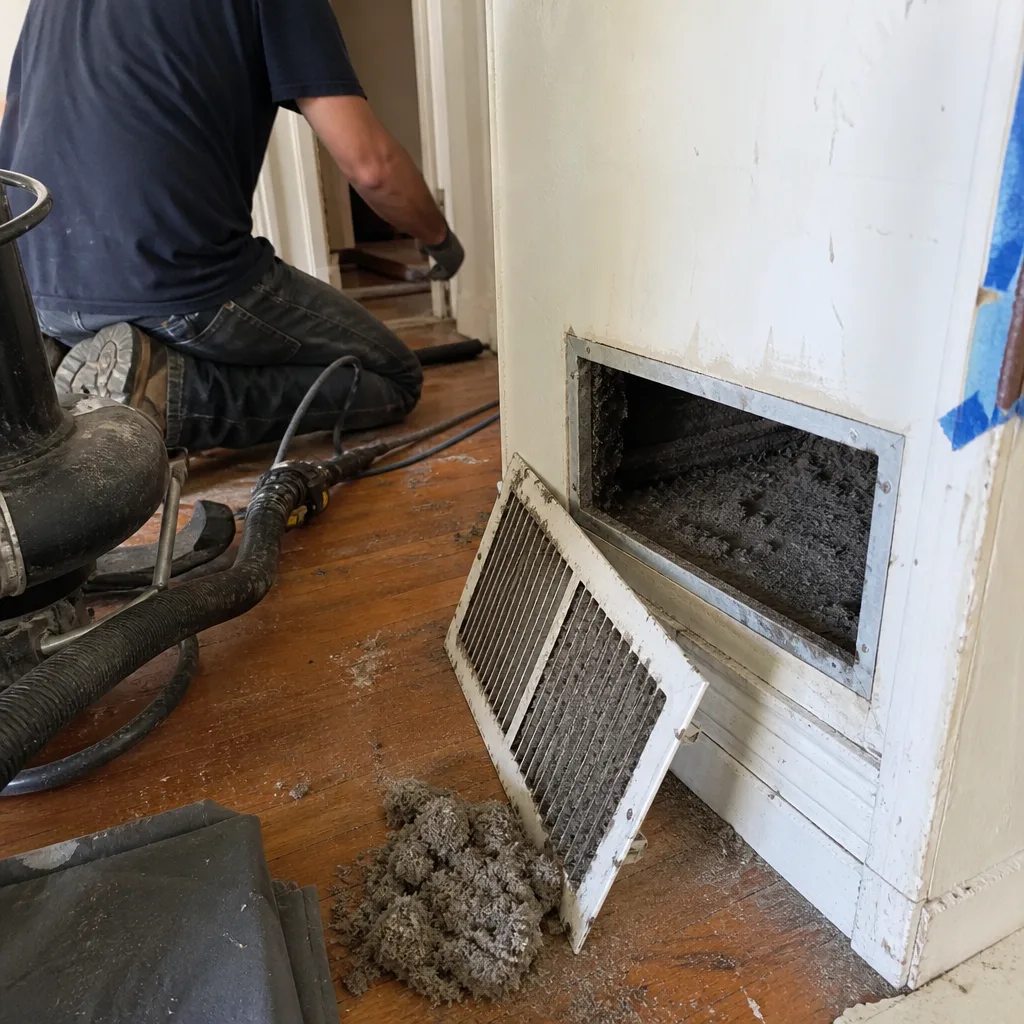 Before
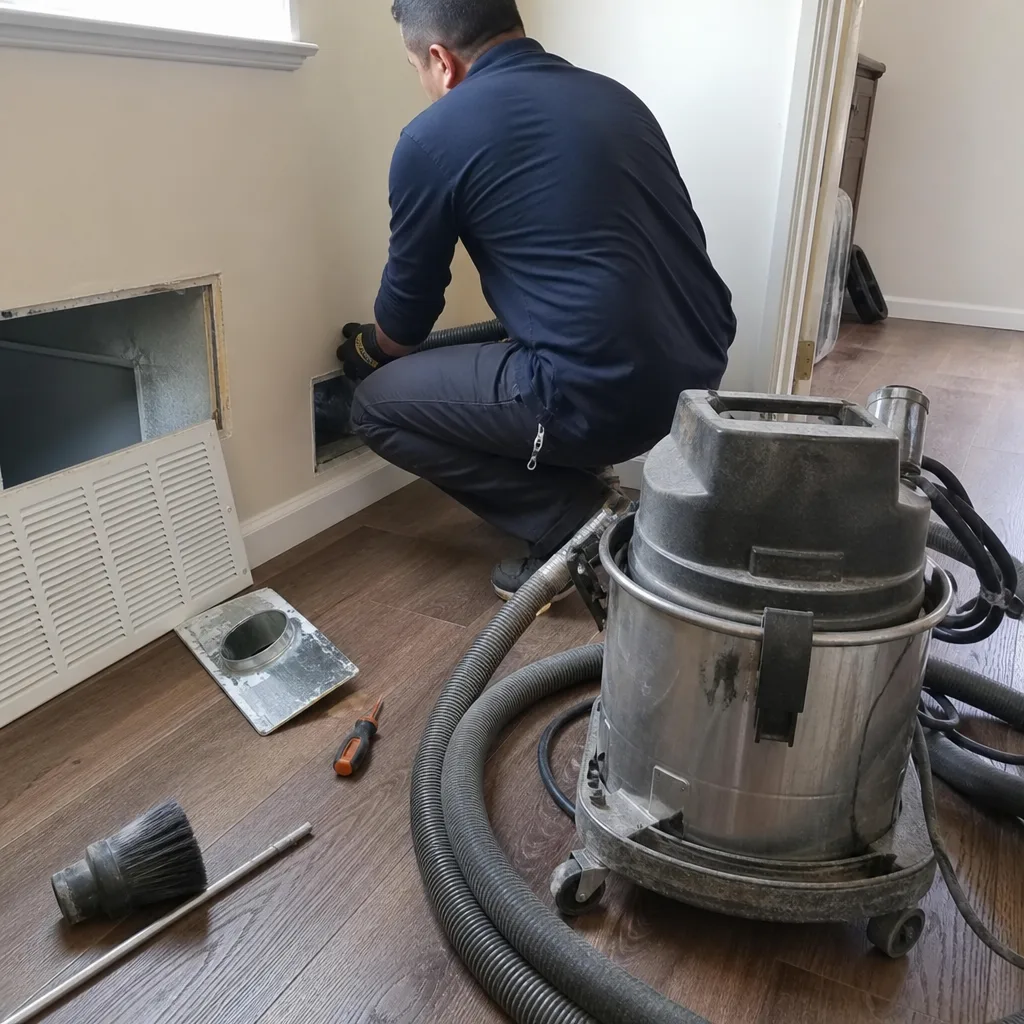 After
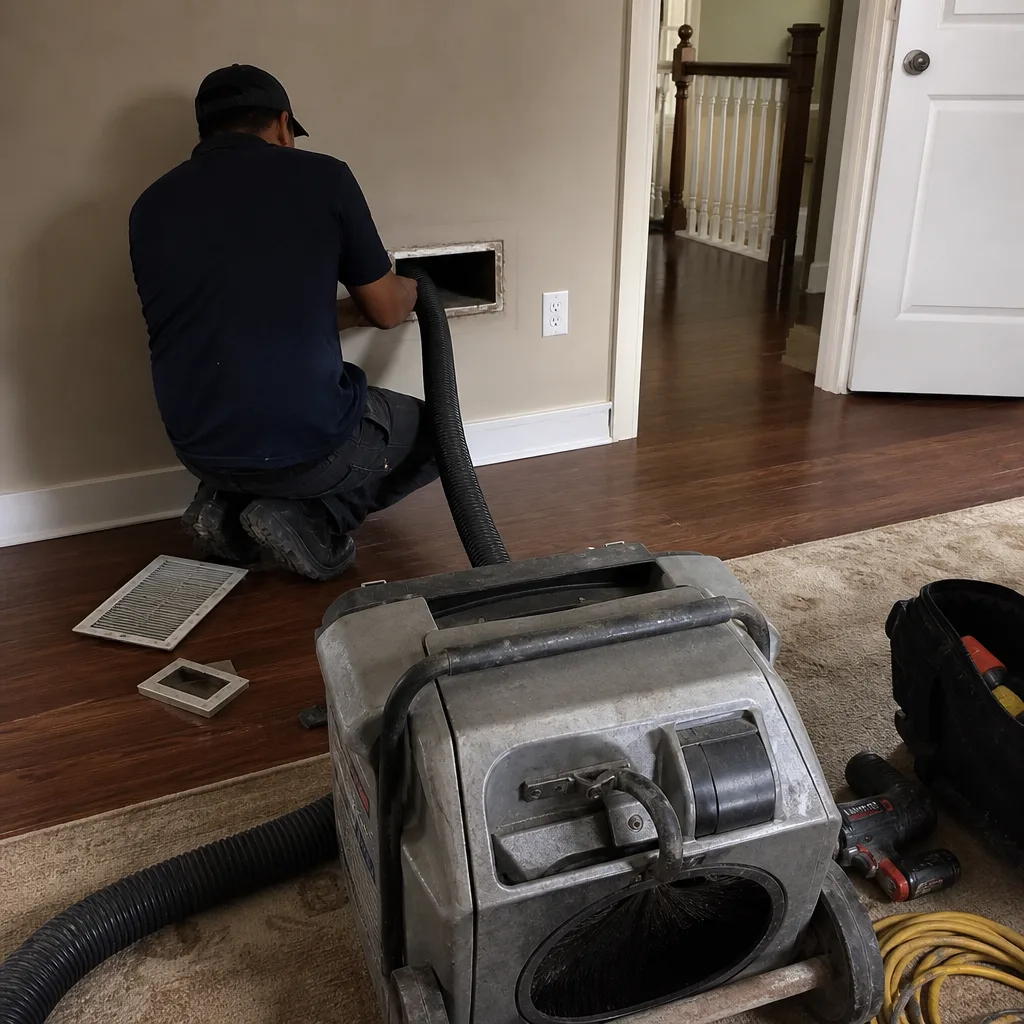 Before
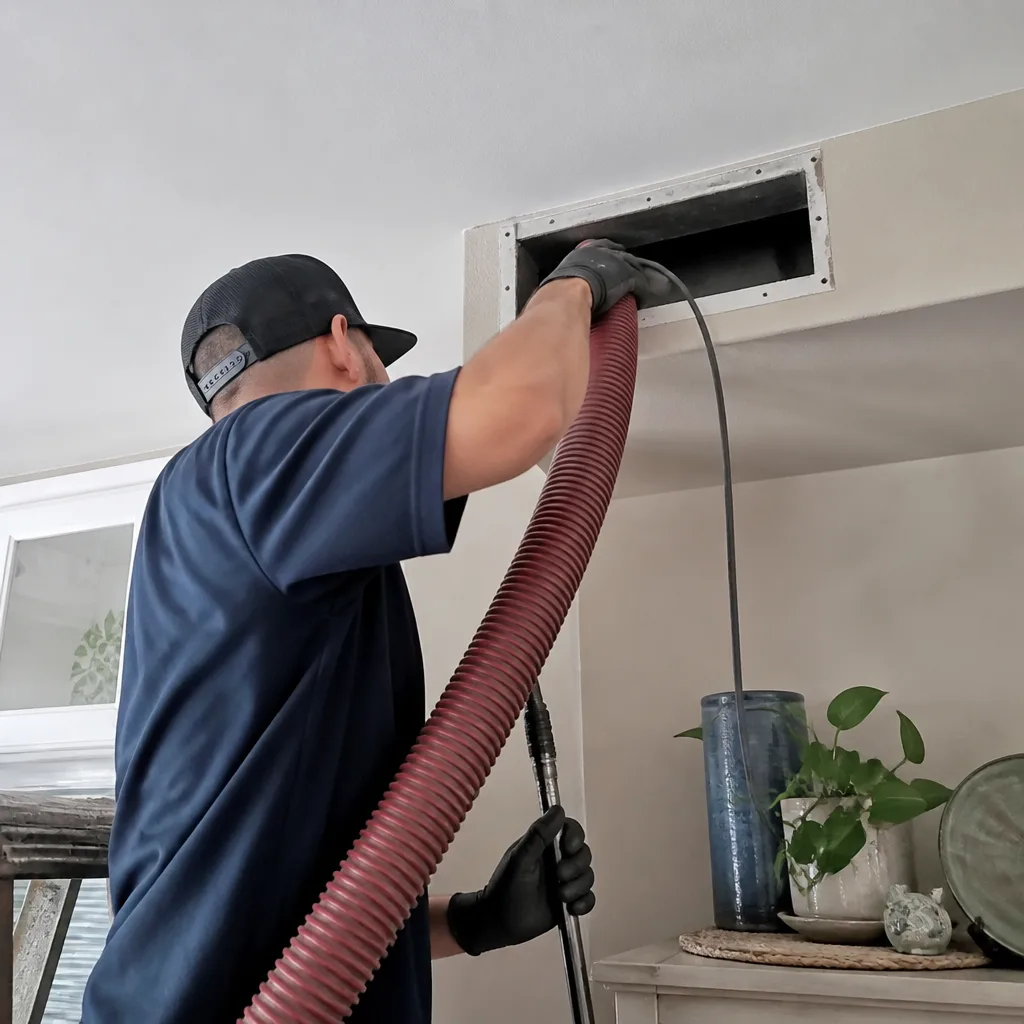 After
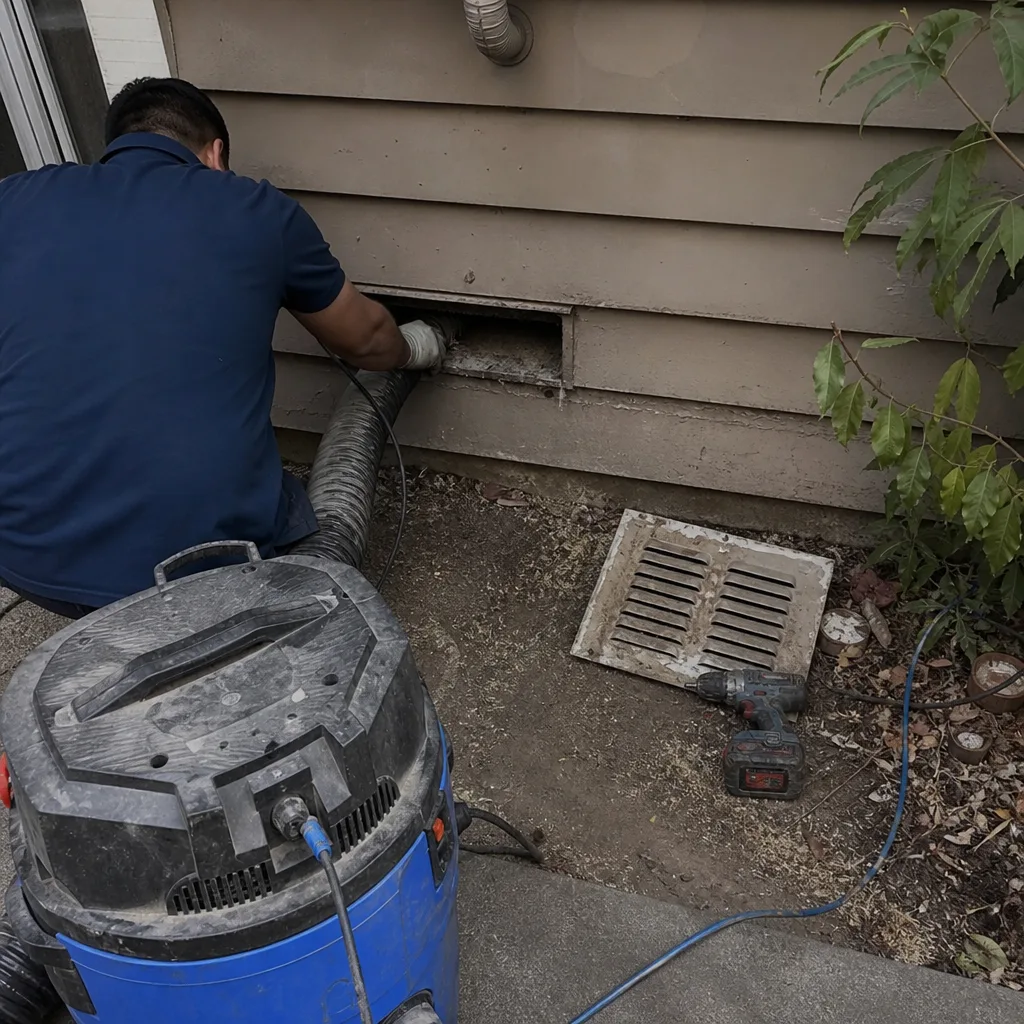 Before
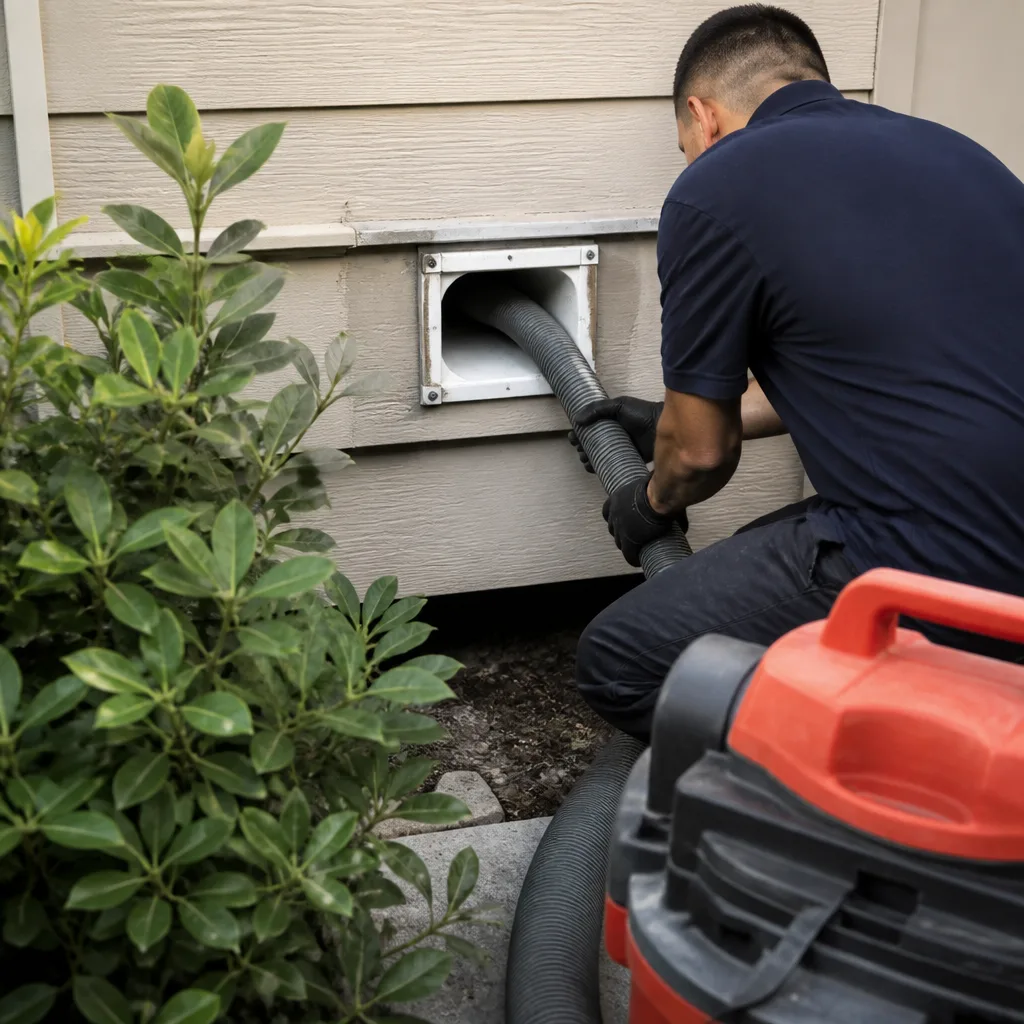 After
When to Call a Professional
Certain scenarios leave no room for a DIY attempt. If your Palo Alto home was built before 1980 and the ductwork is original, call a professional before touching anything. If you have visible mold growth on duct surfaces or a persistent musty odor from the registers, you need containment and assessment, not a brush and a vacuum. If anyone in the household has allergies, asthma, or a compromised immune system, the recirculation risks of DIY cleaning outweigh any cost consideration. If you see sagging flex duct, disconnected joints, or crushed sections in your crawlspace or attic, you need repair work, not cleaning. Our full-service approach covers air duct repair alongside cleaning, so one call addresses both. Air Duct Cleaning Palo Alto offers free estimates in Palo Alto, call (833) 620-7085.
Frequently Asked Questions
Professional air duct cleaning for a typical Palo Alto single-family home costs between $450 and $900, depending on system size, number of zones, and crawlspace or attic accessibility. Homes with multiple HVAC systems or extensive flex duct runs fall on the higher end. For an exact quote on your system, call (833) 620-7085 for a free estimate.
No, a shop vac cannot effectively clean interior duct surfaces because it generates 60 to 80 CFM of airflow, while professional systems operate at 2,000 to 4,000 CFM with HEPA filtration. The negative-air requirement for capturing dislodged debris simply cannot be met by consumer equipment. What a shop vac can do is clean register vanes, filter housings, and accessible return cavities. For whole-system cleaning, the equipment gap is not a matter of effort.
Inspect the return side first: pull the grille and look for caked or matted debris beyond a thin dust layer. Then check the supply side, which sits downstream of the filter and should be noticeably cleaner than the return side. Heavy accumulation on the supply side, recent renovation work in the home, or persistent dust settling on furniture within days of cleaning are all indicators that professional cleaning is warranted; see our more guides & resources for additional home maintenance tips.
The difference in duct cleaning quotes almost always comes down to equipment. Companies running truck-mounted shop vacs and basic brushes have low equipment costs and can quote aggressively. Companies running Rotobrush contact-cleaning systems, Nikro HEPA negative-air machines, and Guardsman containment protocols have higher operating costs but deliver a fundamentally different result. Ask any company to name their equipment and explain how they capture debris at the point of agitation. If they cannot answer that question, the quote is low for a reason.
Yes, when performed with HEPA-level containment, duct cleaning reduces the recirculating allergen load in a home. Palo Alto’s mature tree cover contributes significant seasonal pollen, and ducts act as a reservoir that re-releases particles into living spaces. For households with allergy sufferers, the combination of professional duct cleaning and upgraded filtration using Honeywell or Aprilaire media provides measurable improvement. The key is containment during the cleaning process itself, which prevents dislodged allergens from being recirculated.
Most Palo Alto homes need professional duct cleaning every 3 to 5 years, though homes with shedding pets, recent renovations, or residents with respiratory conditions may warrant shorter intervals. Homes built before 1980 with original ductwork often benefit from an initial professional assessment and cleaning, followed by a maintenance schedule based on what the first inspection reveals. The interval depends on household factors, not a fixed calendar schedule.
You can clear the accessible portions of a short, straight dryer vent run on an exterior wall. Any run longer than six feet, any run with bends, or any run that terminates on a roof or in a location you cannot safely access requires professional equipment and technique. Dryer vent cleaning is a fire-prevention service, not a convenience task. We treat Dryer Vent Cleaning in Palo Alto as a dedicated safety service precisely because lint accumulation is combustible and the consequences of incomplete cleaning are severe.
The Bottom Line
DIY duct cleaning in Palo Alto is not a skill problem. It is an equipment problem. The airflow and filtration capabilities required to dislodge and capture duct debris at the source do not exist in consumer tools, and the attempt often creates damage that costs more to repair than the cleaning would have cost in the first place. Homeowners can legitimately handle register cleaning, filter maintenance, and accessible inspection. Everything beyond that belongs with professional equipment. For homes with allergy sufferers, older ductwork, or pre-1980 construction, the decision is clearer still. If you are in Palo Alto and want a professional assessment, call (833) 620-7085 for a free estimate. We are an Air Duct Cleaning Palo Alto home service company, and we also provide Air Duct Cleaning in Palo Alto for residential and light-commercial customers across the city.
Written by the team at Air Duct Cleaning Palo Alto, serving Palo Alto since 2016.