
Last updated November 2, 2026
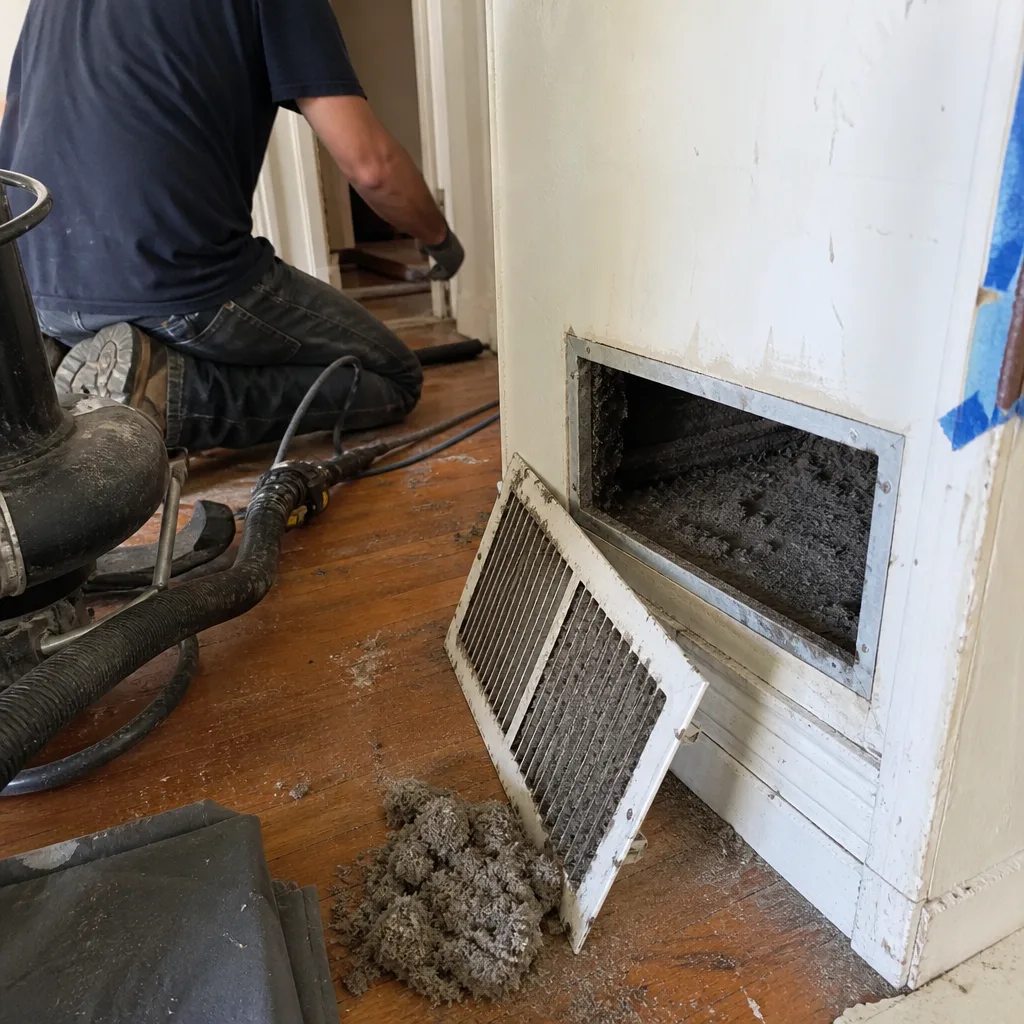
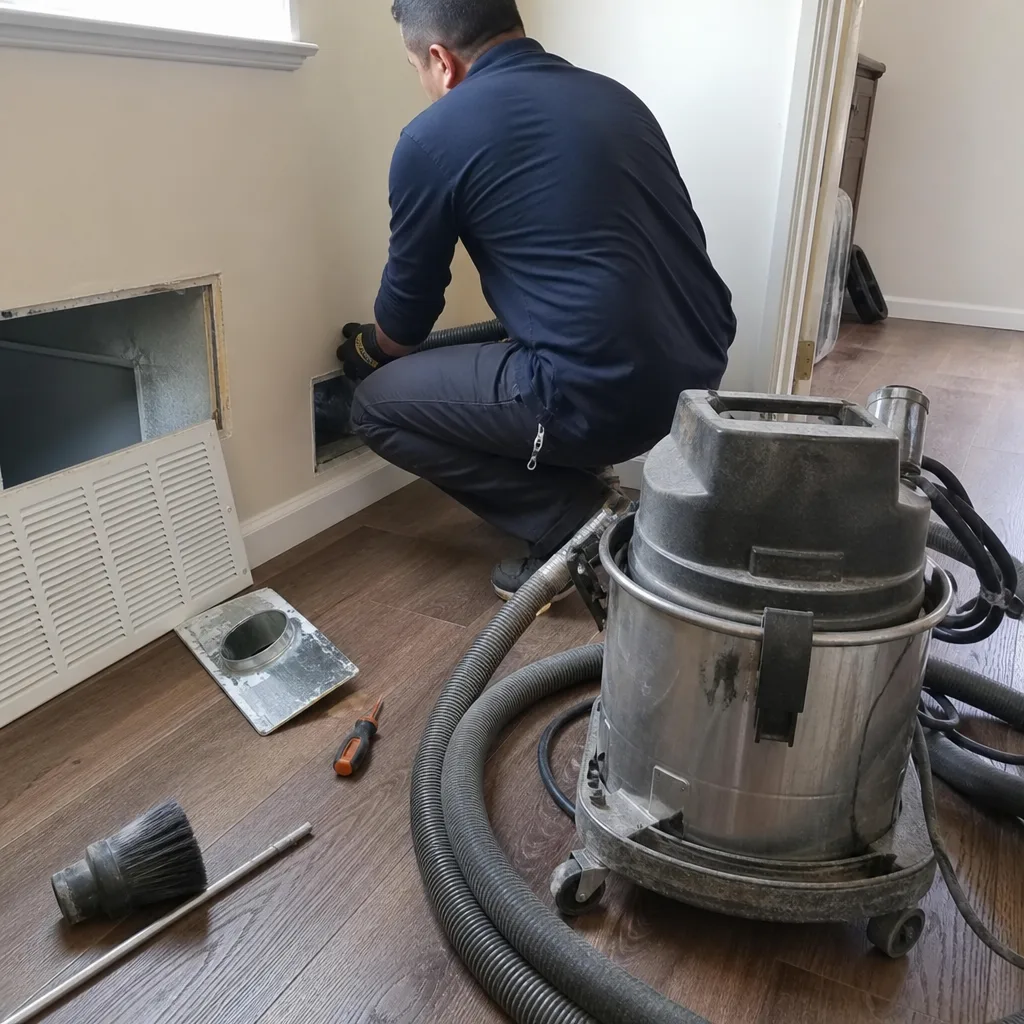
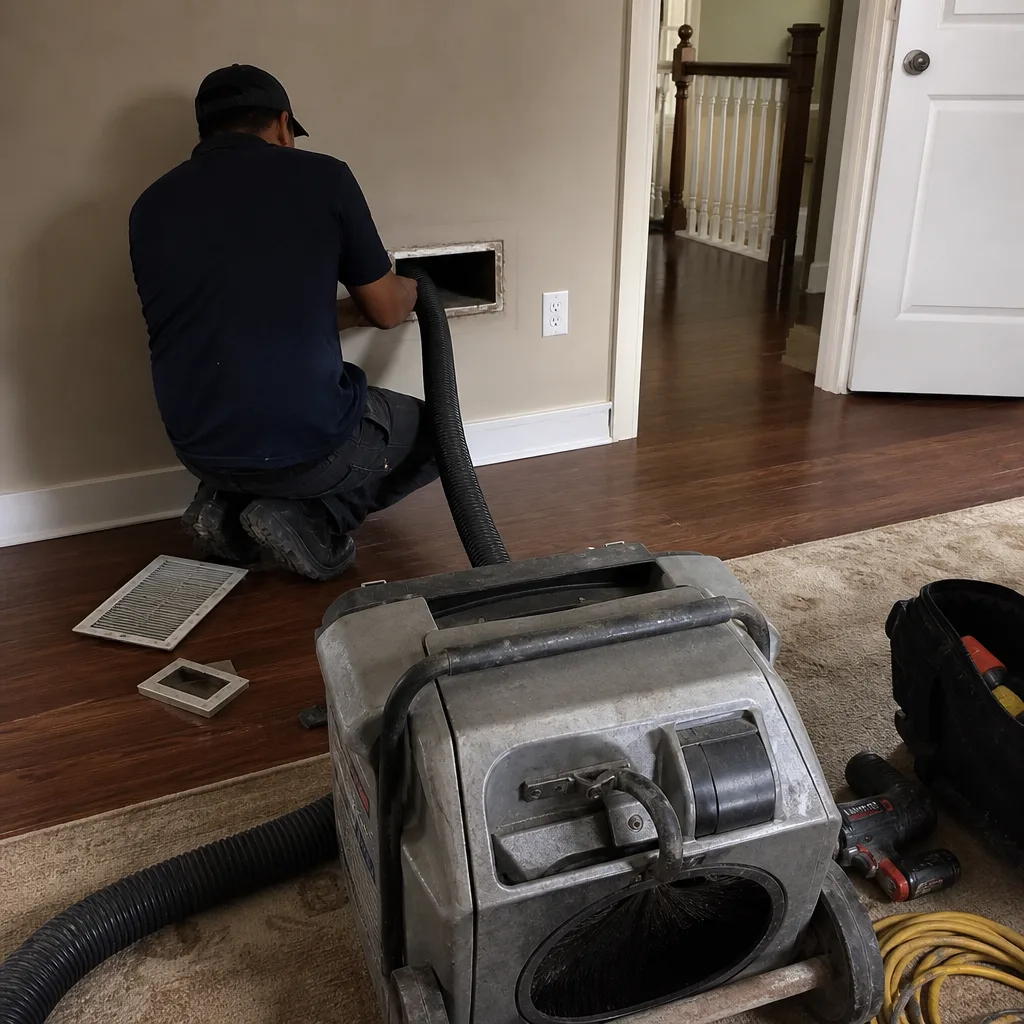
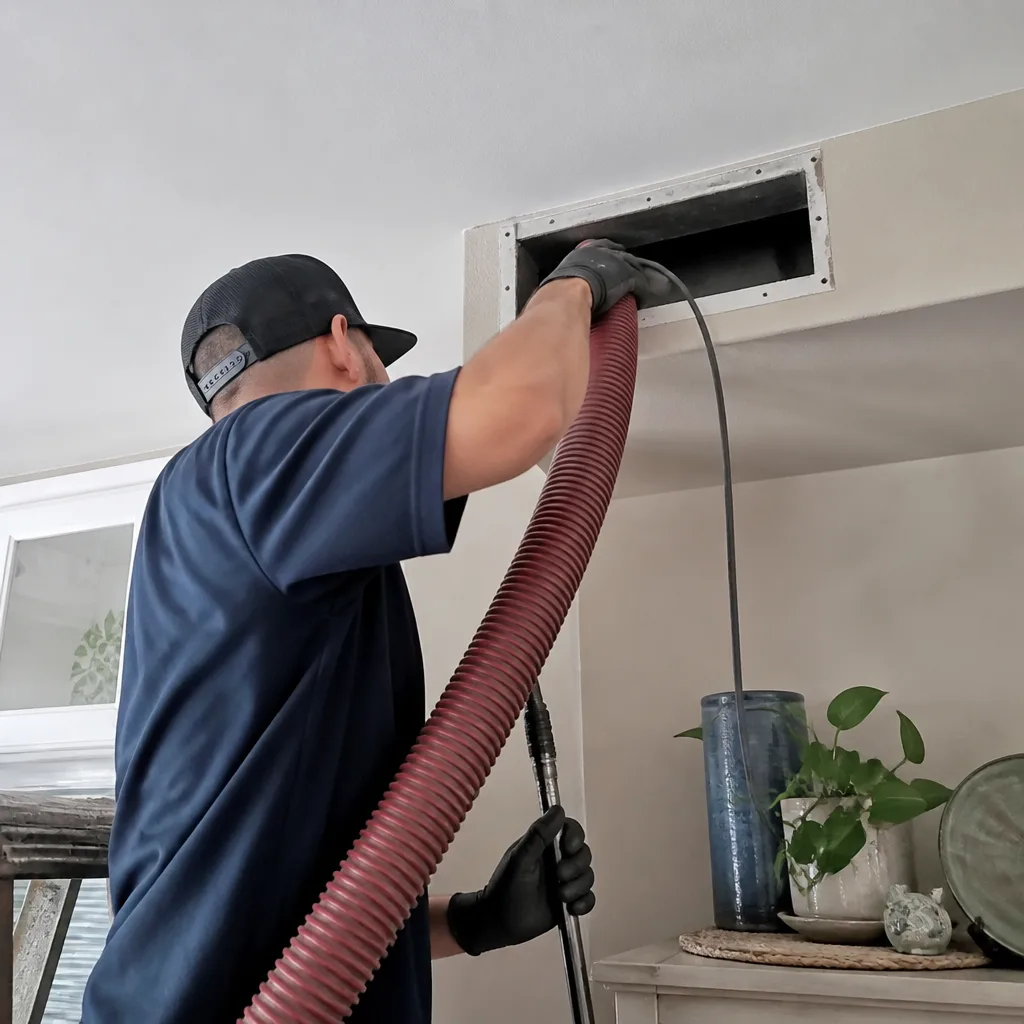
Whole-system duct and dryer vent check with before-and-after photos - you see exactly what came out of your vents
That "$99 whole-house special" is a bait ad - the real number appears once they are in your hallway, or the "clean" is a shop-vac at the register. We photograph the inside of your ducts before and after instead.
Air Duct Cleaning Emergency Preparedness Guide for Palo Alto Homes
During the 2018 Camp Fire, air quality in Palo Alto reached hazardous AQI levels for multiple consecutive days, with readings exceeding 400 in some neighborhoods. Homes with forced-air systems actively running during those weeks pulled smoke particulate into ductwork for hours at a stretch, creating a secondary exposure source that lingered long after outdoor air cleared. This guide explains how to prepare your duct system before an emergency strikes, how to respond when contamination occurs, and how to document everything properly for insurance and remediation purposes. If you live in Palo Alto, you already know wildfire season is no longer seasonal, and seismic risk is part of the geography. What most homeowners don’t realize is that their ductwork is the primary vector through which both threats enter living spaces at scale.
Styles & brands we work with
- Whole-home duct cleaning
- Dryer vent cleaning
- Camera inspection
- Sanitizing & deodorizing
Quick Answer
Air duct cleaning emergency preparedness in Palo Alto means taking three steps before a wildfire, earthquake, or renovation event: seal return-air leaks, install a MERV-13 or higher filter rated for your system, and know exactly how to shut down forced-air circulation when outdoor air quality degrades. After a smoke event with sustained AQI above 150 for 48+ hours, or an earthquake that shifts duct joints, professional cleaning with HEPA containment is the standard response, not just a filter swap. Document everything with photos, AQI screenshots, and HVAC runtime logs before calling a contractor.
Table of Contents
- The Pre-Wildfire-Season Protocol for Palo Alto Duct Systems
- The Post-Smoke-Event Decision Framework: Clean or Just Filter Change?
- Post-Earthquake Dust Protocol: What Seismic Shifts Do to Duct Runs
- Renovation Contamination: When Construction Dust Enters the System
- How to Shut Down Forced-Air Circulation During a Smoke Event
- Documenting an Emergency Contamination Event for Insurance
- What Professional Cleaning Actually Involves: Equipment and Method
- Common Mistakes to Avoid
- When to Call a Professional
- Frequently Asked Questions
- The Bottom Line
The Pre-Wildfire-Season Protocol for Palo Alto Duct Systems
In Palo Alto, wildfire season now stretches from late spring through early winter. The hills west of Interstate 280 create a natural channel for smoke that settles across the Peninsula, and once outdoor AQI climbs past 150, any forced-air system running in your home is actively pulling that particulate into the ductwork. The pre-season protocol is not complicated, but it requires doing a few specific things before the first red flag warning of the year.
Step 1: Upgrade your filter to MERV-13 if your system can handle it. MERV-13 is the minimum rating that captures wildfire smoke particulate in the 0.3 to 1.0 micron range, which is the size that travels deepest into lung tissue. Not every blower can push through the added resistance of a MERV-13 filter, especially older systems with restrictive return ducting. We regularly install Honeywell media cabinets in Palo Alto homes for this exact reason: the deeper cabinet housing allows a higher MERV filter without choking airflow the way a standard one-inch slot does. If your system cannot accommodate MERV-13, use the highest MERV rating your blower can handle and plan to supplement with portable HEPA units in occupied rooms during smoke events.
Step 2: Seal return-air leaks. Return ducts are the “inhale” side of your HVAC system, and in most Palo Alto homes built before 2000, they’re leaky. Gaps at joints, tears in flexible duct runs, and poorly sealed plenum connections allow unfiltered attic or crawlspace air to bypass the filter entirely. During a smoke event, that means contaminated air can enter your living space without ever passing through filtration. A professional duct inspection with pressure testing is the only way to quantify how much air is bypassing the filter. The fix is often straightforward: mastic sealant at joints, new foil tape on seams, and replacement of torn flex duct sections. This is exactly the kind of work covered by Air Duct Repair in Palo Alto, and doing it before fire season is smarter than discovering the leak after your house has been breathing smoke for three days.
Step 3: Know your system’s shutdown procedure. Most thermostats have a “fan” setting with three options: Auto, On, and Off. During a smoke event, set it to Auto so the blower only runs when the system is actively heating or cooling. Better yet, shut the system down entirely if indoor temperatures are tolerable. This single action prevents hours of smoke from being drawn through the return registers and distributed through every room. Write the steps down and put them somewhere visible. In our experience, when AQI hits 300 and people are stressed, they forget which setting does what.
The Post-Smoke-Event Decision Framework: Clean or Just Filter Change?
After a smoke event, every Palo Alto homeowner asks the same question: do I need the ducts cleaned, or is a filter change enough? See our Air Duct Cleaning Maintenance Checklist for Palo Alto Homeowners for a full pre-season and post-event protocol. The answer depends on three variables: AQI exposure, duration, and system runtime. Here’s the framework we use when advising homeowners.
If your home experienced two or more consecutive days of AQI above 150, and your system ran during that period, you need professional duct cleaning. The reason is straightforward: wildfire smoke particulate is sticky. It doesn’t just sit loosely on duct surfaces waiting for airflow to push it along. It adheres to the residue and film already inside the ductwork, creating a layer that cannot be removed by replacing the filter. A filter swap addresses what’s still airborne. It does nothing for what’s caked onto the duct walls, blower housing, and coil surfaces.
If AQI stayed below 150, or your system was off for the duration, a filter change is likely sufficient. Check the filter: if it’s gray or brown, replace it immediately with the same MERV rating or higher. If it’s heavily saturated or you can smell smoke when the system runs, that’s a signal that particulate has made it past the filter and into the system itself.
Here’s the decision matrix in plain terms:
- AQI above 300 for any duration, system ran: Full cleaning with HEPA containment recommended, regardless of filter condition
- AQI 150-300 for 48+ hours, system ran: Full cleaning recommended; inspect all return ducting for bypass leaks
- AQI 150-300 for under 48 hours, system mostly off: Filter replacement, visual inspection of return side
- AQI under 150, system ran normally: Filter replacement; no cleaning indicated unless smell persists
One more consideration specific to Palo Alto: the smoke that settles here often carries fine ash from burning structures, not just vegetation. That ash is chemically different from forest fire smoke, and it’s more corrosive to blower motors and more irritating to respiratory systems. If the event involved structure fire proximity, err on the side of cleaning.
Post-Earthquake Dust Protocol: What Seismic Shifts Do to Duct Runs
Palo Alto sits between two major fault zones, the San Andreas about 15 miles west and the Hayward about 15 miles east. A magnitude 5 or 6 event is not hypothetical here, and when the ground moves, your ductwork moves with it. The problem isn’t the shaking itself. It’s what the shaking dislodges.
Duct runs in most Palo Alto homes are suspended from attic structure with metal straps or resting on crawlspace soil. Joints between sections are sealed with tape or mastic. After decades of thermal cycling, those seals get brittle. An earthquake of any significance can snap a joint connection or pull a flex duct off its collar entirely. When that happens, two things enter the system: attic insulation and dust.
Post-earthquake, the first thing to do is a visual inspection of accessible ductwork. Bring a flashlight into the attic or crawlspace and look for separated joints, sagging flex runs, and visible gaps at register boots. If you see insulation fibers near a joint, the system is pulling attic air into living spaces every time the blower runs. That’s fiberglass and cellulose particulate, and it doesn’t belong in your lungs.
The second step is a pressure test. This isn’t a DIY procedure; it requires calibrated equipment to measure total system leakage and identify which runs are compromised. We run pressure diagnostics on every Air Duct Cleaning in Palo Alto job because a cleaning that doesn’t address the leaks that let contamination in is a temporary fix. If the earthquake separated a joint in your attic, cleaning the ducts without reconnecting and resealing that joint means you’ll be pulling attic air again within days.
For Palo Alto homes with older duct systems, earthquakes create a compounding problem: each seismic event loosens connections slightly, and the accumulated gaps make every subsequent smoke season or renovation more damaging. Homes in neighborhoods like Professorville and Old Palo Alto, where duct runs may date back to the 1960s and 1970s, are especially vulnerable to this slow degradation.
Renovation Contamination: When Construction Dust Enters the System
Palo Alto has one of the highest rates of residential remodeling on the Peninsula. Walk through Midtown, Community Center, or Crescent Park on any given week, and you’ll see dumpsters and contractor trucks. Remodels that involve drywall sanding, floor refinishing, or demolition generate particulate that’s measured in microns, and if the duct system runs through the work area, it becomes a distribution network for that dust.
The protocol for renovation contamination has three phases: before, during, and after.
Before work begins: If your ducts run through or adjacent to the construction zone, have them sealed at the registers and returns in that area. This is not the same as turning the system off. Sealing means removing register covers and taping Heavy plastic sheeting across the openings from the inside, so no negative pressure from the blower can draw dust through the gaps. Contractors sometimes do this themselves, but in our experience, the standard of sealing varies widely. It’s worth confirming the method before the drywall dust starts flying.
During the work: Do not run the HVAC system, even in other parts of the house, unless the duct runs serving the construction zone are fully isolated. Dust travels through return ducting in ways that surprise people: an open return in a hallway outside the work area can pull dust from surprising distances. Use portable heating or cooling in occupied rooms if needed.
After the work is done: Before you remove the sealing and resume normal operation, the ducts need to be inspected and, in most cases, cleaned. Drywall dust is so fine it penetrates through filter media and deposits on blower components and coil surfaces. A standard filter change won’t touch what’s already inside the system. This is also the time to consider whether the renovation exposed existing duct damage: loose joints, crushed flex runs, and separated boot connections all become apparent when you’re staring into the system anyway.
How to Shut Down Forced-Air Circulation During a Smoke Event
When AQI in Palo Alto climbs past 200, the single most important action you can take is also the simplest: stop the blower. Every minute your forced-air system runs during a smoke event is pulling contaminated outside air through the return ducting, past the filter, and into your living space. The filter catches some of it, but not all, and whatever makes it through gets distributed room by room.
Here is the shutdown procedure, in order:
- Set the thermostat system switch to OFF. This stops both heating and cooling operation. On most thermostats, this is a physical switch or a mode setting. This takes you out of automatic operation entirely.
- Set the fan switch to AUTO or OFF. If your thermostat has a “fan” setting separate from system mode, make sure the fan is not set to ON. The ON setting runs the blower continuously regardless of heating or cooling demand, which means smoke is being pulled into the house even when the system isn’t actively conditioning air.
- Close all windows and exterior doors. This is obvious but often overlooked. Seal the envelope first, then stop airflow through the HVAC system.
- If you have a fresh-air intake connected to the system, close it. Some newer Palo Alto homes have dedicated outside-air intakes for ventilation code compliance. These pull directly from outside and can bypass filters entirely depending on the design. If you don’t know where yours is, check the manual or look for a labeled damper near the air handler.
- Monitor indoor AQI if you have a monitor. Indoor levels typically lag outdoor by several hours, but in most homes, interior levels will eventually equalize with outdoor levels unless you’re actively filtering indoor air with portable HEPA units.
When the outdoor AQI drops back below 100, you can resume normal system operation. Before you do, check the filter. If it’s darkened, replace it. If you smell smoke coming from the registers when the system turns back on, particulate has moved past the filter into the supply side, and that’s a signal that cleaning is warranted.
Documenting an Emergency Contamination Event for Insurance
Insurance claims for duct contamination are not straightforward. Most policies cover sudden and accidental damage, but proving that smoke, earthquake dust, or construction particulate contaminated your duct system requires documentation. For details on permits and compliance, read our guide to Air Duct Cleaning Permits, Codes & Inspections in CA: What You Need to Know. The stronger your documentation, the better your chances of getting remediation covered, and the more accurate your scope will be when you talk to a contractor.
Here’s what to document, and when:
- AQI records. Screenshot the AQI reading for your Palo Alto ZIP code at least once daily during a smoke event. PurpleAir, AirNow, and the Bay Area Air Quality Management District all provide public data. Note the date, time, and source. These records establish the severity and duration of the exposure.
- HVAC runtime logs. If you have a smart thermostat with usage history, export or screenshot the runtime data showing when and how long the system operated during the event. If you don’t have a smart thermostat, note manually when the system was running and when it was off. This establishes how much contaminated air was likely pulled through the system.
- Filter photos. Remove the filter after the event and photograph it next to a clean filter for contrast. This is simple, visual evidence of what the system was pulling in.
- Register and grille photos. Photograph supply registers and return grilles before cleaning. Visible dust accumulation or discoloration around return grilles is evidence that contamination was distributed through the living space.
- Duct interior photos. If you can remove a register and reach a phone or small camera into the duct, take photos of the interior surfaces. Don’t reach past what’s safe, but a visual record of what’s on the duct walls before any cleaning is valuable evidence.
- Post-event inspection notes. Write down dates, observations, and any changes in air quality or symptoms after the event. If someone in the home has respiratory symptoms that correlate with the event, note that too.
This documentation serves two purposes. It supports an insurance claim if you’re filing one. And it gives a professional contractor an accurate scope: when you call for a cleaning estimate, you’ll be able to describe exactly what happened, how long the system ran, and what the filter looked like. That information changes how the job is approached.
What Professional Cleaning Actually Involves: Equipment and Method
Most Palo Alto homeowners have never watched ductwork being cleaned, and there’s a good reason for that: it happens out of sight, in the attic or crawlspace. The result is that people have no mental model for what professional cleaning looks like versus the consumer-grade alternatives. Here’s a plain explanation.
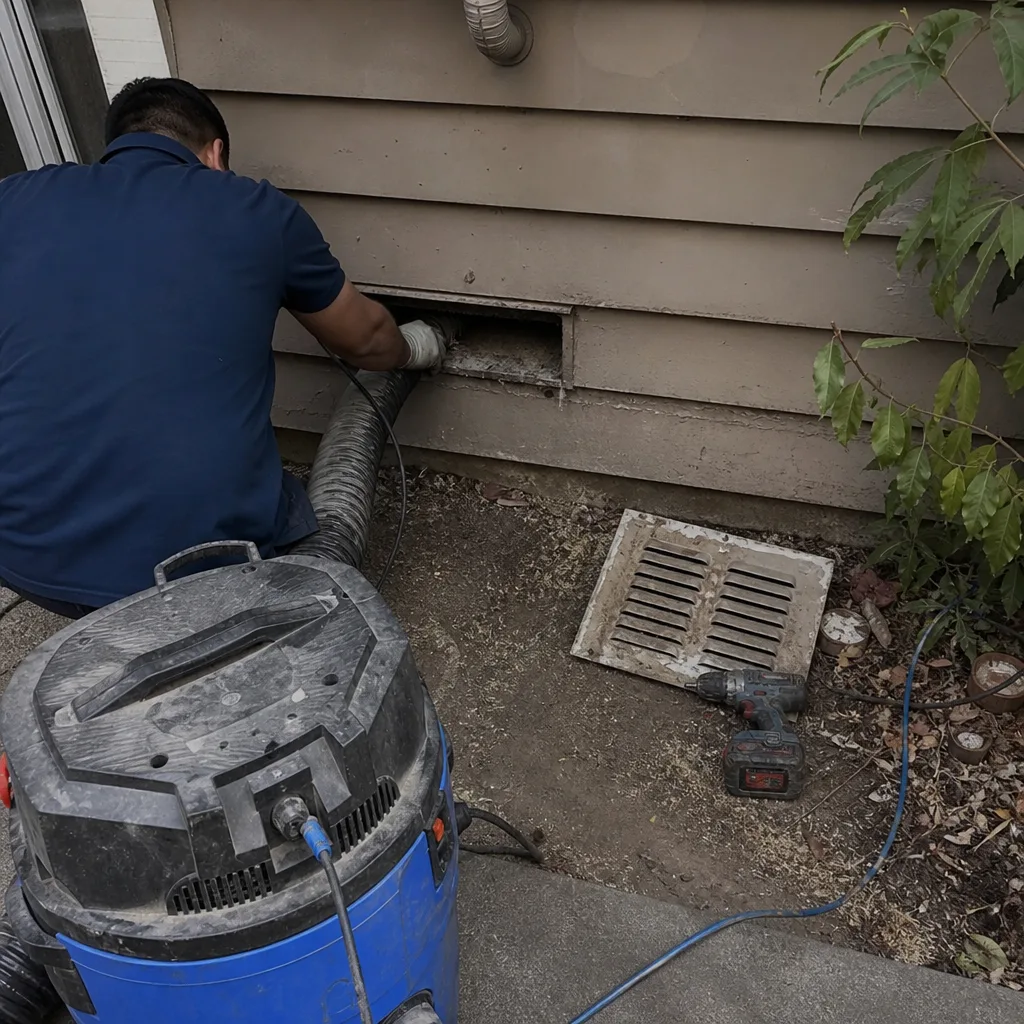
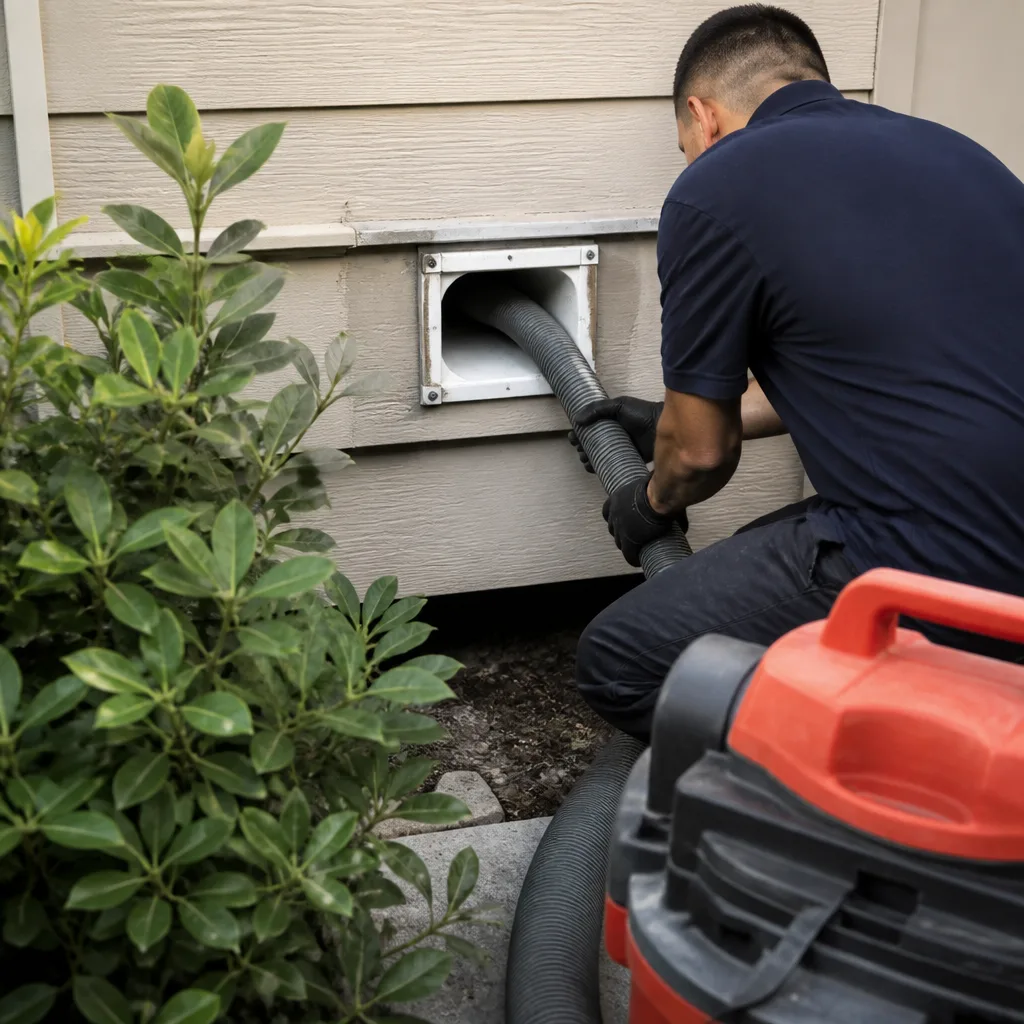
Professional duct cleaning uses two categories of equipment working in combination. The first is a mechanical agitation system that physically dislodges debris from duct walls. On our jobs, that means a Rotobrush brush-contact system which spins a stiff brush head through the duct run to break compacted material loose. The second is a high-volume extraction system that creates negative pressure to capture dislodged particulate before it can escape into living spaces. We use Nikro HEPA negative-air machines for this, which filter extracted air through HEPA media. This is the same approach used in commercial restoration and mold remediation work. When you see references to Abatement Technologies standards, this is what that means: containment and capture during cleaning, not just blowing debris down the line.
Consumer-grade equipment doesn’t do this. A shop vac connected to a brush can’t generate the airflow volume needed to pull debris from a full duct run. Rotating brushes without proper extraction simply loosen material and send it airborne, where it settles back onto the duct surfaces. The difference in outcomes is measurable, and it’s the reason we use the equipment we do.
For homeowners and property managers managing rental units or light-commercial spaces in Palo Alto, the equipment standard matters for a practical reason: the work has to be done right the first time. A cleaning that leaves residue on duct walls because the agitation wasn’t effective means the job has to be repeated, and no one wants to pay twice for the same service.
A full-service provider should also address what’s found during cleaning. Damaged duct sections, separated joints, and corroded boots are common findings in Palo Alto homes, and a cleaning-only company will simply work around them. That leaves the system vulnerable to future contamination. The Air Duct Cleaning Palo Alto home guide covers what to look for when evaluating a provider, but the short version is this: if the company can’t repair what it finds, they’re not really solving the problem.
Common Mistakes to Avoid
- Running the system during a smoke event because “the filter will catch it.” A standard one-inch filter will not catch smoke particulate. What it doesn’t catch gets distributed through the duct system and into every room. Shut the system down.
- Replacing the filter after a smoke event and calling it done. The filter captures only what’s drawn through it. What’s deposited on duct walls, blower housing, and coils remains. If the system ran during a significant smoke event, the filter replacement is a first step, not a complete response.
- Skipping the post-earthquake duct inspection. Earthquakes in Palo Alto can shift duct joints without visible damage to the house itself. A separated joint in the attic won’t show up until contaminants start appearing at registers or energy bills climb.
- Assuming renovation dust stayed in the work area. Duct systems don’t respect room boundaries. A return in a hallway can pull dust from across the house, and once it’s in the ductwork, it becomes a whole-house issue.
- Hiring the cheapest cleaning quote without checking equipment. In Palo Alto, the difference between a Rotobrush agitation system with HEPA extraction and a shop-vac-and-brush approach is significant. The cheaper quote often reflects the cheaper method, and you’ll pay for it later.
- Ignoring return-air leaks because they’re “just leaks.” Return-side leaks are the pathway for attic insulation, crawlspace dust, and unfiltered outside air to enter the system. In a smoke event, those leaks become contamination inlets. Seal them before the event.
- Failing to document the event before cleaning. Once a contractor cleans the ducts, the evidence is gone. Photos, AQI records, and runtime logs taken before cleaning are your strongest tools for insurance and contractor scope.
When to Call a Professional
Call a professional when the contamination event involves anything beyond a routine filter change. If your system ran during a Palo Alto smoke event with AQI above 150 for 48 hours or more, if an earthquake has visibly shifted duct runs or separated joints, or if renovation dust moved through a work area connected to the system, a professional inspection and cleaning is warranted. If you smell smoke coming from the registers after the outdoor air has cleared, that’s a direct signal. If you see dust accumulating on registers or around return grilles within days of cleaning them, the system is actively distributing contamination.
Air Duct Cleaning Palo Alto offers free estimates in Palo Alto. Call (833) 620-7085 to schedule an inspection.
Frequently Asked Questions
Whole-house duct cleaning in Palo Alto typically runs between $400 and $900 depending on the number of systems, duct runs, and the level of contamination. Post-smoke-event cleaning with HEPA containment costs at the higher end of that range because the process must include capture and disposal of contaminated particulate, not just removal. Call (833) 620-7085 for an exact quote based on your home’s layout.
No. Duct cleaning requires mechanical agitation to dislodge deposited particulate and negative-air extraction to capture it before it escapes into living spaces. Consumer equipment cannot generate the airflow volume or containment needed. And the distribution of contaminated particulate throughout the house is a respiratory hazard, not a weekend project.
Check the filter first. If it’s darkened, the system was pulling smoke-laden air. Then, with the system running, smell each register. A smoky odor from registers after outdoor air has cleared indicates particulate inside the supply side. Visual inspection of the return duct interior through a removed grille will show smoke residue as a gray or brown film.
Yes, professional cleaning removes fine particulate including attic insulation fibers and earthquake-displaced dust, provided it’s done with appropriate agitation and HEPA extraction. The cleaning must be paired with repair of any separated joints or damaged duct sections that allowed the debris in. Otherwise, the system re-contaminates quickly.
For most Palo Alto homes, an inspection every 2-3 years plus an inspection after any significant contamination event like wildfire smoke, earthquake shaking, or renovation is reasonable. Older systems in neighborhoods like Professorville or Old Palo Alto may warrant more frequent inspection due to aging duct materials and joint deterioration.
Depends on the policy and the documentation. Some Palo Alto homeowners have recovered duct cleaning costs after wildfire smoke events when they provided AQI records, HVAC runtime logs, and filter photos. Talk to your insurer before scheduling, and document everything throughout the event. Your contractor can provide detailed service documentation that supports a claim.
The Bottom Line
In Palo Alto, three predictable scenarios put your duct system at risk: wildfire smoke events, earthquake-induced joint shifts, and residential renovation dust. The pattern is the same in all three: contamination enters the system, gets distributed through forced-air circulation, and persists long after the original event ends. Pre-event preparation like sealing return leaks, upgrading filtration, and knowing how to shut down the system does more than any post-event response. When contamination does occur, document it thoroughly, then bring in professional-grade equipment that actually removes the particulate. A Dryer Vent Cleaning in Palo Alto is a separate fire-prevention service that follows the same principle: the time to address the hazard is before it becomes an emergency. Your duct system is the respiratory system of your home. Treat it with the same seriousness you’d apply to your own lungs.
Written by the team at Air Duct Cleaning Palo Alto, serving Palo Alto since 2016. Browse our more guides & resources for additional homeowner tips.
See the difference
 Before
 After
 Before
 After
 Before
 After